
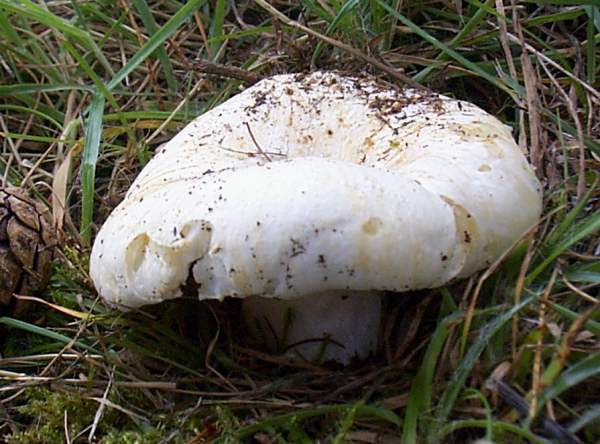
Where does White Russula grow?
Russula delica
Got a photo? Identify mushrooms instantly with the Mushby app
Open the appWhite Russula grows in specific habitats. Knowing where to look and when is the difference between an empty basket and a successful forage.
Where to find White Russula
North America
Widely distributed across temperate regions, particularly common in the eastern United States and Canada, and also found in the Pacific Northwest.
Europe
Common throughout Europe, from Scandinavia to the Mediterranean, in various forest types.
Asia
Reported from parts of Asia, including Japan and China, where suitable host trees are present.
Foraging tips
- Seasonal Availability. Typically fruits from summer through fall (July to October), with peak abundance often in late summer and early autumn after periods of rain.
- Preferred Habitat. Look for it in mixed forests, especially under oak, beech, pine, and spruce. It often grows partially buried in leaf litter or moss.
- Distinguishing Features. Its deeply decurrent gills, lack of latex, and overall white coloration are key identifiers. Always check for the absence of milky latex to differentiate from Lactarius species.
- Taste Test (Cautionary). A small taste of the raw flesh (and spitting it out) can reveal a mild to slightly acrid or peppery taste, which is characteristic of many Russula species. However, this should not be relied upon as the sole identification method, especially for beginners, due to the risk of toxic look-alikes.
Quick Check
- Substrate:
- Terrestrial, on soil in mixed forests, broadleaf woodlands, and conifer forests.
- Fruiting:
- Summer to fall (July-October).
- Odor:
- Faint, sometimes slightly unpleasant or fishy, but not distinctive.
Explore White Russula
Identify mushrooms anywhere
Free on iOS, Android, and Web. Photo identification, full database, and your personal collection.