
How to identify Dung Bell
Panaeolus papilionaceus
Got a photo? Identify mushrooms instantly with the Mushby app
Open the appTo correctly identify Dung Bell (Panaeolus papilionaceus), check each of these features in order. Misidentification is the most common cause of mushroom poisoning, so cross-reference multiple sources.
Step-by-step identification
- 1
Cap
Shape, color, surface texture, and diameter.
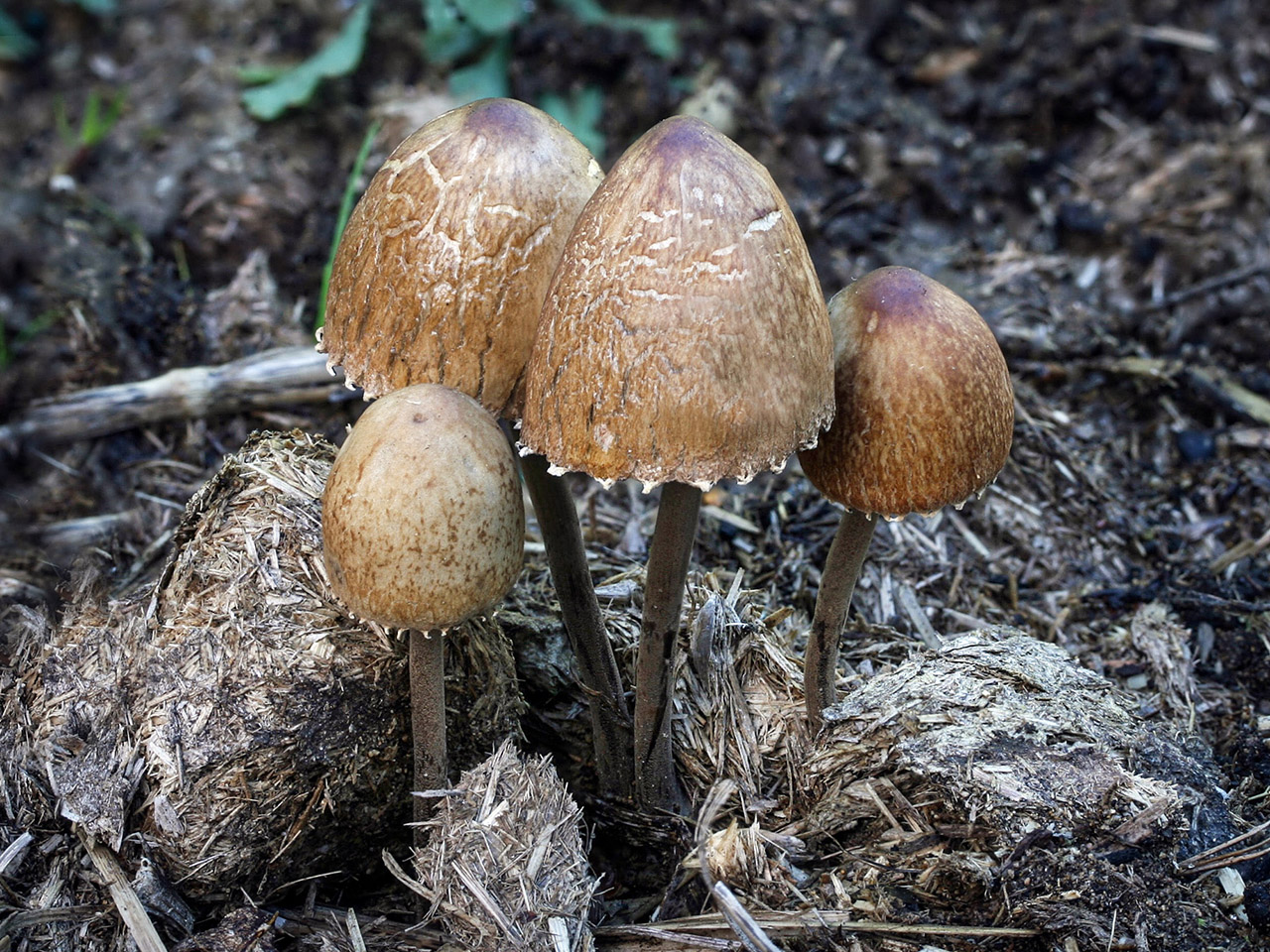
1-4 cm in diameter, campanulate (bell-shaped) to convex, often with a distinct papilla (nipple-like projection) in the center. The margin can be slightly incurved when young, becoming straight or slightly upturned with age, sometimes with remnants of a partial veil. Color varies from grayish-brown to yellowish-brown, often paler towards the margin, and can be hygrophanous, fading to a lighter tan or buff when dry. The surface is smooth, sometimes finely striate when moist.
- 2
Gills
Attachment to stem, color, and spacing.
Adnate to adnexed, close, broad, and often mottled due to the uneven ripening of spores. Initially grayish, becoming dark brown to black with age as spores mature. The gill edges are often paler.
- 3
Stem
Length, shape, surface, and any ring.
3-10 cm long, 1-4 mm thick, slender, cylindrical, often slightly tapering upwards. Color is whitish to grayish-brown, often darker towards the base. The surface is smooth or finely pruinose (powdery) at the apex. It is hollow and fragile, without a ring, though a temporary fibrillose zone may be present from the partial veil.
- 4
Flesh
Color, texture, and bruising reaction.
Thin, fragile, whitish to grayish, without a distinctive odor or taste.
- 5
Fruiting body
Overall growth pattern.
Small to medium-sized agaric, typically growing gregariously or scattered.
- 6
Habitat
Where it grows and on what substrate.
Saprobic, growing directly on dung (especially horse, cow, and sheep dung) or on heavily manured soil. It is a common species in pastures, fields, and gardens.
Key Facts
- Cap surfaces
- Smooth, sometimes finely striate when moist
- Growth Form
- Gregarious or scattered
- Spore Print
- Jet black
- Body color
- Grayish-brown to yellowish-brown
- Odor
- Indistinct
- Flesh bruises
- No significant bruising reaction
- Height
- 3-10 cm
- Cap Diameter
- 1-4 cm
Fruit body characteristics
- Gill attachment: Adnate to adnexed
- Stem shape: Cylindrical, often slightly tapering upwards
- Stem surface: Smooth or finely pruinose at apex
- Ring: Absent (sometimes a temporary fibrillose zone)
- Stem cross-section: Hollow
Explore Dung Bell
Identify mushrooms anywhere
Free on iOS, Android, and Web. Photo identification, full database, and your personal collection.