
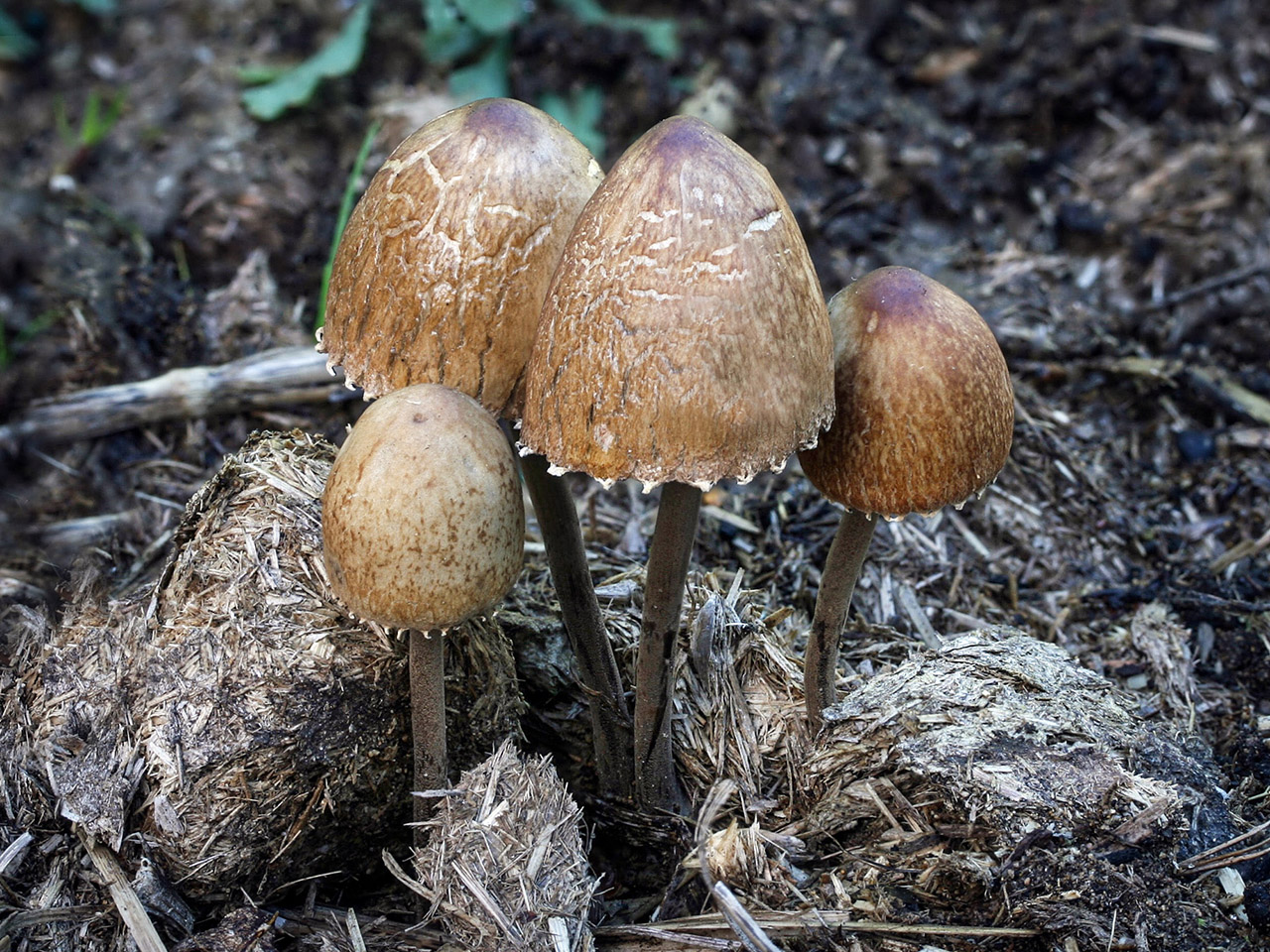
Is Dung Bell edible?
Panaeolus papilionaceus
Got a photo? Identify mushrooms instantly with the Mushby app
Open the appSafe
SafePanaeolus papilionaceus is generally considered non-toxic, but it is not recommended for consumption due to its lack of culinary value and the high risk of confusion with psychoactive Panaeolus species. While it does not contain psilocybin, some sources suggest it may contain trace amounts of other indole compounds, though this is not well-established. The primary danger lies in misidentification with species like Panaeolus cinctulus or Panaeolus cyanescens, which are hallucinogenic. Therefore, it should be treated with extreme caution and never consumed.
Don't confuse with these look-alikes
Misidentification is the most common cause of mushroom poisoning. Dung Bell can be confused with:
- Mottled Gilled Panaeolus — Panaeolus
- Panaeolus foenisecii — Panaeolus
- Panaeolus cinctulus — Panaeolus
- Panaeolus cyanescens — Panaeolus
Explore Dung Bell
Identify mushrooms anywhere
Free on iOS, Android, and Web. Photo identification, full database, and your personal collection.