
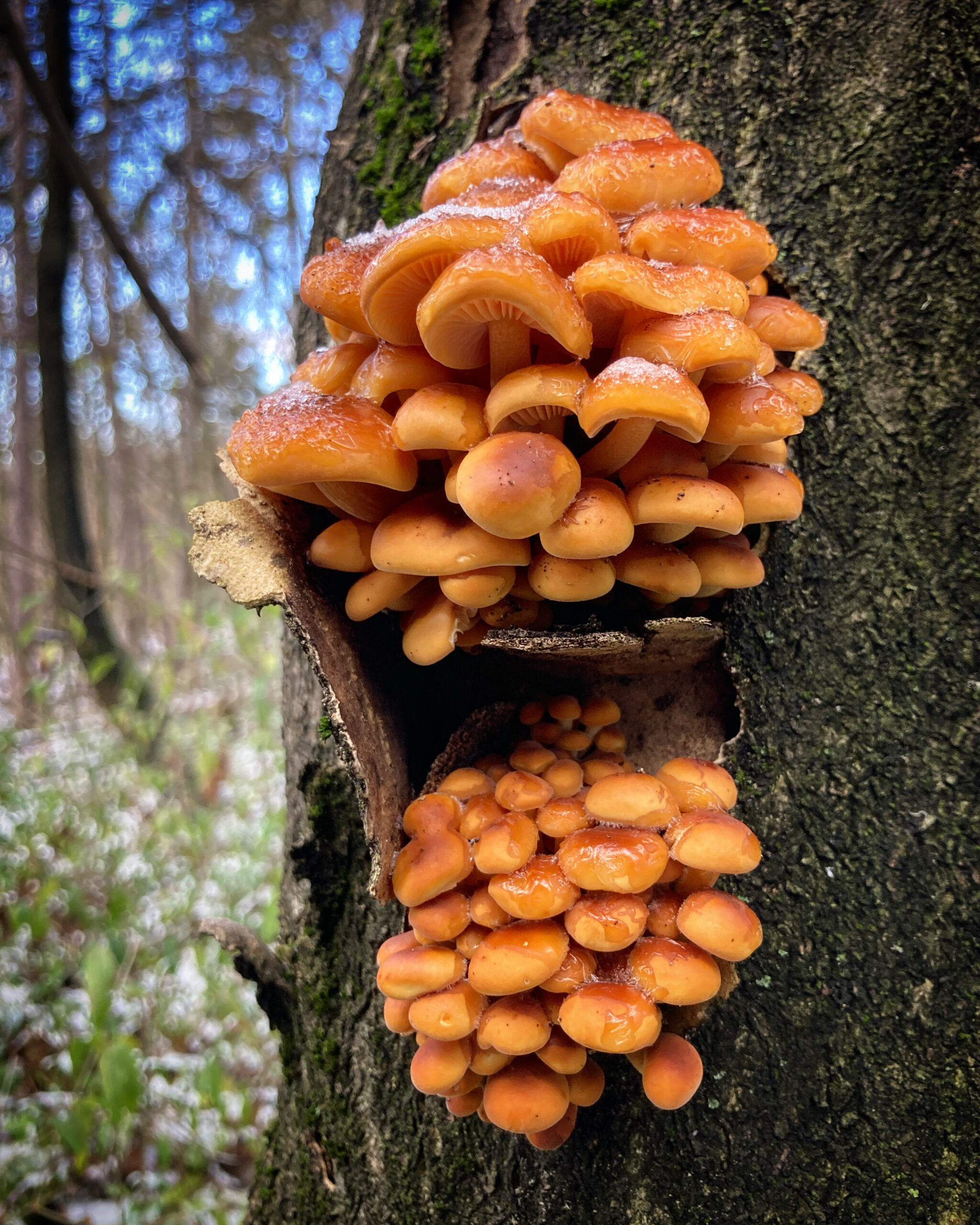
How to identify Bonnet Bell
Mycena tintinnabulum
Got a photo? Identify mushrooms instantly with the Mushby app
Open the appTo correctly identify Bonnet Bell (Mycena tintinnabulum), check each of these features in order. Misidentification is the most common cause of mushroom poisoning, so cross-reference multiple sources.
Step-by-step identification
- 1
Cap
Shape, color, surface texture, and diameter.
The cap is typically 5-20 mm in diameter, initially bell-shaped or paraboloid, expanding to a more conical or convex shape with age, often retaining a central papilla (umbo). The margin is usually striate (grooved) due to the underlying gills. Color varies from pale reddish-brown, grayish-brown, or ochraceous-brown, fading to a lighter grayish or yellowish-brown towards the margin. The surface is moist, slightly hygrophanous, and often translucent.
- 2
Gills
Attachment to stem, color, and spacing.
Adnexed to nearly free, rather broad, distant to subdistant, and becoming ventricose (swollen in the middle). They are whitish to grayish, sometimes with a pinkish or yellowish tint, especially near the stem. The gill edges are smooth.
- 3
Stem
Length, shape, surface, and any ring.
The stem is 20-60 mm long and 1-2 mm thick, slender, cylindrical, and often slightly twisted or flexuous. It is tough, cartilaginous, and hollow. The color is similar to the cap, often paler at the apex and darkening towards the base, which may be covered in fine, white, strigose hairs (mycelial down). There is no ring or volva.
- 4
Flesh
Color, texture, and bruising reaction.
Thin, fragile, watery, and typically concolorous with the cap surface or slightly paler. It does not change color when bruised or cut.
- 5
Fruiting body
Overall growth pattern.
Small, delicate fruiting bodies growing in dense clusters.
- 6
Habitat
Where it grows and on what substrate.
Saprobic, growing in dense clusters on decaying hardwood logs, stumps, and branches, particularly oak and beech. It prefers shaded, moist environments and is a late-season to winter fruiter.
Key Facts
- Cap surfaces
- Moist, translucent-striate, slightly pruinose when young, often fading.
- Growth Form
- Gregarious to caespitose (clustered) on wood.
- Spore Print
- White
- Body color
- Pale grayish-brown, reddish-brown, or ochraceous-brown.
- Odor
- Indistinct to slightly earthy/farinaceous.
- Flesh bruises
- No.
- Height
- 20-60 mm
- Cap Diameter
- 5-20 mm
Fruit body characteristics
- Gill attachment: Adnexed to nearly free.
- Stem shape: Cylindrical, slender, often flexuous.
- Stem surface: Smooth to finely pruinose, base often strigose with white hairs.
- Ring: Absent.
- Stem cross-section: Hollow.
Explore Bonnet Bell
Identify mushrooms anywhere
Free on iOS, Android, and Web. Photo identification, full database, and your personal collection.