
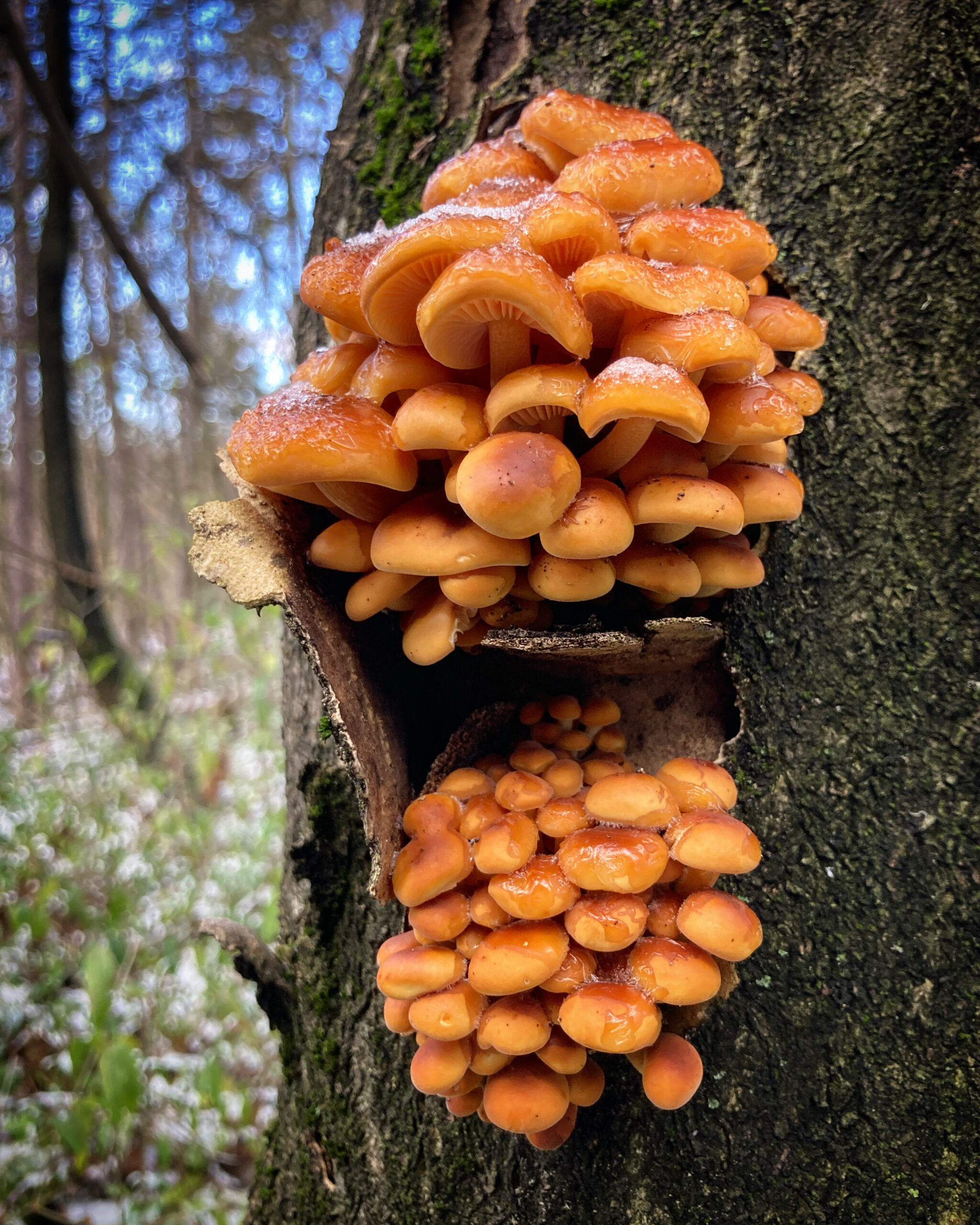
Where does Bonnet Bell grow?
Mycena tintinnabulum
Got a photo? Identify mushrooms instantly with the Mushby app
Open the appBonnet Bell grows in specific habitats. Knowing where to look and when is the difference between an empty basket and a successful forage.
Where to find Bonnet Bell
Decaying Hardwood
Look for clusters on fallen logs, stumps, and branches of deciduous trees, especially oak (Quercus spp.) and beech (Fagus sylvatica).
Mossy Forest Floors
Often found in cool, moist, and shaded deciduous or mixed woodlands where suitable woody debris is abundant.
Winter Months
This species frequently fruits in late autumn, winter, and early spring during mild periods, making it a distinctive sight when many other fungi are dormant.
Foraging tips
- Look for Clusters. Mycena tintinnabulum almost always grows in dense clusters, sometimes numbering in the hundreds of individual fruiting bodies, on its substrate.
- Check Deciduous Wood. Focus your search on dead and decaying hardwood, particularly wood that is well-rotted and covered in moss or leaf litter.
- Winter Foraging. This is one of the few species that consistently fruits in colder weather. If you are foraging in winter, this mushroom is a likely find on suitable substrates.
- Observe Gills. The relatively broad, somewhat distant, and often ventricose gills are a good distinguishing feature for this small Mycena.
Quick Check
- Substrate:
- Decaying hardwood, particularly oak and beech.
- Fruiting:
- Late autumn to early spring (winter fruiter)
- Odor:
- Indistinct to slightly earthy or farinaceous (mealy), not strong or distinctive.
Explore Bonnet Bell
Identify mushrooms anywhere
Free on iOS, Android, and Web. Photo identification, full database, and your personal collection.