
Got a photo? Identify mushrooms instantly with the Mushby app
Open the appDescription
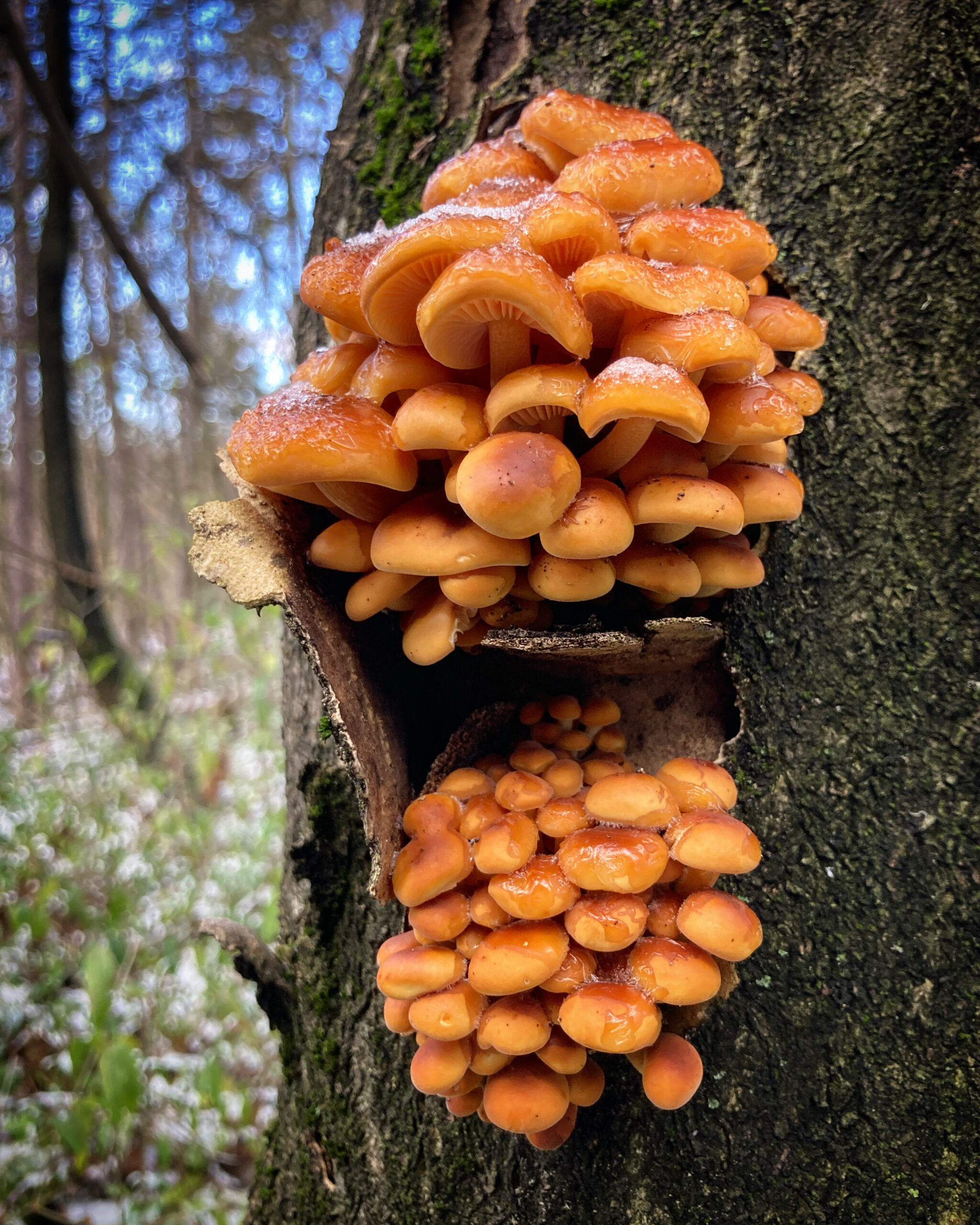
Mycena tintinnabulum, commonly known as the Bonnet Bell or Winter Bonnet, is a small, gregarious saprobic mushroom belonging to the family Mycenaceae. It is characterized by its small, bell-shaped to conical cap, pale grayish-brown coloration, and growth in dense clusters on decaying hardwood, particularly in cooler temperatures. Its delicate structure and preference for winter fruiting distinguish it from many other Mycena species.
How to Identify
- Cap
- The cap is typically 5-20 mm in diameter, initially bell-shaped or paraboloid, expanding to a more conical or convex shape with age, often retaining a central papilla (umbo). The margin is usually striate (grooved) due to the underlying gills. Color varies from pale reddish-brown, grayish-brown, or ochraceous-brown, fading to a lighter grayish or yellowish-brown towards the margin. The surface is moist, slightly hygrophanous, and often translucent.
- Gills
- Adnexed to nearly free, rather broad, distant to subdistant, and becoming ventricose (swollen in the middle). They are whitish to grayish, sometimes with a pinkish or yellowish tint, especially near the stem. The gill edges are smooth.
- Stem
- The stem is 20-60 mm long and 1-2 mm thick, slender, cylindrical, and often slightly twisted or flexuous. It is tough, cartilaginous, and hollow. The color is similar to the cap, often paler at the apex and darkening towards the base, which may be covered in fine, white, strigose hairs (mycelial down). There is no ring or volva.
- Flesh
- Thin, fragile, watery, and typically concolorous with the cap surface or slightly paler. It does not change color when bruised or cut.
- Fruiting body
- Small, delicate fruiting bodies growing in dense clusters.
- Habitat
- Saprobic, growing in dense clusters on decaying hardwood logs, stumps, and branches, particularly oak and beech. It prefers shaded, moist environments and is a late-season to winter fruiter.
Key Facts
- Cap surfaces: Moist, translucent-striate, slightly pruinose when young, often fading.
- Growth Form: Gregarious to caespitose (clustered) on wood.
- Spore Print: White
- Body color: Pale grayish-brown, reddish-brown, or ochraceous-brown.
- Odor: Indistinct to slightly earthy/farinaceous.
- Flesh bruises: No.
- Height: 20-60 mm
- Cap Diameter: 5-20 mm
- Nutrient gathering: Saprobic
Safe
SafeMycena tintinnabulum is generally considered inedible due to its small size and lack of culinary value. There are no reports of it being toxic, but consumption is not recommended. Many small Mycena species contain compounds that can cause gastrointestinal upset, and distinguishing them accurately can be challenging.
Quick Check
- Odor: Indistinct to slightly earthy or farinaceous (mealy), not strong or distinctive.
- Fruiting: Late autumn to early spring (winter fruiter)
- Substrate: Decaying hardwood, particularly oak and beech.
Where to Find
Decaying Hardwood
Look for clusters on fallen logs, stumps, and branches of deciduous trees, especially oak (Quercus spp.) and beech (Fagus sylvatica).
Mossy Forest Floors
Often found in cool, moist, and shaded deciduous or mixed woodlands where suitable woody debris is abundant.
Winter Months
This species frequently fruits in late autumn, winter, and early spring during mild periods, making it a distinctive sight when many other fungi are dormant.
Finding Tips
Look for Clusters
Mycena tintinnabulum almost always grows in dense clusters, sometimes numbering in the hundreds of individual fruiting bodies, on its substrate.
Check Deciduous Wood
Focus your search on dead and decaying hardwood, particularly wood that is well-rotted and covered in moss or leaf litter.
Winter Foraging
This is one of the few species that consistently fruits in colder weather. If you are foraging in winter, this mushroom is a likely find on suitable substrates.
Observe Gills
The relatively broad, somewhat distant, and often ventricose gills are a good distinguishing feature for this small Mycena.
Similar Species
Common Bonnet
Mycena
Also known as: Mycena galericulata
Clustered Bonnet
Mycena
Also known as: Mycena inclinata
Stinking Bonnet
Mycena
Also known as: Mycena stipata
Scientific Classification
- Phylum
- Basidiomycota
- Class
- Agaricomycetes
- Order
- Agaricales
- Family
- Mycenaceae
- Genus
- Mycena
Storage Information
- Max Temperature: 4°C
- Freezing duration: N/A (not recommended for consumption)
- Min Temperature: 0°C
- Refrigeration: N/A (not recommended for consumption)
How to Clean
Due to their small size and delicate nature, Mycena tintinnabulum are not typically collected for consumption. If one were to clean them for study or other purposes, a soft brush or dry cloth would be used to gently remove debris. Avoid washing as they become waterlogged and disintegrate easily.
Explore Bonnet Bell
Identify mushrooms anywhere
Free on iOS, Android, and Web. Photo identification, full database, and your personal collection.