
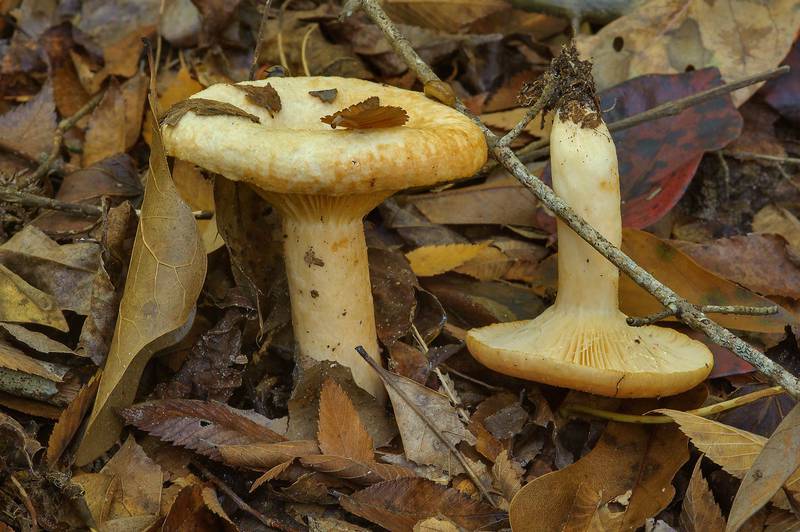
Where does Milkcap grow?
Lactarius
Got a photo? Identify mushrooms instantly with the Mushby app
Open the appMilkcap grows in specific habitats. Knowing where to look and when is the difference between an empty basket and a successful forage.
Where to find Milkcap
Temperate and Boreal Forests
Widely distributed across temperate and boreal regions of the Northern Hemisphere, and also found in parts of the Southern Hemisphere.
Coniferous and Deciduous Woodlands
Specific species show preferences for certain tree hosts, e.g., L. deliciosus with pines, L. torminosus with birches, L. quietus with oaks.
Foraging tips
- Look for Latex. The most crucial identification feature is the milky latex. Break a gill or cut the cap to observe its color, abundance, and any color changes.
- Note Taste. A small taste of the latex (and spitting it out) can be diagnostic. Acrid or peppery latex often indicates an inedible or toxic species, while mild latex is common in edible ones. Do not swallow unknown latex.
- Observe Cap Features. Pay attention to cap color, texture (sticky, dry, hairy), and presence of concentric zones or pits.
- Check Gills and Stem. Note gill attachment, spacing, and color. Examine stem surface, shape, and whether it's hollow or solid.
- Identify Host Trees. Knowing the associated tree species can help narrow down identification, as Lactarius species are mycorrhizal.
- Seasonal Timing. Most species fruit from late summer through autumn, but some can appear earlier or later depending on climate and species.
Quick Check
- Substrate:
- Terrestrial, growing on soil in mycorrhizal association with trees.
- Fruiting:
- Late summer to late autumn, depending on species and region.
- Odor:
- Variable; can be mild, fruity, fishy, or indistinct. Some species have a distinctive odor (e.g., Lactarius camphoratus smells of fenugreek or curry).
Explore Milkcap
Identify mushrooms anywhere
Free on iOS, Android, and Web. Photo identification, full database, and your personal collection.