
Got a photo? Identify mushrooms instantly with the Mushby app
Open the appDescription
Lactarius, commonly known as milkcaps, is a large genus of fungi in the family Russulaceae. They are characterized by the production of a milky latex (lactation) when the gills or flesh are broken, a feature that gives them their common name. This latex can vary in color (white, orange, red, purple, or even clear) and taste (mild, acrid, or bitter), and its properties are crucial for species identification. The genus is globally distributed, forming ectomycorrhizal associations with a wide range of trees and shrubs. Many species are edible, some are highly prized, while others are inedible due to their acrid taste, and a few are considered mildly toxic if not properly prepared.
How to Identify
- Cap
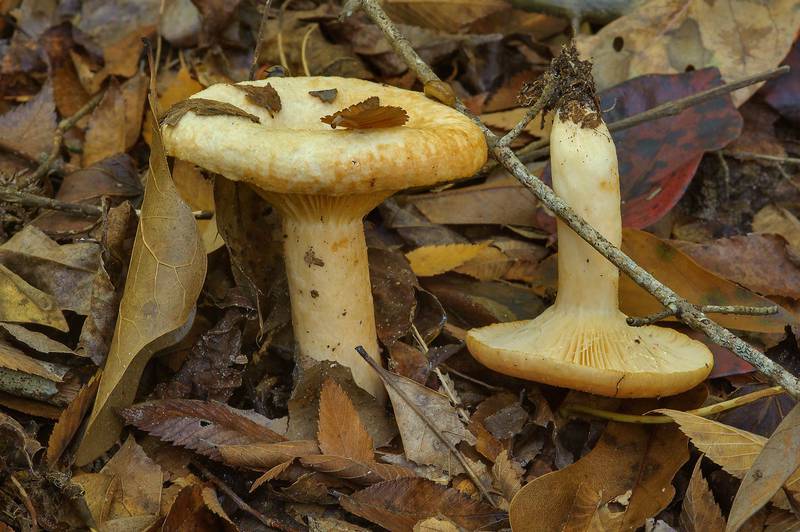
- Caps vary greatly in size (2-20 cm), shape (convex, plano-convex, depressed, infundibuliform), color (white, yellow, orange, brown, green, purple), and surface texture (smooth, sticky, hairy, scaly, zoned). Many species have a central depression or umbo. The margin can be inrolled, straight, or wavy.
- Gills
- Adnate, decurrent, or subdecurrent, often crowded, and typically brittle. Gill color varies from white to cream, yellow, orange, or brownish, and can change with age or bruising. The latex is most readily observed by breaking a gill.
- Stem
- Cylindrical, often tapering towards the base or apex, sometimes hollow or chambered. Surface can be smooth, pruinose, or scrobiculate (pitted). Color often matches the cap or is paler. Typically central, but can be eccentric.
- Flesh
- Brittle, granular, and often breaks cleanly, similar to Russula. When cut or broken, it exudes a milky latex. The color of the flesh and the latex, and any color changes upon exposure to air, are important diagnostic features.
- Fruiting body
- Typically agaricoid (mushroom-shaped) with a cap, gills, and central or eccentric stem. The most defining characteristic is the production of latex when injured.
- Habitat
- Ectomycorrhizal, forming symbiotic relationships with various trees (conifers and hardwoods) and shrubs. Found growing on the ground in forests, woodlands, and sometimes in parks or gardens, usually solitary or scattered, occasionally gregarious.
Key Facts
- Cap surfaces: Smooth, sticky, dry, hairy, scaly, zoned, or pitted.
- Growth Form: Solitary, scattered, or gregarious.
- Spore Print: White to cream or pale yellow.
- Body color: Highly variable across the genus, ranging from white, yellow, orange, red, brown, green, to purple.
- Odor: Variable; mild, fruity, fishy, fenugreek-like, or indistinct.
- Flesh bruises: Some species show color changes in the flesh or latex upon bruising or exposure to air (e.g., L. indigo turns green, L. deliciosus turns green).
- Height: Typically 3-15 cm, but can vary from 2 cm to over 20 cm.
- Cap Diameter: Typically 2-20 cm, with some species having smaller or larger caps.
- Nutrient gathering: Ectomycorrhizal, forming symbiotic relationships with tree roots.
Toxic
Moderate ToxicityWhile many Lactarius species are edible and highly prized, a significant number are inedible due to an acrid or bitter taste, and some are considered mildly toxic if consumed raw or improperly prepared. The primary concern with toxic Lactarius species is gastrointestinal upset (nausea, vomiting, diarrhea). The most notable toxic species is Lactarius torminosus (Woolly Milkcap), which causes severe gastrointestinal distress. Other species with acrid latex, such as Lactarius piperatus, are generally considered inedible raw but can be rendered edible by parboiling and discarding the water, a practice common in some cultures. However, this is not recommended for beginners due to the risk of misidentification. Always err on the side of caution and only consume species positively identified as edible.
Quick Check
- Odor: Variable; can be mild, fruity, fishy, or indistinct. Some species have a distinctive odor (e.g., Lactarius camphoratus smells of fenugreek or curry).
- Fruiting: Late summer to late autumn, depending on species and region.
- Substrate: Terrestrial, growing on soil in mycorrhizal association with trees.
Where to Find
Temperate and Boreal Forests
Widely distributed across temperate and boreal regions of the Northern Hemisphere, and also found in parts of the Southern Hemisphere.
Coniferous and Deciduous Woodlands
Specific species show preferences for certain tree hosts, e.g., L. deliciosus with pines, L. torminosus with birches, L. quietus with oaks.
Finding Tips
Look for Latex
The most crucial identification feature is the milky latex. Break a gill or cut the cap to observe its color, abundance, and any color changes.
Note Taste
A small taste of the latex (and spitting it out) can be diagnostic. Acrid or peppery latex often indicates an inedible or toxic species, while mild latex is common in edible ones. Do not swallow unknown latex.
Observe Cap Features
Pay attention to cap color, texture (sticky, dry, hairy), and presence of concentric zones or pits.
Check Gills and Stem
Note gill attachment, spacing, and color. Examine stem surface, shape, and whether it's hollow or solid.
Identify Host Trees
Knowing the associated tree species can help narrow down identification, as Lactarius species are mycorrhizal.
Seasonal Timing
Most species fruit from late summer through autumn, but some can appear earlier or later depending on climate and species.
Similar Species
Brittlegill
Fungus
Also known as: Russula
Saffron Milkcap
Fungus
Also known as: Lactarius deliciosus
Woolly Milkcap
Fungus
Also known as: Lactarius torminosus
Scientific Classification
- Phylum
- Basidiomycota
- Class
- Agaricomycetes
- Order
- Russulales
- Family
- Russulaceae
- Genus
- Lactarius
Explore Milkcap
Identify mushrooms anywhere
Free on iOS, Android, and Web. Photo identification, full database, and your personal collection.