
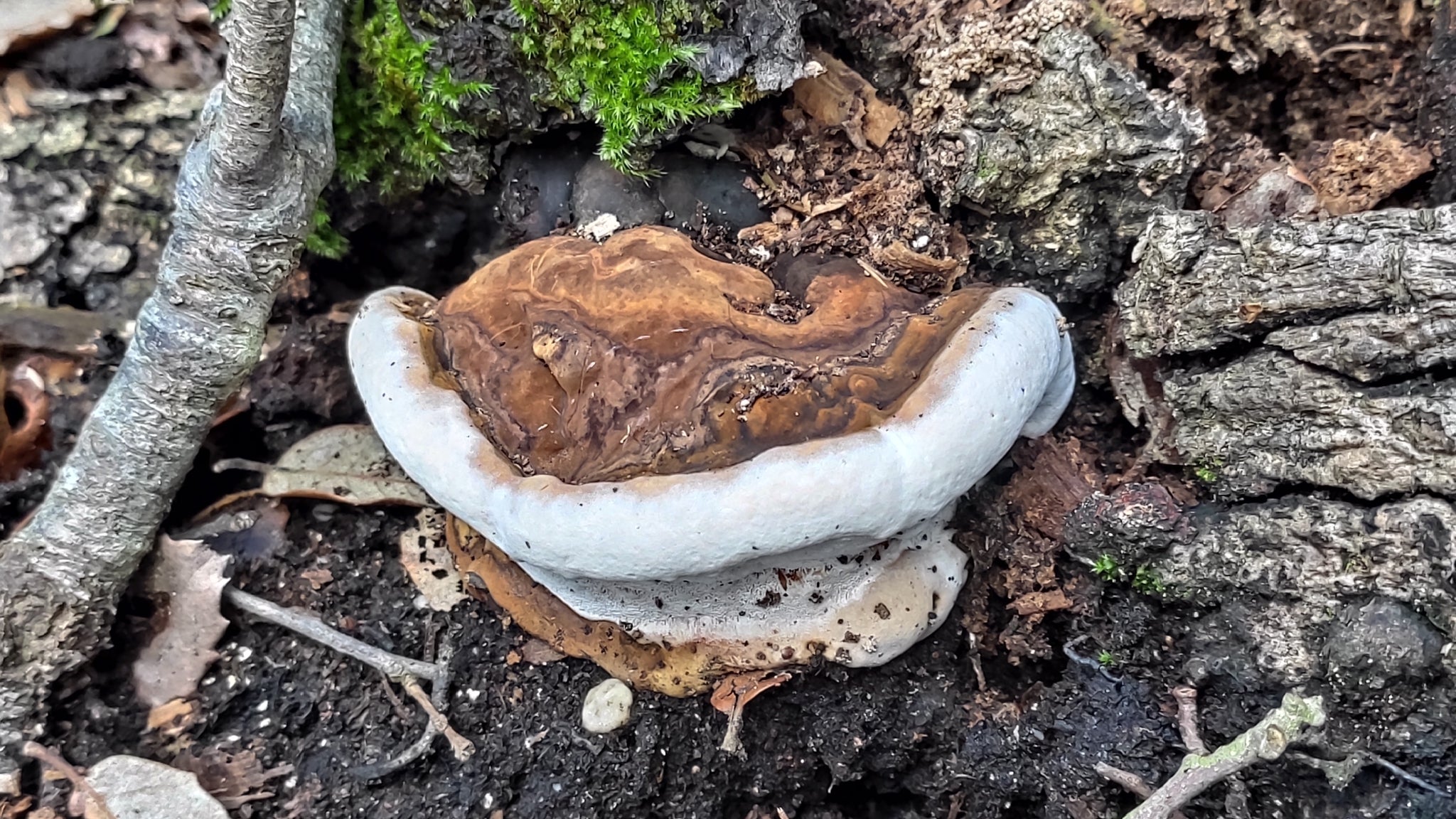
Where does Artist's Conk grow?
Ganoderma adspersum
Got a photo? Identify mushrooms instantly with the Mushby app
Open the appArtist's Conk grows in specific habitats. Knowing where to look and when is the difference between an empty basket and a successful forage.
Where to find Artist's Conk
North America
Widely distributed throughout temperate regions of North America, particularly in the eastern United States and Canada where deciduous forests are prevalent.
Europe
Common across much of Europe, from the United Kingdom to continental Europe, thriving in similar deciduous forest ecosystems.
Asia
Also reported in parts of Asia, though its distribution might overlap with other closely related Ganoderma species which can be difficult to distinguish without microscopic examination or genetic analysis.
Foraging tips
- Look for Hardwoods. Focus your search in deciduous forests, particularly those with older oak, maple, beech, or birch trees, as these are preferred hosts for Ganoderma adspersum. Check around the base of living trees and on fallen logs or stumps.
- Examine Tree Bases. Artist's Conk frequently grows at the base of living trees, often near the ground level or slightly higher up. Look for the distinctive hoof-shaped brackets protruding from the bark.
- Check Deadwood. Do not overlook deadwood. Large, fallen logs and stumps, especially of deciduous species, are prime locations for this saprobic fungus.
- Year-Round Presence. While spore production is strongest in warmer months, the perennial fruiting bodies can be found year-round. They persist for many seasons, growing larger over time.
- Pore Surface Test. To confirm identification, gently scratch or draw on the creamy white underside (pore surface). If it instantly bruises dark brown to black, it is a strong indicator of an Artist's Conk (Ganoderma species capable of this, including G. adspersum and G. applanatum).
Quick Check
- Substrate:
- Deciduous trees (living or dead), rarely conifers.
- Fruiting:
- Perennial, hoof-shaped to ungulate bracket, growing directly on wood.
- Odor:
- Mild, faintly fungoid to somewhat reminiscent of licorice, not distinctive.
Explore Artist's Conk
Identify mushrooms anywhere
Free on iOS, Android, and Web. Photo identification, full database, and your personal collection.