Where does Blue-belted Cortinarius grow?
Cortinarius collinitus
Got a photo? Identify mushrooms instantly with the Mushby app
Open the appBlue-belted Cortinarius grows in specific habitats. Knowing where to look and when is the difference between an empty basket and a successful forage.
Where to find Blue-belted Cortinarius
North America
Common in coniferous forests across temperate North America.
Europe
Widespread in coniferous and mixed woodlands throughout Europe.
Asia
Reported in coniferous regions of Asia.
Foraging tips
- Seasonality. Typically fruits from late summer through autumn (August to November), depending on geographical location and weather conditions.
- Substrate Preference. Look for it growing on the ground in coniferous litter, often near spruce (Picea spp.), pine (Pinus spp.), or fir (Abies spp.).
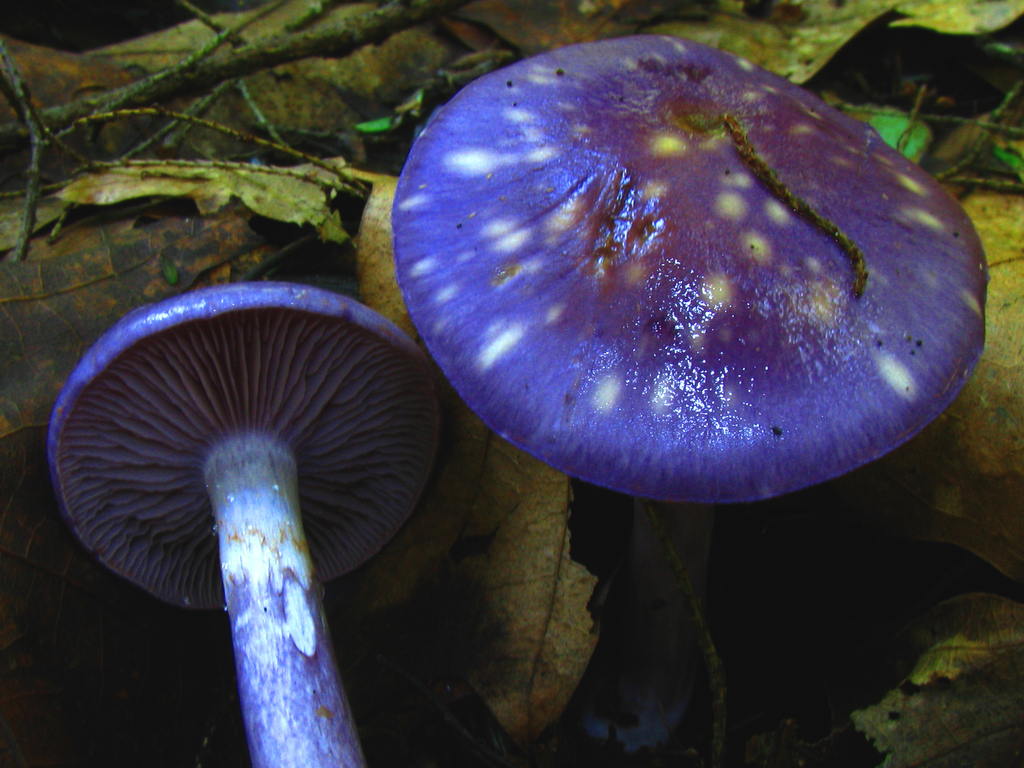
- Distinguishing Features. Pay close attention to the very slimy cap and stem, and the often bluish-violet zone on the upper stem. The rusty-brown spore print is also critical for Cortinarius identification.
- Look-alike Caution. Many Cortinarius species are similar. Be especially cautious, as numerous Cortinarius species are toxic, including some with very similar appearances. Never consume any Cortinarius without expert, unequivocal identification.
Quick Check
- Substrate:
- Ground in coniferous or mixed woods.
- Fruiting:
- Late summer to autumn.
- Odor:
- Indistinct or slightly earthy, not distinctive.
Explore Blue-belted Cortinarius
Identify mushrooms anywhere
Free on iOS, Android, and Web. Photo identification, full database, and your personal collection.