
Got a photo? Identify mushrooms instantly with the Mushby app
Open the appDescription
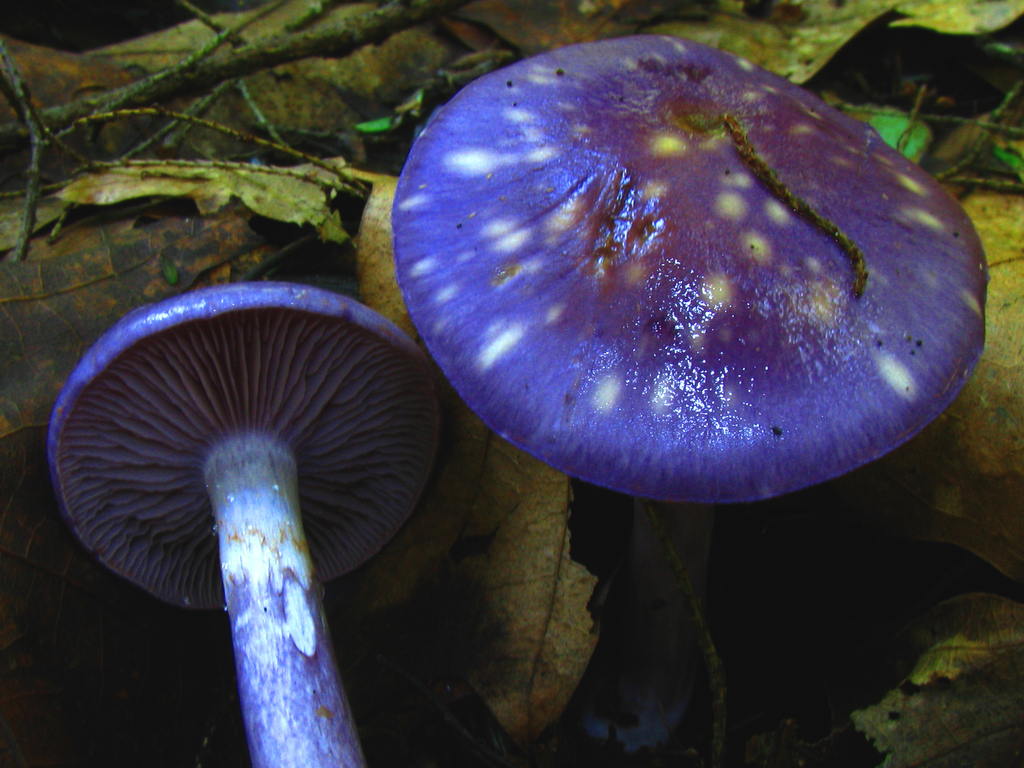
Cortinarius collinitus is a medium-sized mushroom characterized by its strikingly viscid, often orange-brown to yellow-brown cap and a stem that is typically covered in a thick, gelatinous slime, especially when young or wet. A distinctive feature is the bluish-violet zone often visible on the upper part of the stem, representing remnants of the cortina. It belongs to the large and complex genus Cortinarius, many of which are mycorrhizal and often difficult to distinguish without microscopic examination or expertise.
How to Identify
- Cap
- 5-12 cm in diameter, convex to broadly umbonate, becoming flattened with age. The surface is distinctly viscid to slimy, especially when moist, with an even margin. Color ranges from yellow-brown to orange-brown or reddish-brown, often darker towards the center. It may be slightly striate at the margin when wet.
- Gills
- Adnexed to adnate, relatively crowded, and thick. They are initially pale grayish-blue to pallid, becoming cinnamon-brown to rusty-brown with the maturation of spores.
- Stem
- 6-15 cm long and 1-2.5 cm thick. Cylindrical to club-shaped, often tapering towards the base. The most striking feature is its thick covering of clear, colorless or bluish-tinged slime, especially when young, often obscuring a characteristic bluish subcortinal zone. Above the slimy zone, fine cortinal remnants may be visible, which are initially whitish blue. The universal veil forms rings of slime or glutinous sheaths on the stem.
- Flesh
- Whitish to pale yellowish, firm, and rather thick in the cap. It does not change color when cut or bruised.
- Fruiting body
- The fruit body is agaricoid (gilled mushroom), robust, and typically slimy throughout, particularly the stem.
- Habitat
- Mycorrhizal, primarily with conifers (especially spruce, pine, and fir), but also occasionally with hardwoods like birch. Grows solitarily or scattered in coniferous and mixed woods.
Key Facts
- Cap surfaces: Viscid to slimy
- Growth Form: Solitary to scattered
- Spore Print: Rusty-brown
- Body color: Cap: Yellow-brown to orange-brown; Gills: Pale becoming rusty-brown; Stem: Whitish to pale yellowish, often with bluish tints, covered in clear slime.
- Odor: Indistinct
- Flesh bruises: No significant bruising or color change.
- Height: 6-15 cm
- Cap Diameter: 5-12 cm
- Nutrient gathering: Mycorrhizal
Toxic
DeadlyAll members of the genus Cortinarius should be considered suspect and potentially deadly poisonous. Cortinarius collinitus is classified as inedible due to its tough texture and sliminess, but more importantly, many species within the genus contain potent toxins, particularly orellanine, which causes irreversible kidney damage. While C. collinitus itself is not typically cited as containing orellanine, it is considered inedible and potentially toxic, and the risk of misidentification with genuinely deadly species is extremely high.
Quick Check
- Odor: Indistinct or slightly earthy, not distinctive.
- Fruiting: Late summer to autumn.
- Substrate: Ground in coniferous or mixed woods.
Where to Find
North America
Common in coniferous forests across temperate North America.
Europe
Widespread in coniferous and mixed woodlands throughout Europe.
Asia
Reported in coniferous regions of Asia.
Finding Tips
Seasonality
Typically fruits from late summer through autumn (August to November), depending on geographical location and weather conditions.
Substrate Preference
Look for it growing on the ground in coniferous litter, often near spruce (Picea spp.), pine (Pinus spp.), or fir (Abies spp.).
Distinguishing Features
Pay close attention to the very slimy cap and stem, and the often bluish-violet zone on the upper stem. The rusty-brown spore print is also critical for Cortinarius identification.
Look-alike Caution
Many Cortinarius species are similar. Be especially cautious, as numerous Cortinarius species are toxic, including some with very similar appearances. Never consume any Cortinarius without expert, unequivocal identification.
Similar Species
Cortinarius mucosus
Cortinarius
Also known as: Orange slime Cort
Cortinarius trivialis
Cortinarius
Also known as: Common Cort
Cortinarius vibratilis
Cortinarius
Also known as: Birch Webcap
Scientific Classification
- Phylum
- Basidiomycota
- Class
- Agaricomycetes
- Order
- Agaricales
- Family
- Cortinariaceae
- Genus
- Cortinarius
Explore Blue-belted Cortinarius
Identify mushrooms anywhere
Free on iOS, Android, and Web. Photo identification, full database, and your personal collection.