
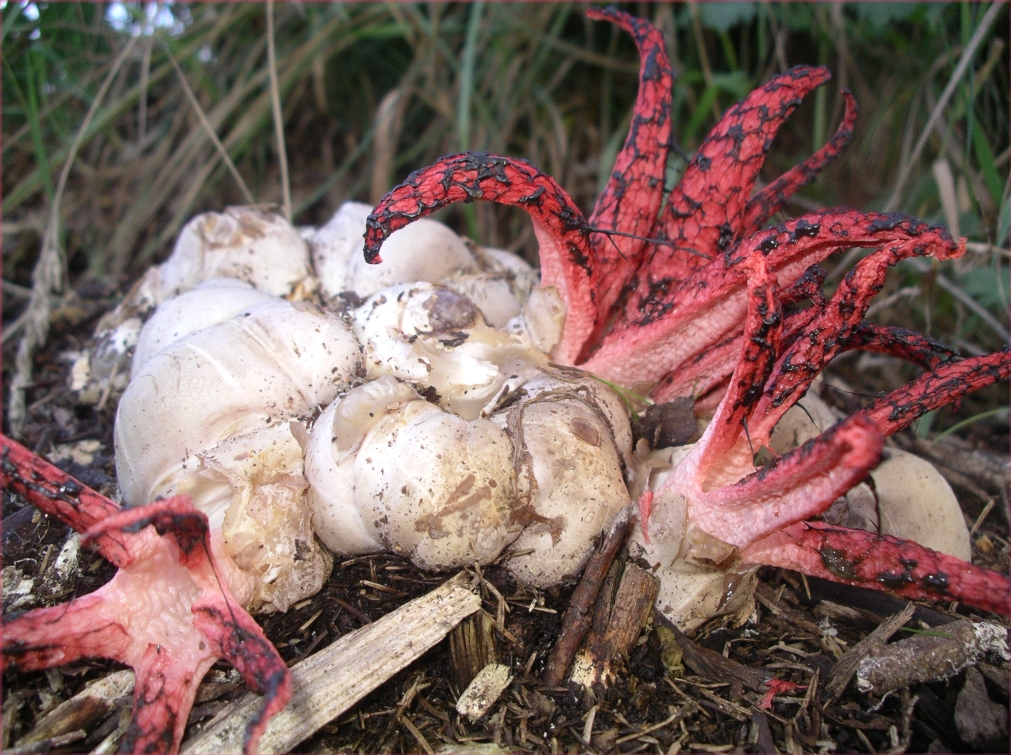
Where does Stinkhorn grow?
Clathrus archeri
Got a photo? Identify mushrooms instantly with the Mushby app
Open the appStinkhorn grows in specific habitats. Knowing where to look and when is the difference between an empty basket and a successful forage.
Where to find Stinkhorn
Gardens and Mulched Areas
Often found in cultivated areas where wood chips or mulch have been used, providing ample decaying organic matter.
Woodlands and Forest Edges
Can be found in deciduous and mixed forests, particularly on the edges or in areas with disturbed soil and decaying woody debris.
Parks and Urban Green Spaces
Due to its invasive nature and preference for disturbed sites, it frequently appears in urban parks and other managed green spaces.
Foraging tips
- Look for the 'Egg' Stage. Before the arms emerge, search for white to pinkish-red, gelatinous egg-like structures partially buried in the substrate. These are less conspicuous but indicate the presence of the fungus.
- Follow the Odor. When mature, the putrid, carrion-like odor is a strong indicator of its presence, especially on still, warm days.
- Check Decaying Wood Substrates. Focus your search on areas with decomposing wood, leaf litter, and wood chip mulch, as these are its preferred habitats.
- Seasonal Awareness. While it can fruit throughout the warmer months, late summer and autumn are often peak times for observation, especially after periods of rain.
Quick Check
- Substrate:
- Decaying wood, leaf litter, disturbed soil, mulch
- Fruiting:
- Starts as a 'witch's egg', then ruptures into 4-7 bright red, finger-like arms covered in dark gleba.
- Odor:
- Putrid, carrion-like, offensive (especially when mature)
Explore Stinkhorn
Identify mushrooms anywhere
Free on iOS, Android, and Web. Photo identification, full database, and your personal collection.