
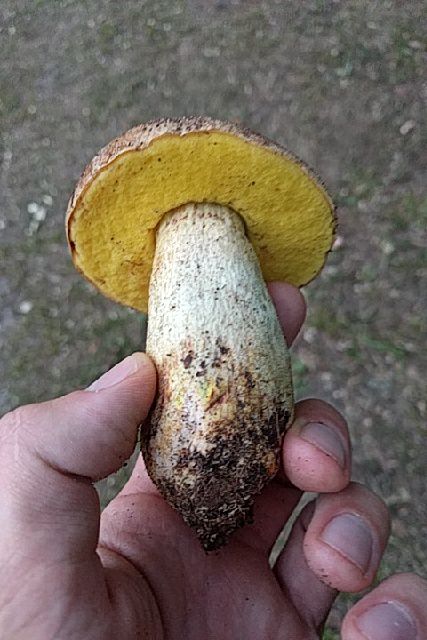
Where does Summer Bolete grow?
Boletus aestivalis
Got a photo? Identify mushrooms instantly with the Mushby app
Open the appSummer Bolete grows in specific habitats. Knowing where to look and when is the difference between an empty basket and a successful forage.
Where to find Summer Bolete
Deciduous Woodlands
Commonly found under oak, beech, hornbeam, and sweet chestnut trees.
Mixed Woodlands
Can also occur in mixed forests where preferred host trees are present.
Well-drained Soils
Prefers chalky or sandy, well-drained soils, often appearing on slopes or woodland edges.
Foraging tips
- Seasonality. As its common name suggests, the Summer Bolete fruits primarily in summer, starting from late May or early June and continuing through August and sometimes into September, earlier than Boletus edulis. It thrives in warm, humid conditions following summer rains.
- Geographic Distribution. Widespread throughout Europe, particularly in central and southern regions. It is also reported from parts of North America (where it may be represented by a closely related species or complex) and Asia, though its distribution is primarily Palearctic.
- Ecological Role. It is an ectomycorrhizal fungus, essential for the nutrient uptake and health of its host trees. Its fruiting bodies contribute to nutrient cycling in forest ecosystems.
- Foraging Tips. Look for cracked caps, especially during dry spells in summer. The prominent reticulation on the stem is a key identifier. Always collect young, firm specimens. Avoid old, soft, or insect-ridden mushrooms. Be absolutely certain of identification to avoid toxic lookalikes. It is considered an excellent edible, highly prized by foragers.
Quick Check
- Substrate:
- Terrestrial, mycorrhizal with broadleaf trees
- Fruiting:
- Early summer to early autumn, peaking in summer
- Odor:
- Pleasant, mild, mushroomy
Explore Summer Bolete
Identify mushrooms anywhere
Free on iOS, Android, and Web. Photo identification, full database, and your personal collection.