
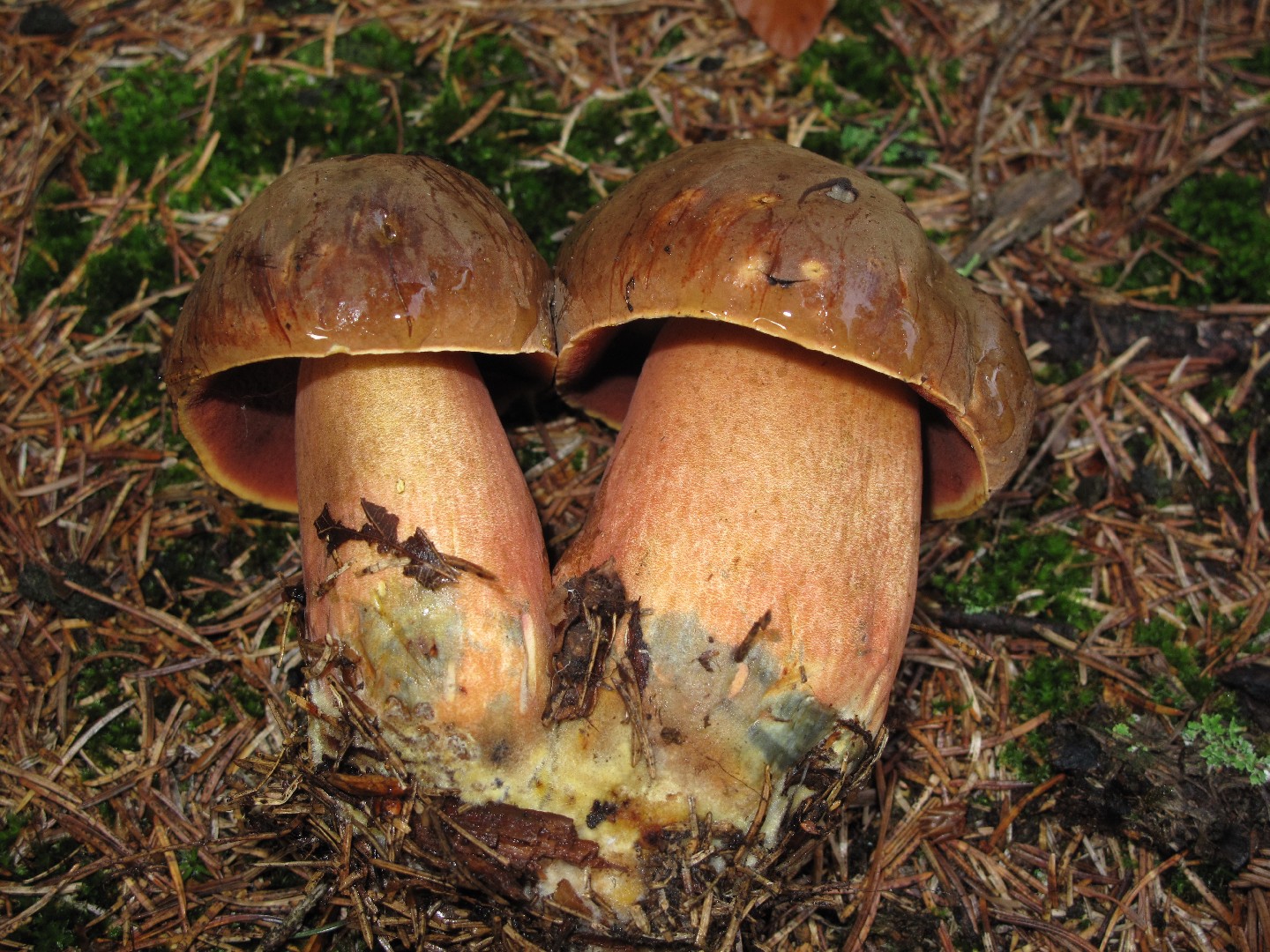
Where does Unidentified Bolete grow?
Boletaceae
Got a photo? Identify mushrooms instantly with the Mushby app
Open the appUnidentified Bolete grows in specific habitats. Knowing where to look and when is the difference between an empty basket and a successful forage.
Where to find Unidentified Bolete
Deciduous Forests
Commonly found under oak, beech, birch, and other broadleaf trees, especially in temperate regions.
Coniferous Forests
Many species associate with pine, spruce, fir, and hemlock trees, particularly in cooler climates.
Mixed Woodlands
Areas with both deciduous and coniferous trees often host a diverse range of bolete species.
Foraging tips
- Observe Host Trees. Note the types of trees nearby, as boletes are mycorrhizal and specific species associate with particular tree genera.
- Check for Bluing. Gently bruise the pores or cut the flesh to observe any color changes, which can be a key diagnostic feature for many boletes.
- Examine Stem Features. Look for reticulation (net-like pattern), scabers (small projections), or other distinctive markings on the stem surface.
- Note Pore Color and Size. The color of the pore surface and the size/shape of individual pores are important for identification.
- Spore Print. A spore print can be crucial. Most boletes have olive-brown, yellowish-brown, or reddish-brown spore prints, but some can be pinkish or purplish-brown.
Quick Check
- Substrate:
- Terrestrial, mycorrhizal with various tree species.
- Fruiting:
- Summer to Fall, depending on species and geographic location.
- Odor:
- Variable; can be mild, pleasant, earthy, or distinctly unpleasant (e.g., phenolic, chemical).
Explore Unidentified Bolete
Identify mushrooms anywhere
Free on iOS, Android, and Web. Photo identification, full database, and your personal collection.