
Got a photo? Identify mushrooms instantly with the Mushby app
Open the appDescription
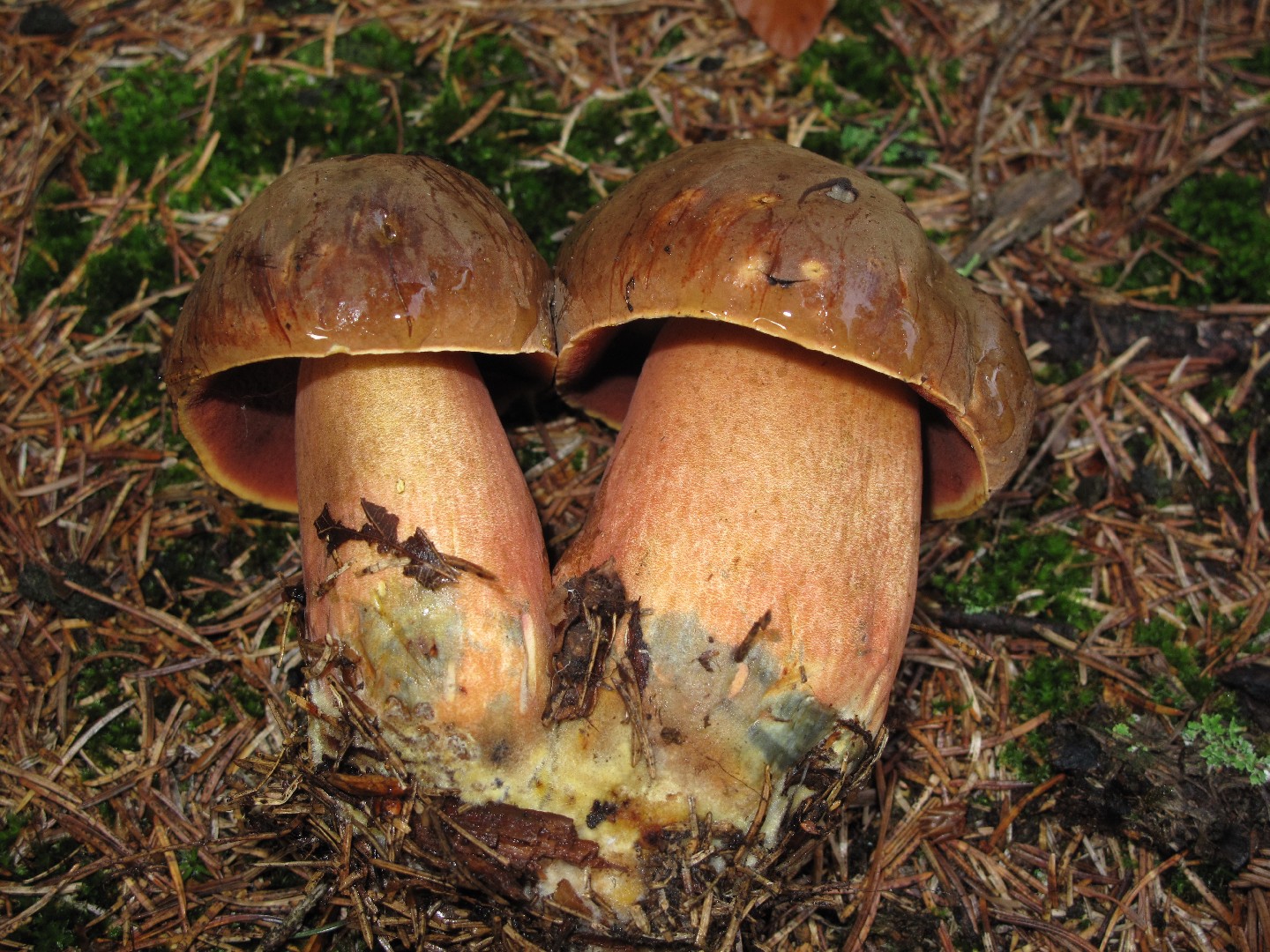
The term 'Unidentified Bolete' refers to any mushroom belonging to the family Boletaceae that cannot be definitively identified to a species level without further examination, often microscopic or molecular. Boletes are characterized by having a spongy pore layer instead of gills under their cap. This family is vast and includes many edible, some toxic, and numerous inedible species. Accurate identification is crucial for safety.
How to Identify
- Cap
- Variable in size (2-30 cm or more), shape (convex to flat), color (white, yellow, red, brown, black), and surface texture (smooth, velvety, sticky, scaly, cracked). The margin can be inrolled, decurved, or straight.
- Gills
- Absent. Instead, boletes have a porous hymenophore. The pore surface can be white, yellow, orange, red, or brown, and the pores themselves can be small and round or larger and angular. The tubes are typically adnate to depressed.
- Stem
- Variable in size (3-20 cm tall, 1-8 cm thick), shape (cylindrical, club-shaped, bulbous, tapered), and surface (smooth, reticulate/netted, scabrous/scaly, punctate/dotted). Color can be uniform with the cap or contrasting, often with a basal mycelium of a distinct color.
- Flesh
- Thick, firm, and often white or yellowish, but can be red, pink, or blue. Many species exhibit a color change (bluing, reddening) when cut or bruised, which can be an important identification feature.
- Fruiting body
- Typically robust and fleshy, with a distinct cap and central or eccentric stem. The most defining feature is the hymenophore, which consists of tubes terminating in pores, rather than gills.
- Habitat
- Mycorrhizal, forming symbiotic relationships with trees (conifers or hardwoods). Found growing on the ground in forests, woodlands, and sometimes parks or gardens where host trees are present. Rarely found on wood.
Key Facts
- Cap surfaces: Smooth, velvety, sticky, scaly, cracked, dry, or moist.
- Growth Form: Solitary to scattered or gregarious.
- Spore Print: Olive-brown, yellowish-brown, reddish-brown, pinkish-brown, or purplish-brown.
- Body color: Highly variable across species, encompassing almost the entire spectrum of mushroom colors.
- Odor: Variable, from mild to strong, sometimes distinctive (e.g., fruity, earthy, unpleasant).
- Flesh bruises: Often stains blue, red, or brown when cut or bruised; some do not stain.
- Height: 3-20 cm
- Cap Diameter: 2-30 cm
- Nutrient gathering: Mycorrhizal (symbiotic with tree roots).
Toxic
DeadlyThe family Boletaceae contains both highly prized edible mushrooms and dangerously toxic species. Without a definitive species identification, any 'Unidentified Bolete' should be considered potentially toxic and *never consumed*. Some toxic boletes can cause severe gastrointestinal distress (nausea, vomiting, diarrhea), while a few, like *Rubroboletus satanas*, are known to be more seriously poisonous. Even some edible species can cause adverse reactions in sensitive individuals or if consumed raw or undercooked.
Quick Check
- Odor: Variable; can be mild, pleasant, earthy, or distinctly unpleasant (e.g., phenolic, chemical).
- Fruiting: Summer to Fall, depending on species and geographic location.
- Substrate: Terrestrial, mycorrhizal with various tree species.
Where to Find
Deciduous Forests
Commonly found under oak, beech, birch, and other broadleaf trees, especially in temperate regions.
Coniferous Forests
Many species associate with pine, spruce, fir, and hemlock trees, particularly in cooler climates.
Mixed Woodlands
Areas with both deciduous and coniferous trees often host a diverse range of bolete species.
Finding Tips
Observe Host Trees
Note the types of trees nearby, as boletes are mycorrhizal and specific species associate with particular tree genera.
Check for Bluing
Gently bruise the pores or cut the flesh to observe any color changes, which can be a key diagnostic feature for many boletes.
Examine Stem Features
Look for reticulation (net-like pattern), scabers (small projections), or other distinctive markings on the stem surface.
Note Pore Color and Size
The color of the pore surface and the size/shape of individual pores are important for identification.
Spore Print
A spore print can be crucial. Most boletes have olive-brown, yellowish-brown, or reddish-brown spore prints, but some can be pinkish or purplish-brown.
Similar Species
Bitter Bolete
Tylopilus felleus
Also known as: Bitter Tylopilus
Satan's Bolete
Rubroboletus satanas
Also known as: Devil's Bolete
Bay Bolete
Imleria badia
Also known as: Bay-capped Bolete
Scientific Classification
- Phylum
- Basidiomycota
- Class
- Agaricomycetes
- Order
- Boletales
- Family
- Boletaceae
- Genus
- Various (e.g., Boletus, Leccinum, Tylopilus, Suillus, Xerocomellus, Rubroboletus)
Explore Unidentified Bolete
Identify mushrooms anywhere
Free on iOS, Android, and Web. Photo identification, full database, and your personal collection.