
Got a photo? Identify mushrooms instantly with the Mushby app
Open the appDescription
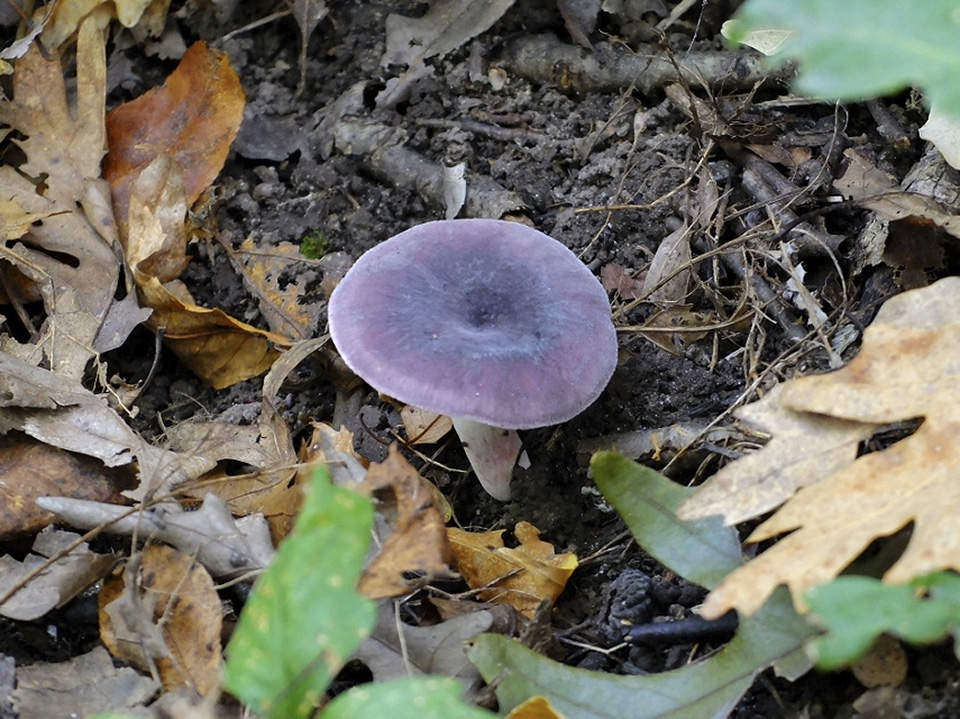
Russula lilacea, commonly known as the Lilac Brittlegill, is a small to medium-sized agaric fungus characterized by its distinctive lilac to purplish-red cap, white gills, and white stem. It is a mycorrhizal species, forming symbiotic relationships with various deciduous trees, particularly oaks and beeches. This species is generally considered edible, but due to its small size and the presence of numerous similar-looking Russula species, some of which can be acrid or mildly toxic, it is not typically sought after for culinary purposes. Its brittle nature, typical of the Russula genus, makes it easily identifiable in the field.
How to Identify
- Cap
- The cap is typically 3-8 cm in diameter, initially convex, becoming plano-convex to depressed with age. The color ranges from lilac to purplish-red, often fading to pinkish or yellowish-ochre in the center. The cuticle is usually dry, smooth, and can be peeled about one-third to halfway to the center. The margin is often striate with age.
- Gills
- The gills are adnexed to almost free, crowded, and brittle. They are white to cream-colored, sometimes with a slight yellowish tint in older specimens. Forking gills are occasionally present near the stem.
- Stem
- The stem is 3-7 cm long and 1-2 cm thick, cylindrical or slightly tapering towards the base. It is white, solid when young, becoming somewhat hollow or chambered with age. The surface is smooth and dry, often with a faint pinkish blush, especially towards the base.
- Flesh
- The flesh is white, firm when young, becoming more brittle with age. It does not change color when cut or bruised. The taste is mild, sometimes slightly acrid in the gills, and the odor is indistinct or faintly fruity.
- Fruiting body
- The fruiting body is a typical agaric mushroom with a cap, gills, and a central stem.
- Habitat
- Russula lilacea is a mycorrhizal fungus, typically found growing solitarily or scattered in deciduous woodlands, particularly under oak (Quercus spp.) and beech (Fagus sylvatica). It prefers well-drained, often calcareous soils.
Key Facts
- Cap surfaces: Dry, smooth, peelable
- Growth Form: Solitary or scattered
- Spore Print: White to cream
- Body color: Lilac to purplish-red cap, white stem and gills
- Odor: Indistinct or faintly fruity
- Flesh bruises: No color change
- Height: 3-7 cm
- Cap Diameter: 3-8 cm
- Nutrient gathering: Mycorrhizal
Safe
SafeRussula lilacea is generally considered edible, but it is not highly regarded for its culinary value due to its small size and brittle texture. Some individuals may experience mild gastrointestinal upset if consumed raw or in large quantities. It is crucial to perform a taste test (chew a small piece and spit it out) to ensure it is not acrid, as some Russula species are toxic and can cause severe gastrointestinal distress. Always cook thoroughly before consumption. Due to the difficulty in distinguishing edible Russulas from mildly toxic ones, and the existence of truly poisonous look-alikes in other genera, it is strongly advised that only experienced foragers consume this mushroom.
Quick Check
- Odor: Indistinct or faintly fruity
- Fruiting: Late summer to autumn
- Substrate: Soil, under deciduous trees (oaks, beeches)
Where to Find
Europe
Widespread across temperate Europe, particularly in deciduous forests.
North America
Reported in parts of North America, though its distribution may be less common or confused with similar species.
Asia
Occasional reports from temperate regions of Asia, but less documented than in Europe.
Finding Tips
Habitat Preference
Look for this species in deciduous forests, especially under oak and beech trees. It prefers well-drained soils.
Seasonal Availability
Fruiting bodies typically appear from late summer to autumn (August to October).
Cap Color Variation
Be aware that the cap color can vary significantly, from vibrant lilac to faded pinkish-ochre, especially in older specimens or different environmental conditions.
Brittle Nature
Russulas are known for their brittle flesh and gills. This can be a key identifying feature when handling the mushroom.
Similar Species
Geranium Scented Russula
Russula
Also known as: Russula fellea
Beechwood Sickener
Russula
Also known as: Russula nobilis
Charcoal Burner
Russula
Also known as: Russula cyanoxantha
Scientific Classification
- Phylum
- Basidiomycota
- Class
- Agaricomycetes
- Order
- Russulales
- Family
- Russulaceae
- Genus
- Russula
Storage Information
- Max Temperature: 4°C
- Freezing duration: 6 months
- Min Temperature: 0°C
- Refrigeration: 3 days
How to Clean
Due to its brittle nature, Russula lilacea should be handled gently. Brush off any debris with a soft brush or cloth. Avoid washing under running water, as the gills can absorb water and become soggy. If necessary, a slightly damp cloth can be used to wipe the cap.
Explore Lilac Brittlegill
Identify mushrooms anywhere
Free on iOS, Android, and Web. Photo identification, full database, and your personal collection.