
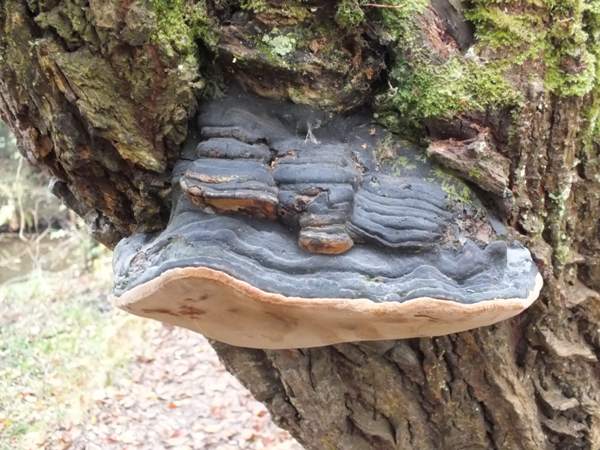
Where does False Tinder Conk grow?
Phellinus igniarius
Got a photo? Identify mushrooms instantly with the Mushby app
Open the appFalse Tinder Conk grows in specific habitats. Knowing where to look and when is the difference between an empty basket and a successful forage.
Where to find False Tinder Conk
North America
Widespread across temperate and boreal forests, particularly common in the northern United States and Canada.
Europe
Common throughout Europe, especially in deciduous woodlands.
Asia
Found in temperate regions of Asia, including Russia, China, and Japan.
Foraging tips
- Host Tree Identification. Focus your search on deciduous trees, especially birch, aspen, willow, and oak. It rarely grows on conifers.
- Look for Older Trees. Phellinus igniarius often infects older or stressed trees, so examine mature woodlands.
- Check Trunks and Large Branches. The conks typically grow directly on the main trunk or large branches, often at varying heights.
- Year-Round Presence. As a perennial fungus, its fruiting bodies can be found year-round, though they may be more noticeable in winter when deciduous trees have lost their leaves.
Quick Check
- Substrate:
- Living or dead deciduous trees, causing white heart rot.
- Fruiting:
- Perennial, hoof-shaped, woody bracket.
- Odor:
- Mildly fungoid or earthy, not distinctive.
Explore False Tinder Conk
Identify mushrooms anywhere
Free on iOS, Android, and Web. Photo identification, full database, and your personal collection.