
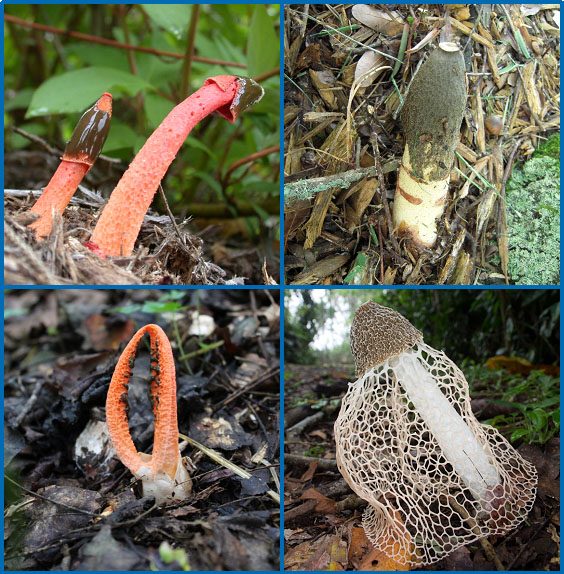
Where does Stinkhorn grow?
Phallus rubicundus
Got a photo? Identify mushrooms instantly with the Mushby app
Open the appStinkhorn grows in specific habitats. Knowing where to look and when is the difference between an empty basket and a successful forage.
Where to find Stinkhorn
Tropical and Subtropical Regions
Widely distributed in tropical and subtropical areas worldwide, including parts of North America (especially the southeastern US), Central and South America, Asia, Africa, and Australia.
Disturbed Habitats
Commonly found in human-modified environments such as gardens, mulched beds, lawns, parks, and agricultural fields.
Woodlands
Can also be found in natural woodland settings, particularly in areas with rich organic matter and decaying wood.
Foraging tips
- Look for 'Eggs'. Keep an eye out for the whitish, partially buried 'egg' stage, especially after rain. These are often easier to spot before the mature stinkhorn emerges.
- Follow Your Nose. The strong, putrid odor of the mature stinkhorn is a primary indicator of its presence. If you smell something foul and unidentifiable, investigate the area.
- Check Mulched Areas. Gardens and landscaped areas with wood chip mulch are prime locations for Phallus rubicundus, as it thrives on decaying organic material.
- Seasonal Availability. Typically fruits during warm, humid periods, often after heavy rains. In tropical regions, it can appear year-round; in temperate zones, it's more common in late summer and fall.
Quick Check
- Substrate:
- Decaying wood, wood chips, leaf litter, garden mulch, disturbed soil.
- Fruiting:
- Solitary or scattered, emerging from a subterranean 'egg'.
- Odor:
- Strongly putrid, fetid, carrion-like, especially from the gleba.
Explore Stinkhorn
Identify mushrooms anywhere
Free on iOS, Android, and Web. Photo identification, full database, and your personal collection.