
How to identify Golden Trumpet
Phaeocollybia fallax
Got a photo? Identify mushrooms instantly with the Mushby app
Open the appTo correctly identify Golden Trumpet (Phaeocollybia fallax), check each of these features in order. Misidentification is the most common cause of mushroom poisoning, so cross-reference multiple sources.
Step-by-step identification
- 1
Cap
Shape, color, surface texture, and diameter.
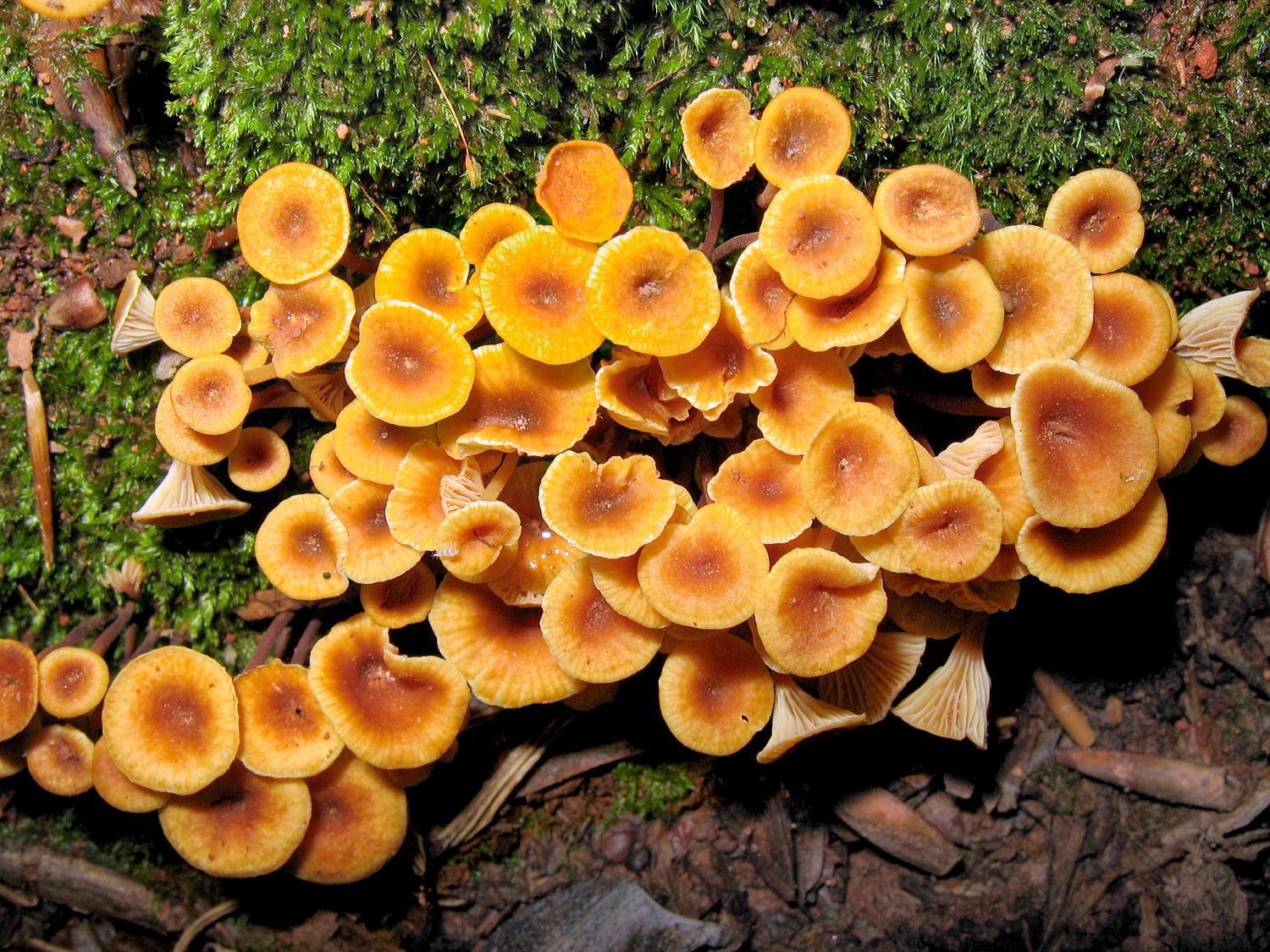
The cap measures 2-6 cm in diameter, initially acutely conical or bell-shaped, expanding to broadly conical or campanulate, often retaining a prominent acute umbo. The margin is typically incurved when young, becoming straight or slightly uplifted with age, sometimes wavy. The surface is smooth, viscid to glutinous when moist, drying shiny. Coloration varies from yellowish-brown to reddish-brown, often with golden or orange-brown tones, especially towards the center, fading to a paler yellowish-tan towards the margin. The cap flesh is thin, somewhat gelatinous, and concolorous with the surface.
- 2
Gills
Attachment to stem, color, and spacing.
The gills are adnexed to sinuate, close to crowded, narrow, and often somewhat ventricose. They are initially pale yellowish-brown, becoming rusty brown to cinnamon-brown with age due to the maturing spores. Lamellulae are frequent.
- 3
Stem
Length, shape, surface, and any ring.
The stem is 5-15 cm long and 0.3-0.8 cm thick, very slender, cylindrical, often twisted or contorted, and deeply rooting into the substrate. The surface is smooth to finely fibrillose, often longitudinally striate, and viscid to glutinous when moist, especially towards the base. Coloration is typically concolorous with the cap or slightly paler, often with a darker reddish-brown base. There is no ring or partial veil. The stem flesh is fibrous and tough.
- 4
Flesh
Color, texture, and bruising reaction.
The flesh is thin, somewhat gelatinous, especially in the cap, and typically yellowish to brownish, concolorous with the surface. It has a distinctive radish-like or earthy odor and a mild to slightly bitter taste.
- 5
Fruiting body
Overall growth pattern.
The fruiting body is typically slender and elegant, with a distinctively conical to bell-shaped cap and a long, often twisted, deeply rooting stem.
- 6
Habitat
Where it grows and on what substrate.
Phaeocollybia fallax is found growing solitarily or scattered in coniferous or mixed forests, often under conifers such as spruce (Picea) and fir (Abies). It typically fruits on soil, often among mosses or on well-decayed woody debris, with its deeply rooting stem extending into the substrate. It is considered either saprobic or ectomycorrhizal.
Key Facts
- Cap surfaces
- Smooth, viscid to glutinous when moist, drying shiny
- Growth Form
- Solitary or scattered
- Spore Print
- Rusty brown to cinnamon-brown
- Body color
- Yellowish-brown to reddish-brown, often with golden tones
- Odor
- Radish-like or earthy
- Flesh bruises
- Does not bruise significantly
- Height
- 5-15 cm
- Cap Diameter
- 2-6 cm
Fruit body characteristics
- Gill attachment: Adnexed to sinuate
- Stem shape: Cylindrical, often twisted or contorted, deeply rooting
- Stem surface: Smooth to finely fibrillose, often longitudinally striate, viscid to glutinous towards the base
- Ring: Absent
- Stem cross-section: Solid to stuffed, becoming hollow with age
Explore Golden Trumpet
Identify mushrooms anywhere
Free on iOS, Android, and Web. Photo identification, full database, and your personal collection.