
Got a photo? Identify mushrooms instantly with the Mushby app
Open the appDescription
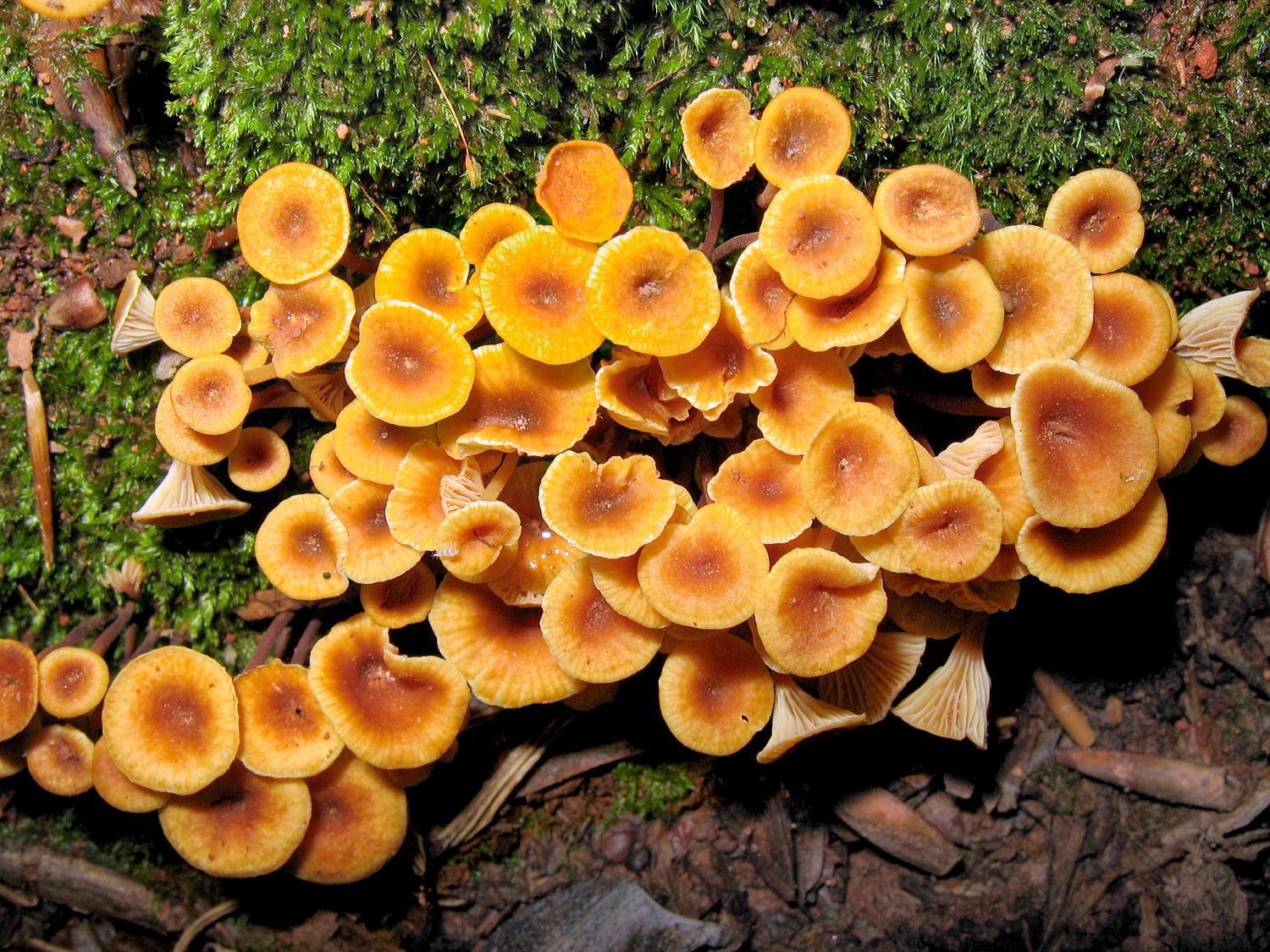
Phaeocollybia fallax, commonly known as the Golden Trumpet, is a distinctive agaric mushroom characterized by its conical to bell-shaped, often acutely umbonate cap, and a long, slender, deeply rooting stem. Its coloration typically ranges from yellowish-brown to reddish-brown, often with a golden hue, especially when young or fresh. This species is saprobic or mycorrhizal, typically found in coniferous or mixed forests, often associated with mosses or decaying wood. It is known for its somewhat gelatinous flesh and a distinctive radish-like or earthy odor. Due to its rarity and potential for confusion with toxic species, it is not recommended for consumption.
How to Identify
- Cap
- The cap measures 2-6 cm in diameter, initially acutely conical or bell-shaped, expanding to broadly conical or campanulate, often retaining a prominent acute umbo. The margin is typically incurved when young, becoming straight or slightly uplifted with age, sometimes wavy. The surface is smooth, viscid to glutinous when moist, drying shiny. Coloration varies from yellowish-brown to reddish-brown, often with golden or orange-brown tones, especially towards the center, fading to a paler yellowish-tan towards the margin. The cap flesh is thin, somewhat gelatinous, and concolorous with the surface.
- Gills
- The gills are adnexed to sinuate, close to crowded, narrow, and often somewhat ventricose. They are initially pale yellowish-brown, becoming rusty brown to cinnamon-brown with age due to the maturing spores. Lamellulae are frequent.
- Stem
- The stem is 5-15 cm long and 0.3-0.8 cm thick, very slender, cylindrical, often twisted or contorted, and deeply rooting into the substrate. The surface is smooth to finely fibrillose, often longitudinally striate, and viscid to glutinous when moist, especially towards the base. Coloration is typically concolorous with the cap or slightly paler, often with a darker reddish-brown base. There is no ring or partial veil. The stem flesh is fibrous and tough.
- Flesh
- The flesh is thin, somewhat gelatinous, especially in the cap, and typically yellowish to brownish, concolorous with the surface. It has a distinctive radish-like or earthy odor and a mild to slightly bitter taste.
- Fruiting body
- The fruiting body is typically slender and elegant, with a distinctively conical to bell-shaped cap and a long, often twisted, deeply rooting stem.
- Habitat
- Phaeocollybia fallax is found growing solitarily or scattered in coniferous or mixed forests, often under conifers such as spruce (Picea) and fir (Abies). It typically fruits on soil, often among mosses or on well-decayed woody debris, with its deeply rooting stem extending into the substrate. It is considered either saprobic or ectomycorrhizal.
Key Facts
- Cap surfaces: Smooth, viscid to glutinous when moist, drying shiny
- Growth Form: Solitary or scattered
- Spore Print: Rusty brown to cinnamon-brown
- Body color: Yellowish-brown to reddish-brown, often with golden tones
- Odor: Radish-like or earthy
- Flesh bruises: Does not bruise significantly
- Height: 5-15 cm
- Cap Diameter: 2-6 cm
- Nutrient gathering: Saprobic or ectomycorrhizal
Toxic
DeadlyPhaeocollybia fallax is generally considered inedible due to its rarity, small size, and potential for confusion with toxic species. While not definitively proven to be deadly toxic, some species within the genus Phaeocollybia are suspected to contain psychoactive compounds or other toxins. More importantly, it can be confused with deadly poisonous species like Galerina marginata, which contains amatoxins. Therefore, it should never be consumed.
Quick Check
- Odor: Radish-like or earthy
- Fruiting: Late summer to late fall
- Substrate: Soil, often among mosses or on decaying wood in coniferous forests
Where to Find
North America
Primarily found in the Pacific Northwest region of North America, extending from British Columbia south to California, and occasionally eastward into the Rocky Mountains.
Europe
Less common but reported in parts of Northern and Central Europe, particularly in coniferous forests.
Finding Tips
Coniferous Forests
Focus your search in mature coniferous forests, especially those dominated by spruce and fir. Look for areas with abundant moss cover and decaying wood.
Deeply Rooting Stems
When you find a potential specimen, carefully excavate around the base to observe the characteristic deeply rooting stem, which is a key identifying feature of Phaeocollybia species.
Moist Conditions
Phaeocollybia fallax prefers moist conditions, so look after periods of rain, typically in late summer and fall.
Similar Species
Phaeocollybia kauffmanii
Phaeocollybia
Also known as: Kauffman's Phaeocollybia
Phaeocollybia christinae
Phaeocollybia
Also known as: Christina's Phaeocollybia
Galerina marginata
Galerina
Also known as: Deadly Galerina
Scientific Classification
- Phylum
- Basidiomycota
- Class
- Agaricomycetes
- Order
- Agaricales
- Family
- Hymenogastraceae
- Genus
- Phaeocollybia
Explore Golden Trumpet
Identify mushrooms anywhere
Free on iOS, Android, and Web. Photo identification, full database, and your personal collection.