
Got a photo? Identify mushrooms instantly with the Mushby app
Open the appDescription
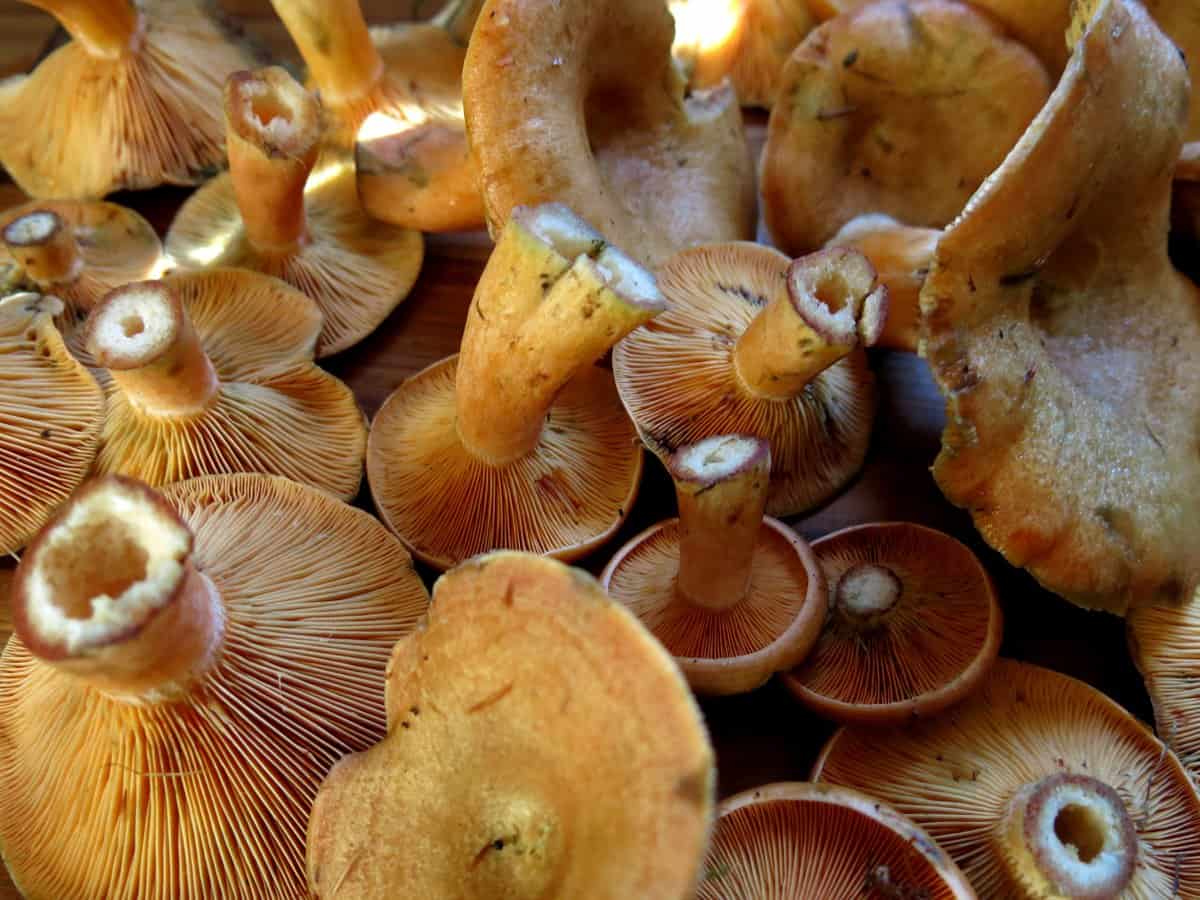
Lactarius deliciosus, commonly known as the Saffron Milk Cap, is a mycorrhizal mushroom in the family Russulaceae. It is characterized by its orange color, the milky latex it exudes when cut, and its association with coniferous trees.
How to Identify
- Cap
- The cap is convex when young, later flattening out and sometimes developing a shallow depression. The surface is smooth and slightly sticky when moist, and it often has concentric zones of lighter and darker orange shades.
- Gills
- The gills are crowded, decurrent (running down the stem), and orange in color. They may stain greenish where damaged.
- Stem
- The stem is short, stout, and cylindrical, typically measuring 3 to 8 cm in length and 1 to 2 cm in diameter. It is usually the same color as the cap or slightly paler and may have small pits or spots.
- Flesh
- The flesh is firm and orange. When cut or bruised, it exudes an orange to reddish-orange latex (milk).
- Fruiting body
- The fruiting body is typically medium-sized, with a cap that ranges from 4 to 14 cm in diameter. The entire mushroom, including the cap, stem, and gills, is usually some shade of orange.
- Habitat
- Lactarius deliciosus is found in coniferous forests, particularly under pine trees. It forms mycorrhizal associations with the roots of these trees. It typically fruits in late summer and autumn.
Key Facts
- Cap surfaces: Smooth, slightly sticky when moist
- Growth Form: Mycorrhizal
- Spore Print: Cream to pale yellow
- Body color: Orange
- Odor: Faintly fruity or mushroomy
- Flesh bruises: Orange latex turns greenish
- Height: 3-8 cm
- Cap Diameter: 4-14 cm
- Nutrient gathering: Mycorrhizal
Safe
SafeLactarius deliciosus is generally considered edible and is highly sought after in many parts of the world. However, it is important to properly identify it to avoid confusion with toxic look-alikes.
Quick Check
- Odor: Faintly fruity or mushroomy
- Fruiting: Late summer to autumn
- Substrate: Under coniferous trees, especially pines
Where to Find
Pine Forests
Look for it under pine trees, as it forms a symbiotic relationship with their roots.
Europe
Commonly found in Europe.
Finding Tips
Check Under Conifers
Focus your search in areas with coniferous trees, especially pines.
Late Summer to Autumn
The mushroom is more likely to be found during these seasons.
Similar Species
False Saffron Milkcap
mushroom
Also known as: Lactarius deterrimus
Scientific Classification
- Phylum
- Basidiomycota
- Class
- Agaricomycetes
- Order
- Russulales
- Family
- Russulaceae
- Genus
- Lactarius
Storage Information
- Max Temperature: 20
- Freezing duration: 3 months
- Min Temperature: 2
- Refrigeration: 3-4 days
How to Clean
Gently brush off any dirt or debris. A soft, damp cloth can be used to wipe the cap. Avoid soaking them in water, as they can become waterlogged.
Explore Saffron Milk Cap
Identify mushrooms anywhere
Free on iOS, Android, and Web. Photo identification, full database, and your personal collection.