
Got a photo? Identify mushrooms instantly with the Mushby app
Open the appDescription
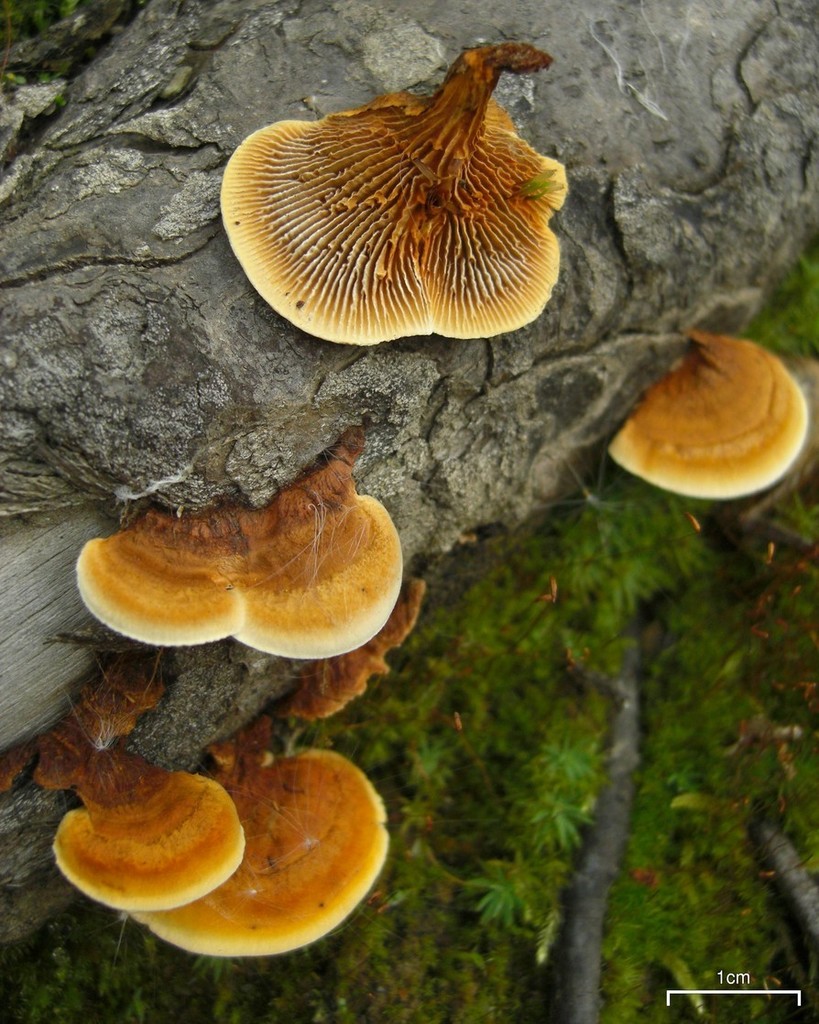
Gloeophyllum sepiarium, commonly known as the Conifer Mazegill, is a common and widespread species of brown-rot fungus that primarily decomposes the deadwood of conifers. It is easily recognizable by its tough, bracket-like fruiting bodies with a distinctive labyrinthine pore surface (gills that are often highly anastomosing, appearing maze-like) and rich rusty brown to yellowish-orange color. It is a significant decomposer in forest ecosystems, contributing to nutrient cycling by breaking down lignin and cellulose in wood.
How to Identify
- Cap
- The upper surface is concentrically zoned, velvety or hairy when young, becoming smoother with age. Color is variable, ranging from yellowish-brown to rusty brown, dark brown, or nearly black, often with a brighter yellowish-orange margin, especially when young and actively growing. The margin can be wavy or lobed.
- Gills
- Unlike true gills, these are highly labyrinthine (maze-like) or sometimes more poroid, especially towards the margin. They are typically rusty brown to dark brown, often with a brighter, sterile, yellowish-orange margin. The spore-bearing surface is decurrent on resupinate portions.
- Stem
- Sessile (stemless), attached directly to the wood, or sometimes effuso-reflexed (partially resupinate with an upturned cap-like margin).
- Flesh
- Tough, leathery, and corky, rusty brown to dark brown in color. Does not change color when cut or bruised.
- Fruiting body
- Typically fan-shaped, bracket-like, or elongated, growing in overlapping tiers or singly. Tough and leathery to woody when mature. Dimensions range from 3-15 cm wide and 1-4 cm thick, projecting up to 8 cm from the substrate.
- Habitat
- Saprobic on dead wood of coniferous trees, rarely on hardwoods. Commonly found on logs, stumps, fallen branches, and structural timbers, causing a brown rot. It can be found on both standing and fallen wood.
Key Facts
- Cap surfaces: Velvety to hairy when young, becoming smoother; concentrically zoned.
- Growth Form: Sessile, bracket-like, effuso-reflexed, sometimes overlapping.
- Spore Print: White to pale yellow.
- Body color: Caps: yellowish-brown to rusty brown, dark brown, often with a brighter yellowish-orange margin. Pore surface: rusty brown to dark brown.
- Odor: Indistinct or faintly woody.
- Flesh bruises: Does not bruise.
- Height: Not applicable (sessile).
- Cap Diameter: 3-15 cm wide, 1-4 cm thick.
- Nutrient gathering: Saprotrophic, causing brown rot of wood.
Safe
SafeGloeophyllum sepiarium is considered inedible due to its tough, woody texture and unpalatable taste. It is not known to be toxic, but it certainly isn't a culinary mushroom.
Quick Check
- Odor: Indistinct or faintly mushroomy/woody.
- Fruiting: Year-round, with new growth most noticeable from late spring to autumn.
- Substrate: Dead conifer wood (primarily), occasionally treated hardwoods.
Where to Find
North America
Widespread throughout coniferous forests.
Europe
Common in conifer-rich regions.
Asia
Reported in various parts of coniferous forest regions.
Global Distribution
Cosmopolitan, particularly in regions with suitable conifer hosts.
Finding Tips
Substrate Preference
Look for it on dead conifer wood, including pine, spruce, fir, and hemlock. It will occasionally appear on treated lumber, such as fence posts or railroad ties.
Growth Habit
Often grows in overlapping clusters or rows on the sides of logs or stumps. Check the undersides of fallen trees.
Seasonality
Though present year-round, new growth is most apparent from late spring through autumn, especially after periods of rain.
Distinctive Features
Recognize it by its rusty brown color, velvety cap, and particularly its maze-like 'gills' (which are technically modified pores).
Similar Species
Common Mazegill
Fungus
Also known as: Oak Mazegill, Gloeophyllum trabeum
Fencepost Fungus
Fungus
Also known as: Gloeophyllum saepiarium var. ungulatum, Lenzites sepiaria
Scientific Classification
- Phylum
- Basidiomycota
- Class
- Agaricomycetes
- Order
- Gloeophyllales
- Family
- Gloeophyllaceae
- Genus
- Gloeophyllum
Storage Information
- Max Temperature: Not applicable (inedible)
- Freezing duration: Not applicable
- Min Temperature: Not applicable (inedible)
- Refrigeration: Not applicable
How to Clean
Not applicable as this mushroom is not edible. Even for scientific collection, brushing off loose debris with a soft brush is usually sufficient. Avoid washing if preserving for a collection.
Explore Conifer Mazegill
Identify mushrooms anywhere
Free on iOS, Android, and Web. Photo identification, full database, and your personal collection.