
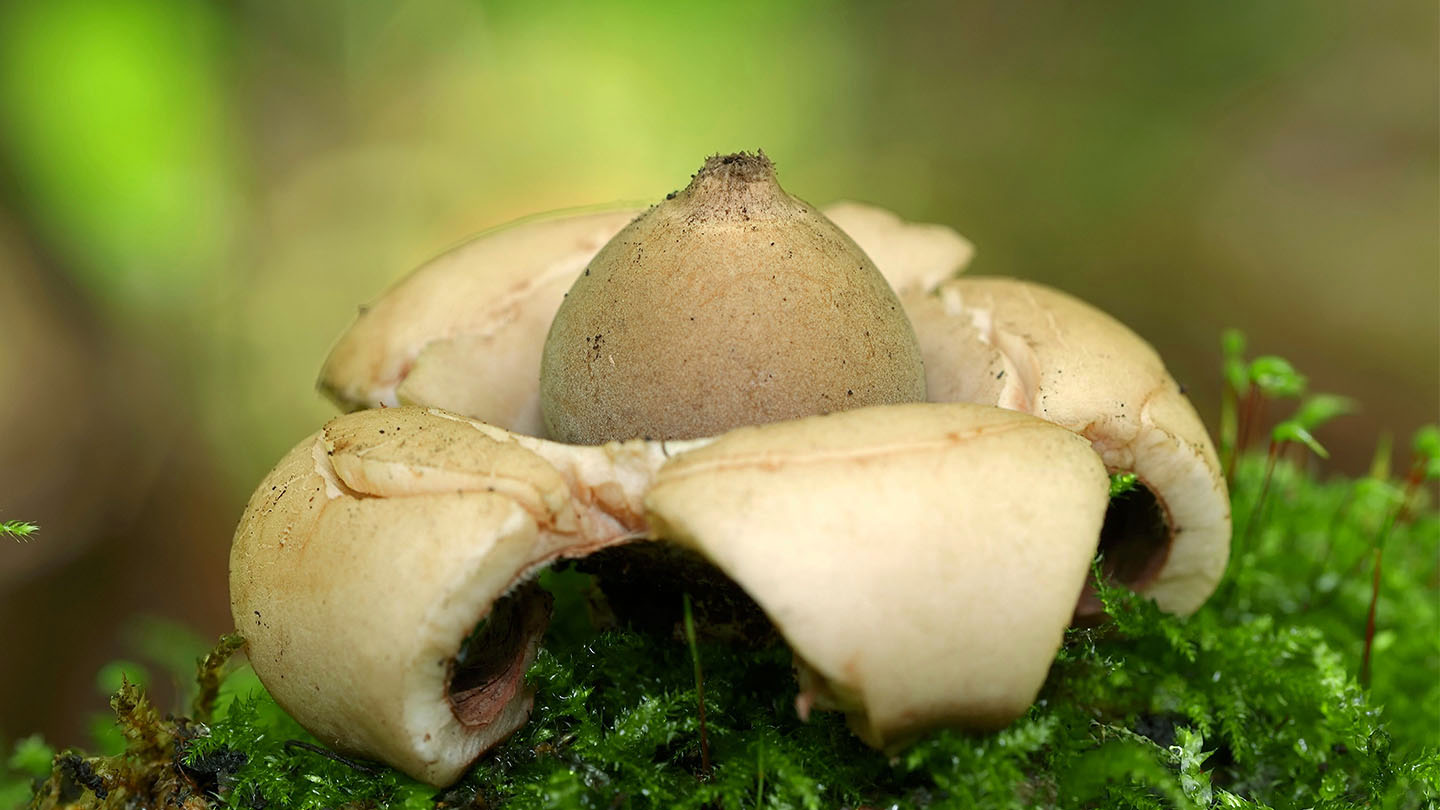
How to identify Collared Earthstar
Geastrum triplex
Got a photo? Identify mushrooms instantly with the Mushby app
Open the appTo correctly identify Collared Earthstar (Geastrum triplex), check each of these features in order. Misidentification is the most common cause of mushroom poisoning, so cross-reference multiple sources.
Step-by-step identification
- 1
Cap
Shape, color, surface texture, and diameter.
Not applicable, as this is a gasteroid fungus and does not produce a cap in the traditional sense.
- 2
Gills
Attachment to stem, color, and spacing.
Not applicable, as this is a gasteroid fungus and does not produce gills.
- 3
Stem
Length, shape, surface, and any ring.
Not applicable, as the spore sac is sessile or nearly sessile, lacking a true stem.
- 4
Flesh
Color, texture, and bruising reaction.
The rays are thick and fleshy when young, becoming leathery and brittle with age. The gleba (spore-bearing tissue inside the spore sac) is white and firm when immature, turning powdery and dark brown as spores mature.
- 5
Fruiting body
Overall growth pattern.
Initially subglobose to ovoid, 2-8 cm in diameter, partially or fully submerged. As it matures, the outer peridium (exoperidium) splits into 4-8 (typically 5-7) pointed, fleshy rays that peel back to expose the inner spore sac. The most distinguishing feature is the 'collar' formed by the unseparated inner layer of the exoperidium at the base of the spore sac, which is often cracked or torn. The rays are thick, fleshy, and initially pale, becoming tan to brownish with age, often cracking on the surface. The inner spore sac (endoperidium) is subglobose, 1-3 cm in diameter, sessile (lacking a stalk) or nearly so, and pale brown to grayish-brown, with a distinct, often fringed or torn, apical pore (peristome) through which spores are released. The entire expanded fruiting body can reach 5-12 cm across.
- 6
Habitat
Where it grows and on what substrate.
Typically found growing solitarily or in small groups on the ground in deciduous or mixed woodlands, often among leaf litter, wood debris, or moss. It prefers rich, well-drained soils. Occasionally found in gardens or disturbed areas.
Key Facts
- Cap surfaces
- Not applicable (gasteroid).
- Growth Form
- Solitary to gregarious.
- Spore Print
- Dark brown (spores are released as a powdery mass).
- Body color
- Immature: whitish to pale tan. Mature: rays tan to brownish, spore sac pale brown to grayish-brown.
- Odor
- Indistinct or slightly earthy.
- Flesh bruises
- Does not bruise significantly; rays may crack with age.
- Height
- Expanded fruiting body 5-12 cm across.
- Cap Diameter
- Not applicable (gasteroid).
Fruit body characteristics
- Gill attachment: Not applicable (gasteroid).
- Stem shape: Not applicable (spore sac sessile).
- Stem surface: Not applicable (spore sac sessile).
- Ring: Not applicable.
- Stem cross-section: Not applicable (spore sac sessile).
Explore Collared Earthstar
Identify mushrooms anywhere
Free on iOS, Android, and Web. Photo identification, full database, and your personal collection.