
Got a photo? Identify mushrooms instantly with the Mushby app
Open the appDescription
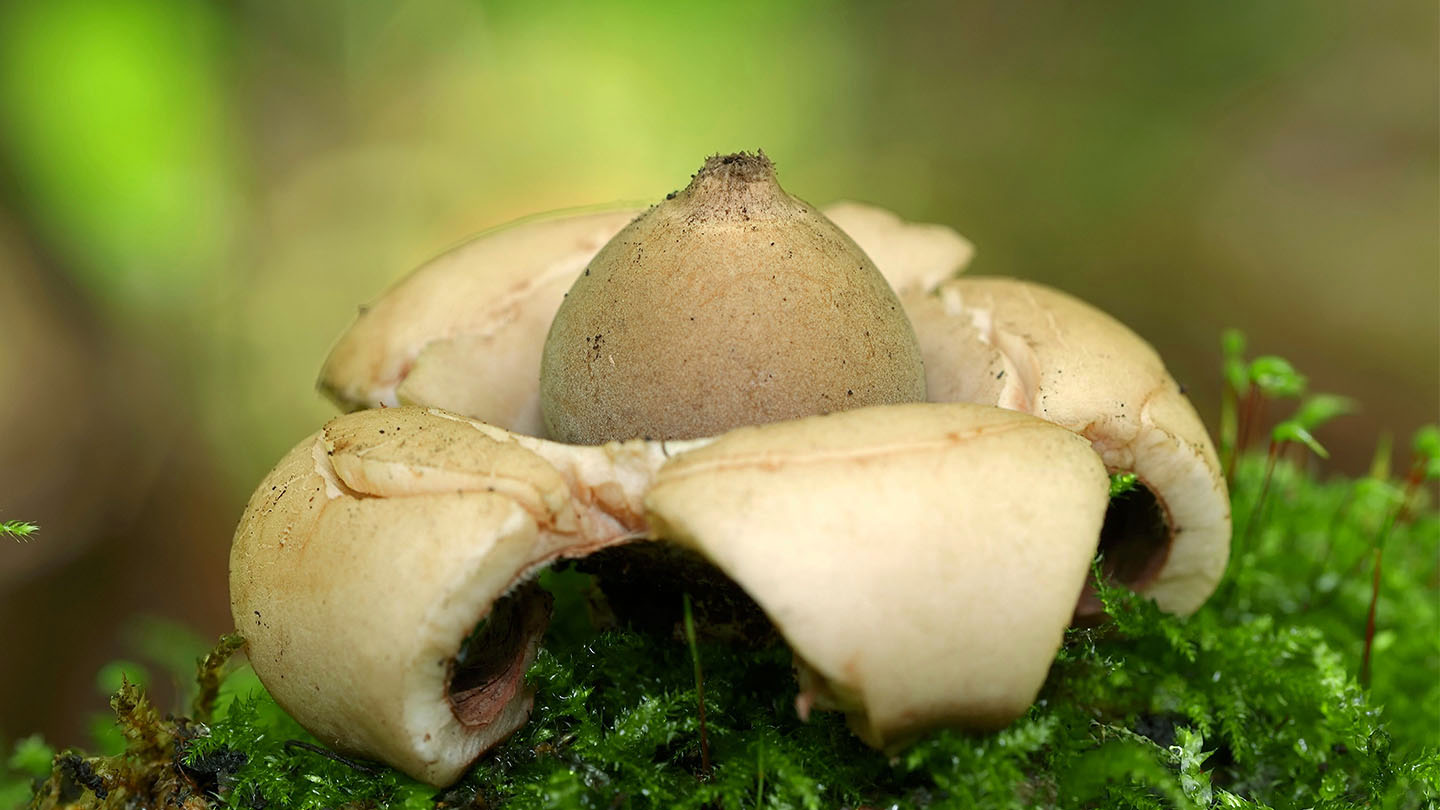
Geastrum triplex, commonly known as the Collared Earthstar, is a fascinating and relatively large member of the earthstar family. It is characterized by its distinctive three-layered peridium (outer wall) that splits into star-like rays, with the innermost layer often forming a collar around the spore sac. This mushroom undergoes significant morphological changes as it matures, starting as a subterranean or partially emergent ball and then expanding to reveal its star-like form. It is a saprobic fungus, playing a role in the decomposition of organic matter in its habitat.
How to Identify
- Cap
- Not applicable, as this is a gasteroid fungus and does not produce a cap in the traditional sense.
- Gills
- Not applicable, as this is a gasteroid fungus and does not produce gills.
- Stem
- Not applicable, as the spore sac is sessile or nearly sessile, lacking a true stem.
- Flesh
- The rays are thick and fleshy when young, becoming leathery and brittle with age. The gleba (spore-bearing tissue inside the spore sac) is white and firm when immature, turning powdery and dark brown as spores mature.
- Fruiting body
- Initially subglobose to ovoid, 2-8 cm in diameter, partially or fully submerged. As it matures, the outer peridium (exoperidium) splits into 4-8 (typically 5-7) pointed, fleshy rays that peel back to expose the inner spore sac. The most distinguishing feature is the 'collar' formed by the unseparated inner layer of the exoperidium at the base of the spore sac, which is often cracked or torn. The rays are thick, fleshy, and initially pale, becoming tan to brownish with age, often cracking on the surface. The inner spore sac (endoperidium) is subglobose, 1-3 cm in diameter, sessile (lacking a stalk) or nearly so, and pale brown to grayish-brown, with a distinct, often fringed or torn, apical pore (peristome) through which spores are released. The entire expanded fruiting body can reach 5-12 cm across.
- Habitat
- Typically found growing solitarily or in small groups on the ground in deciduous or mixed woodlands, often among leaf litter, wood debris, or moss. It prefers rich, well-drained soils. Occasionally found in gardens or disturbed areas.
Key Facts
- Cap surfaces: Not applicable (gasteroid).
- Growth Form: Solitary to gregarious.
- Spore Print: Dark brown (spores are released as a powdery mass).
- Body color: Immature: whitish to pale tan. Mature: rays tan to brownish, spore sac pale brown to grayish-brown.
- Odor: Indistinct or slightly earthy.
- Flesh bruises: Does not bruise significantly; rays may crack with age.
- Height: Expanded fruiting body 5-12 cm across.
- Cap Diameter: Not applicable (gasteroid).
- Nutrient gathering: Saprobic (decomposer).
Safe
SafeGeastrum triplex is generally considered inedible due to its tough, leathery texture and lack of culinary value. While not reported as toxic, it is not consumed. As with all wild mushrooms, proper identification is crucial, and consumption of any unidentified or questionable mushroom should be avoided.
Quick Check
- Odor: Indistinct or slightly earthy.
- Fruiting: Late summer to late autumn, sometimes year-round in mild climates.
- Substrate: Terrestrial, on soil, leaf litter, or decaying wood in deciduous and mixed forests.
Where to Find
Deciduous and Mixed Woodlands
Commonly found in forests with broadleaf trees, often under oaks, maples, and other hardwoods, as well as in mixed forests containing conifers.
Leaf Litter and Wood Debris
Prefers to grow on decaying organic matter, such as fallen leaves, twigs, and well-rotted wood.
Gardens and Disturbed Areas
Occasionally appears in cultivated areas or places where soil has been disturbed, indicating its adaptability to various organic substrates.
Finding Tips
Look for the 'Collar'
The most distinctive feature is the collar-like structure at the base of the spore sac, formed by the unseparated inner layer of the exoperidium. This helps differentiate it from many other earthstar species.
Check for Fleshy Rays
The rays are relatively thick and fleshy compared to some other earthstars, which can have thinner, papery rays.
Observe Spore Sac Pore
The apical pore on the spore sac is often distinctly fringed or torn, rather than a smooth, defined opening.
Seasonal Timing
While it can be found throughout the year in some regions, it is most commonly observed from late summer through autumn.
Similar Species
Sessile Earthstar
Earthstar
Also known as: Geastrum fimbriatum
Striate Earthstar
Earthstar
Also known as: Geastrum striatum
Rosy Earthstar
Earthstar
Also known as: Geastrum rufescens
Scientific Classification
- Phylum
- Basidiomycota
- Class
- Agaricomycetes
- Order
- Geastrales
- Family
- Geastraceae
- Genus
- Geastrum
Storage Information
- Max Temperature: Not applicable
- Freezing duration: Not applicable
- Min Temperature: Not applicable
- Refrigeration: Not applicable
How to Clean
Not applicable, as this mushroom is not considered edible.
Explore Collared Earthstar
Identify mushrooms anywhere
Free on iOS, Android, and Web. Photo identification, full database, and your personal collection.