
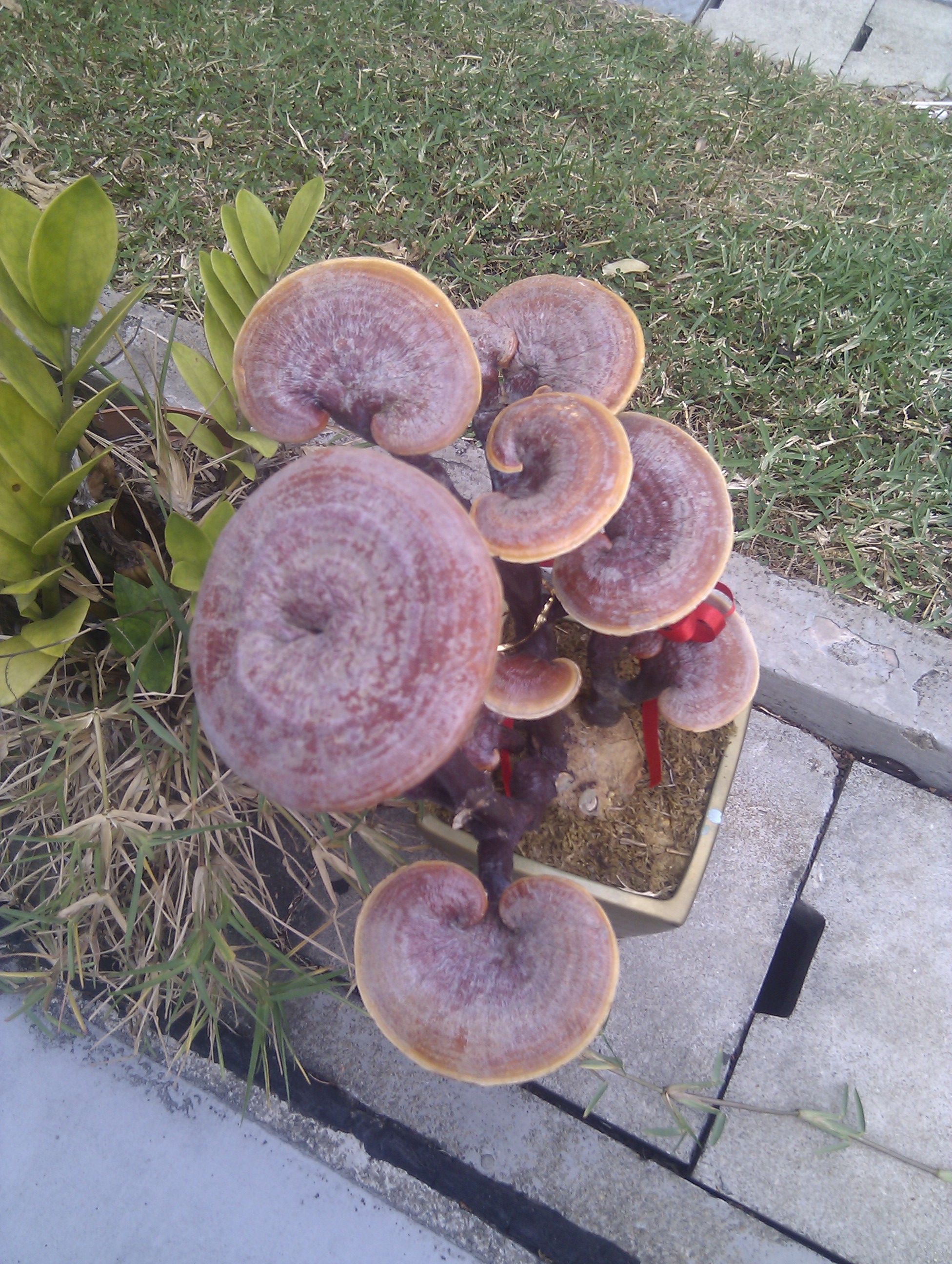
How to identify Lingzhi
Ganoderma lingzhi
Got a photo? Identify mushrooms instantly with the Mushby app
Open the appTo correctly identify Lingzhi (Ganoderma lingzhi), check each of these features in order. Misidentification is the most common cause of mushroom poisoning, so cross-reference multiple sources.
Step-by-step identification
- 1
Cap
Shape, color, surface texture, and diameter.
The cap is kidney-shaped or fan-shaped, with a shiny, varnished appearance. The color ranges from reddish-brown to dark brown, often with concentric zones of different colors.
- 2
Gills
Attachment to stem, color, and spacing.
N/A (Polypore - has pores instead of gills)
- 3
Stem
Length, shape, surface, and any ring.
The stem is often lateral and may be absent in some specimens. It is typically varnished and has a similar color to the cap.
- 4
Flesh
Color, texture, and bruising reaction.
The flesh is tough and corky, with a bitter taste.
- 5
Fruiting body
Overall growth pattern.
The fruiting body is typically shelf-like and can grow up to 20 cm or more in diameter. It has a distinctive varnished appearance.
- 6
Habitat
Where it grows and on what substrate.
Grows on decaying hardwood logs and stumps.
Key Facts
- Cap surfaces
- Shiny, varnished
- Growth Form
- Shelf-like
- Spore Print
- Brown
- Body color
- Reddish-brown to dark brown
- Odor
- Mild, slightly earthy
- Flesh bruises
- Does not typically bruise
- Height
- Variable, depending on stem length
- Cap Diameter
- Up to 20 cm or more
Fruit body characteristics
- Gill attachment: N/A (Polypore)
- Stem shape: Variable, often lateral
- Stem surface: Varnished or lacquered
- Ring: Absent
- Stem cross-section: Solid
Explore Lingzhi
Identify mushrooms anywhere
Free on iOS, Android, and Web. Photo identification, full database, and your personal collection.