
Got a photo? Identify mushrooms instantly with the Mushby app
Open the appDescription
Lingzhi, scientifically known as Ganoderma lingzhi, is a polypore mushroom highly valued in traditional medicine, particularly in East Asia. It is known for its potential health benefits and distinctive appearance.
How to Identify
- Cap
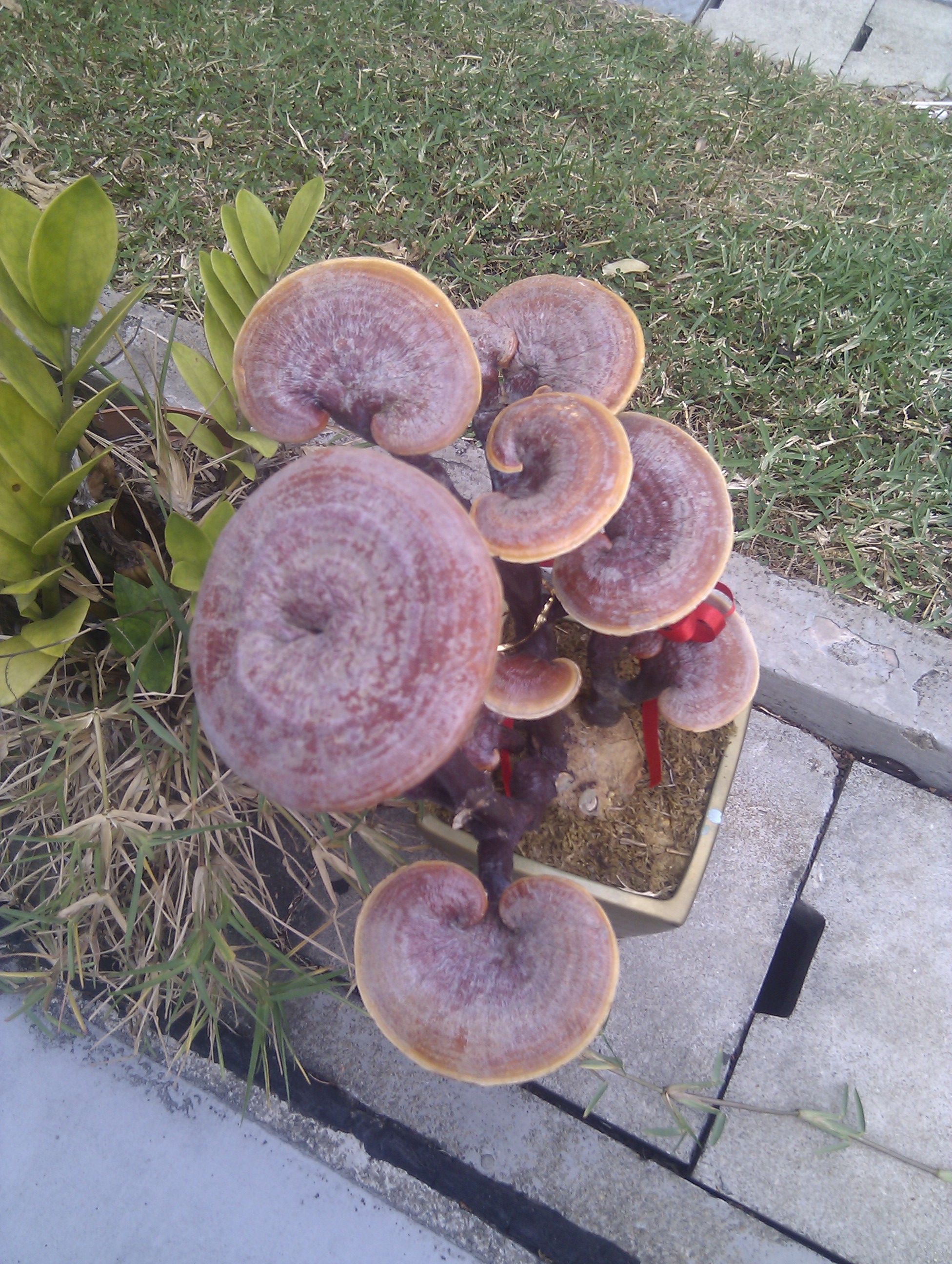
- The cap is kidney-shaped or fan-shaped, with a shiny, varnished appearance. The color ranges from reddish-brown to dark brown, often with concentric zones of different colors.
- Gills
- N/A (Polypore - has pores instead of gills)
- Stem
- The stem is often lateral and may be absent in some specimens. It is typically varnished and has a similar color to the cap.
- Flesh
- The flesh is tough and corky, with a bitter taste.
- Fruiting body
- The fruiting body is typically shelf-like and can grow up to 20 cm or more in diameter. It has a distinctive varnished appearance.
- Habitat
- Grows on decaying hardwood logs and stumps.
Key Facts
- Cap surfaces: Shiny, varnished
- Growth Form: Shelf-like
- Spore Print: Brown
- Body color: Reddish-brown to dark brown
- Odor: Mild, slightly earthy
- Flesh bruises: Does not typically bruise
- Height: Variable, depending on stem length
- Cap Diameter: Up to 20 cm or more
- Nutrient gathering: Saprophytic
Safe
SafeGanoderma lingzhi is generally considered non-toxic. However, some individuals may experience mild digestive upset or allergic reactions. It is important to source Lingzhi from reputable suppliers to avoid misidentification with potentially toxic look-alikes.
Quick Check
- Odor: Mild, slightly earthy.
- Fruiting: Shelf-like fruiting body with a varnished appearance.
- Substrate: Decaying hardwood logs and stumps.
Where to Find
Decaying hardwood logs and stumps
Lingzhi mushrooms are typically found growing on decaying logs or tree stumps, particularly of hardwood trees. They prefer humid environments and are often found in forests.
Finding Tips
Habitat
Look for Lingzhi in forests with hardwood trees, especially those that are decaying. Check the base of trees and decaying logs for the distinctive shelf-like fruiting bodies.
Season
Lingzhi mushrooms are perennial, meaning they can be found year-round, although they are more common during the warmer months.
Similar Species
Ganoderma applanatum
mushroom
Also known as: Artist's Conk
Scientific Classification
- Phylum
- Basidiomycota
- Class
- Agaricomycetes
- Order
- Polyporales
- Family
- Ganodermataceae
- Genus
- Ganoderma
Storage Information
- Max Temperature: 25°C
- Freezing duration: 6 months
- Min Temperature: 2°C
- Refrigeration: 1-2 weeks
How to Clean
Gently wipe the surface of the Lingzhi mushroom with a soft brush or cloth to remove any dirt or debris. Avoid washing with water unless necessary, and if you do, dry thoroughly.
Explore Lingzhi
Identify mushrooms anywhere
Free on iOS, Android, and Web. Photo identification, full database, and your personal collection.