
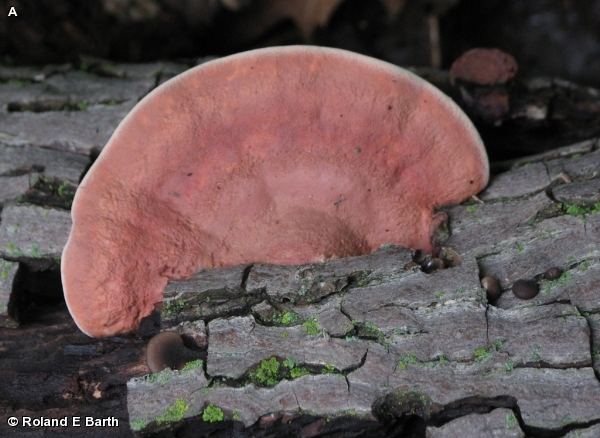
Where does Rosy Polypore grow?
Fomitopsis rosea
Got a photo? Identify mushrooms instantly with the Mushby app
Open the appRosy Polypore grows in specific habitats. Knowing where to look and when is the difference between an empty basket and a successful forage.
Where to find Rosy Polypore
Coniferous Forests
Common in boreal and temperate coniferous forests across North America, Europe, and Asia.
Dead or Dying Conifers
Look for it on fallen logs, stumps, and standing dead trees of spruce, fir, and hemlock.
Foraging tips
- Substrate Specificity. Focus your search on coniferous wood, as Fomitopsis rosea rarely grows on hardwoods.
- Perennial Nature. Being perennial, specimens can be found year-round, but fresh growth and vibrant colors are most apparent during warmer, wetter months.
- Distinctive Color. The rosy pink to reddish-brown pore surface is a key identifying feature, especially in fresh specimens.
Quick Check
- Substrate:
- Dead or dying coniferous wood (spruce, fir, hemlock).
- Fruiting:
- Perennial, sessile, hoof-shaped to shelf-like.
- Odor:
- Faintly pleasant, sometimes described as slightly acidic or mushroomy.
Explore Rosy Polypore
Identify mushrooms anywhere
Free on iOS, Android, and Web. Photo identification, full database, and your personal collection.