
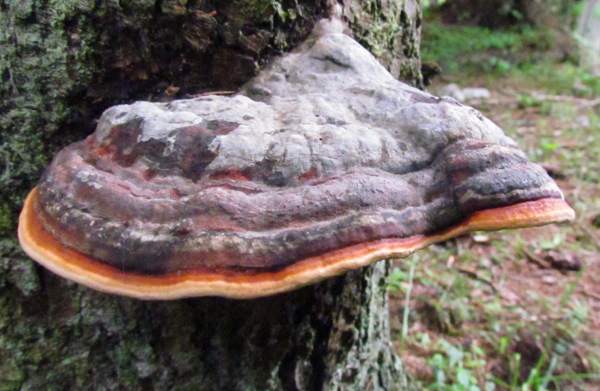
Where does Red-belt Conk grow?
Fomitopsis pinicola
Got a photo? Identify mushrooms instantly with the Mushby app
Open the appRed-belt Conk grows in specific habitats. Knowing where to look and when is the difference between an empty basket and a successful forage.
Where to find Red-belt Conk
Coniferous Forests
Red-belt Conks are most commonly found in coniferous forests, where they grow on dead or dying conifer trees like pine, spruce, and fir. Look for them on fallen logs, standing dead trees (snags), and stumps.
Mixed Forests
While less common, Red-belt Conks can also be found in mixed forests that contain both coniferous and deciduous trees. In these environments, they may grow on either type of wood, though conifers are still the preferred substrate.
Disturbed Areas
They can also be found in disturbed areas within forests such as forest clearings, logging sites, or areas affected by windthrow or insect infestations, as these areas often have abundant deadwood.
Foraging tips
- Look for Brown Rot. Red-belt Conks cause a brown rot, which means the wood they decay becomes reddish-brown, dry, and crumbly. This is a good indication that the fungus may be present in the area.
- Check Undersides of Logs. Examine the undersides of fallen logs, as conks often start growing in these sheltered locations.
- Observe Seasonally. While Red-belt Conks are perennial and can be found year-round, they are often more conspicuous during periods of higher moisture, such as spring and fall.
Quick Check
- Substrate:
- Dead or dying coniferous wood, occasionally hardwoods.
- Fruiting:
- Perennial, shelf-like conk.
- Odor:
- Indistinct or slightly fungal.
Explore Red-belt Conk
Identify mushrooms anywhere
Free on iOS, Android, and Web. Photo identification, full database, and your personal collection.