
Got a photo? Identify mushrooms instantly with the Mushby app
Open the appDescription
Chlorophyllum molybdites is a mushroom that is often mistaken for edible parasol mushrooms. It is known to cause significant gastrointestinal upset. It is one of the most commonly ingested poisonous mushrooms in North America.
How to Identify
- Cap
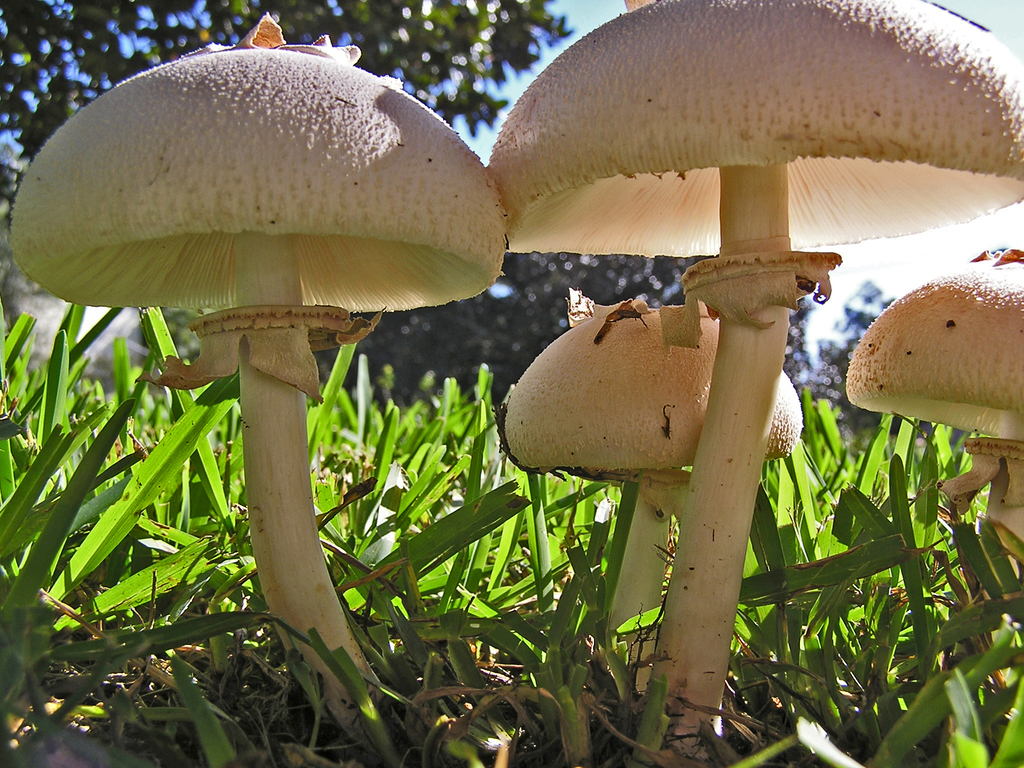
- The cap starts as a round, brownish knob and expands to a broad, flattened surface with brownish scales on a whitish background. It can reach up to 40 cm in diameter.
- Gills
- Free from the stem, crowded, and white, turning greenish with age as the spores mature.
- Stem
- Tall and sturdy, with a double-edged, movable ring. The stem is smooth and whitish, often with brownish scales near the base.
- Flesh
- Thick and white, but may turn reddish-brown when cut or bruised.
- Fruiting body
- Large and imposing, with a distinctive ring on the stem.
- Habitat
- Grows in lawns, pastures, and disturbed areas, often in rings or clusters, especially after rain.
Key Facts
- Cap surfaces: Dry with brownish scales.
- Growth Form: Solitary or in rings/clusters.
- Spore Print: Greenish.
- Body color: White with brownish scales.
- Odor: Unpleasant or slightly fungal.
- Flesh bruises: May turn reddish-brown.
- Height: 10-30 cm
- Cap Diameter: 10-40 cm
- Nutrient gathering: Saprobic.
Toxic
Severe ToxicityCauses significant gastrointestinal distress if ingested. Symptoms include nausea, vomiting, diarrhea, and abdominal cramps.
Quick Check
- Odor: Unpleasant or slightly fungal.
- Fruiting: Late summer to fall.
- Substrate: Lawns, pastures, and disturbed areas.
Where to Find
Lawns and Pastures
Commonly found in grassy areas, especially in urban and suburban environments.
Disturbed Soil
Can appear in areas with recent soil disturbance, such as construction sites or gardens.
Finding Tips
Look After Rain
These mushrooms often fruit after periods of heavy rain, so check grassy areas a few days after a downpour.
Check Open Grassy Areas
Focus your search on lawns, parks, and pastures with ample sunlight.
Similar Species
Edible Parasol Mushroom
Mushroom
Also known as: Macrolepiota procera
Scientific Classification
- Phylum
- Basidiomycota
- Class
- Agaricomycetes
- Order
- Agaricales
- Family
- Agaricaceae
- Genus
- Chlorophyllum
Explore False Parasol
Identify mushrooms anywhere
Free on iOS, Android, and Web. Photo identification, full database, and your personal collection.