
Where does Honey Mushroom grow?
Armillaria borealis
Got a photo? Identify mushrooms instantly with the Mushby app
Open the appHoney Mushroom grows in specific habitats. Knowing where to look and when is the difference between an empty basket and a successful forage.
Where to find Honey Mushroom
North America
Widespread across temperate and boreal regions, particularly in the northern United States and Canada.
Europe
Common throughout Europe, especially in northern and central regions.
Asia
Reported in parts of Asia, particularly in temperate zones.
Foraging tips
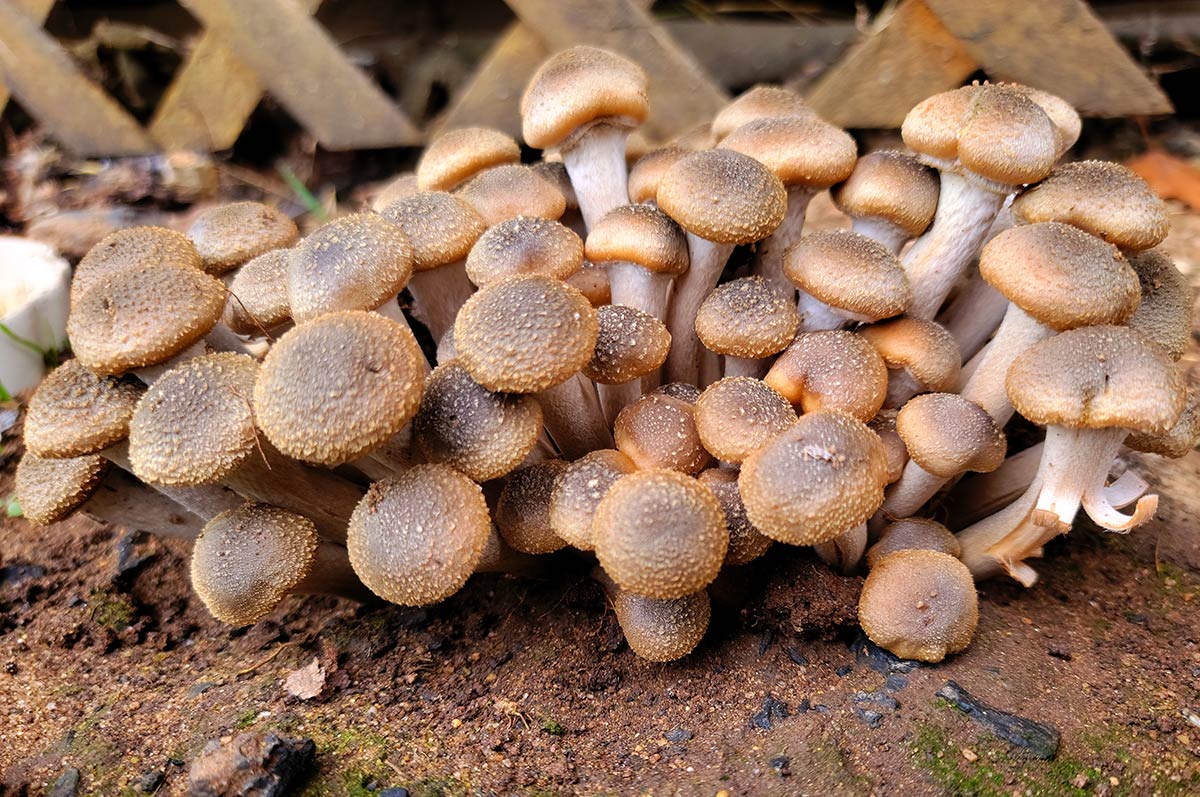
- Look for Clusters. Armillaria borealis almost always grows in dense clusters, often at the base of trees or on stumps and logs. Solitary specimens are rare.
- Check the Substrate. Always look for these mushrooms growing on wood, whether living, dead, or buried. They are never found growing directly from the ground without an underlying wood source.
- Examine the Ring. A key identifying feature is the prominent, persistent ring (annulus) on the stem. This helps differentiate it from ringless look-alikes.
- Observe Cap Scales. Young specimens typically have small, dark, erect scales on the cap. While these may disappear with age, their presence is a good indicator.
- Spore Print. A white to cream-colored spore print is crucial for confirming identification and ruling out toxic look-alikes with darker spore prints.
- Seasonal Timing. These mushrooms typically fruit in late summer and autumn, often after periods of rain.
Quick Check
- Substrate:
- Dead or living hardwood and conifer wood
- Fruiting:
- Late summer to late autumn
- Odor:
- Mild, pleasant, mushroomy
Explore Honey Mushroom
Identify mushrooms anywhere
Free on iOS, Android, and Web. Photo identification, full database, and your personal collection.