
Got a photo? Identify mushrooms instantly with the Mushby app
Open the appDescription
Amanita phalloides, commonly known as the death cap, is a deadly poisonous basidiomycete fungus, one of the most poisonous of all known mushrooms. It is found across Europe and parts of North America, and its cap color varies, often greenish or yellowish. It is responsible for the majority of fatal mushroom poisonings worldwide.
How to Identify
- Cap
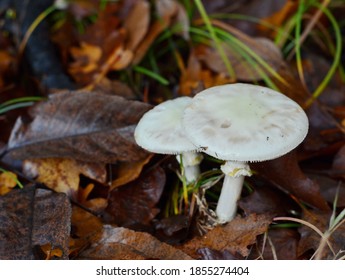
- The cap of Amanita phalloides is typically 5–15 cm (2–6 in) across, initially rounded and convex, later flattening out. The color is often greenish, yellowish, or brownish, and it can be variable. The surface is smooth and may be slightly sticky when moist.
- Gills
- The gills are free, white, and crowded.
- Stem
- The stem is 8–15 cm (3–6 in) long and 1–2 cm (0.4–0.8 in) thick, white, and has a ring (annulus). The base of the stem is surrounded by a sac-like volva, which is a key identifying feature.
- Flesh
- The flesh is white and does not change color when bruised.
- Fruiting body
- The fruiting body typically has a cap that is 5–15 cm (2–6 in) across, initially rounded and convex, later flattening out. The cap color is often greenish, yellowish, or brownish, and it can be variable. The surface is smooth and may be slightly sticky when moist.
- Habitat
- Amanita phalloides is commonly found in deciduous woodlands, particularly under oak and beech trees. It is a mycorrhizal fungus, forming a symbiotic relationship with the roots of trees.
Key Facts
- Cap surfaces: Smooth, slightly sticky when moist.
- Growth Form: Solitary or scattered.
- Spore Print: White.
- Body color: Greenish, yellowish, or brownish.
- Odor: Slightly sweet when young, unpleasant when mature.
- Flesh bruises: Does not change color.
- Height: 8–15 cm (3–6 in).
- Cap Diameter: 5–15 cm (2–6 in).
- Nutrient gathering: Mycorrhizal.
Toxic
DeadlyAmanita phalloides is one of the most poisonous mushrooms known. It contains amatoxins and phallotoxins, which cause severe liver and kidney damage. Even a small amount can be lethal.
Quick Check
- Odor: Slightly sweet when young, becoming unpleasant with age.
- Fruiting: Late summer to autumn.
- Substrate: Deciduous woodlands, especially under oak and beech trees.
Where to Find
Europe
Common in deciduous woodlands.
North America
Found in some regions, often associated with introduced trees.
Finding Tips
Look for Deciduous Trees
Search in areas with oak and beech trees, as Amanita phalloides forms mycorrhizal associations with these trees.
Check in Late Summer and Autumn
This mushroom typically fruits from late summer to autumn.
Similar Species
Amanita virosa
Amanita
Also known as: Destroying Angel
Amanita bisporigera
Amanita
Also known as: Eastern Destroying Angel
Scientific Classification
- Phylum
- Basidiomycota
- Class
- Agaricomycetes
- Order
- Agaricales
- Family
- Amanitaceae
- Genus
- Amanita
Explore Death Cap
Identify mushrooms anywhere
Free on iOS, Android, and Web. Photo identification, full database, and your personal collection.