
Got a photo? Identify mushrooms instantly with the Mushby app
Open the appDescription
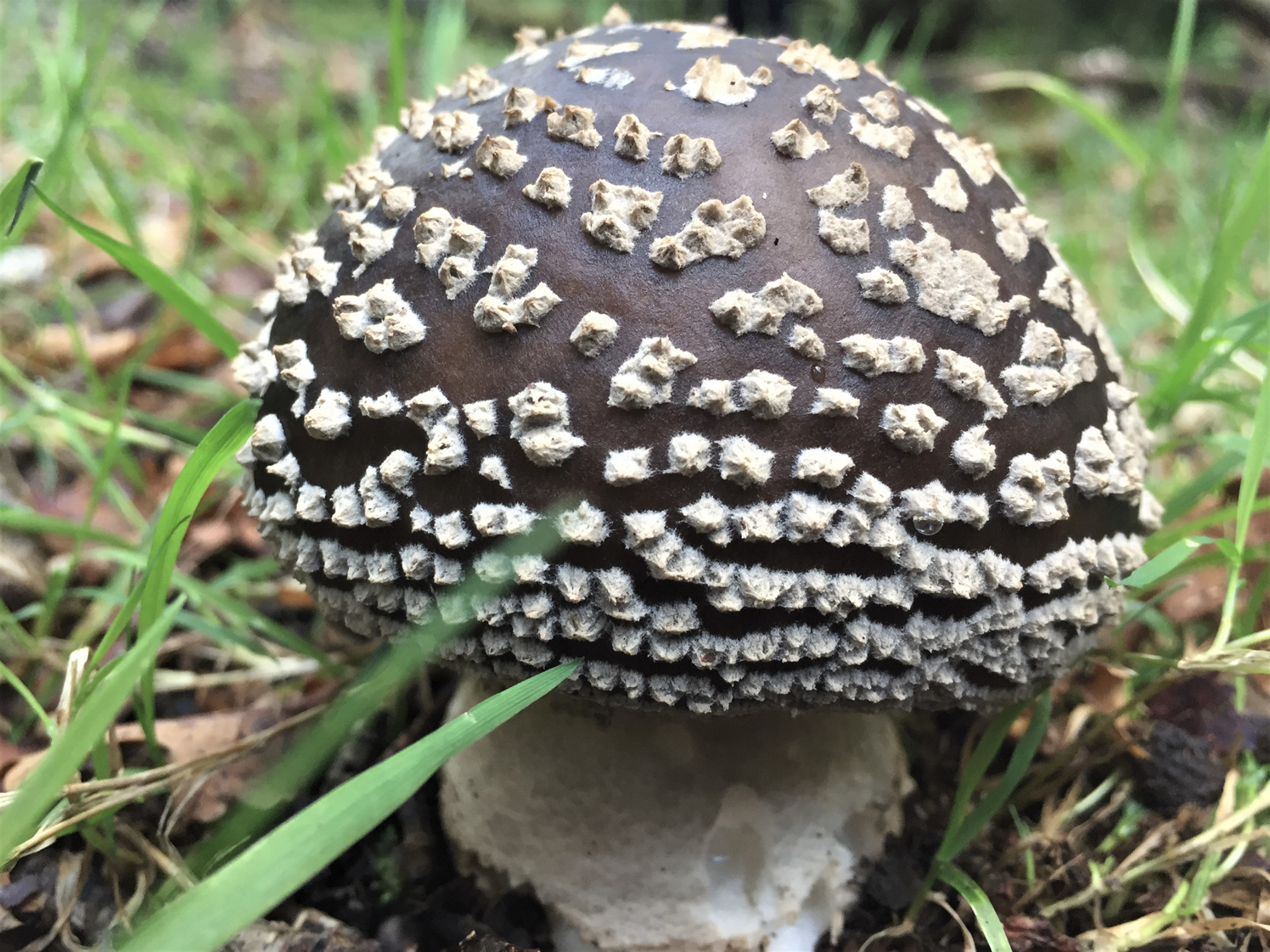
Amanita excelsa, commonly known as the Grey Spotted Amanita, is a prominent member of the Amanitaceae family. It is characterized by its dull greyish to brownish-grey cap, often covered with persistent, felted greyish-brown patches or warts, remnants of the universal veil. It typically grows in mycorrhizal association with various coniferous and deciduous trees across temperate regions of the Northern Hemisphere. While traditionally considered edible after proper preparation, its close resemblance to highly toxic Amanitas necessitates extreme caution and discourages its consumption.
How to Identify
- Cap
- 3-15 cm in diameter, initially hemispherical, becoming convex then plano-convex to almost flat with age. Color varies from grey-brown, dull greyish-olive, to brownish-grey. The surface is dry, usually covered with numerous greyish brown, felty, irregular patches or warts (volval remnants), which can be detached. The margin is not striate.
- Gills
- Free to adnexed, crowded, broad, white to cream-colored. Lammellulae (short gills) are frequent.
- Stem
- 6-15 cm tall and 1-3 cm thick, tapering slightly upwards from a bulbous base. Solid, white to greyish-white, often with felty or scaly zones below the ring. The ring (annulus) is membranous, white, striate on the upper surface, and often with greyish ragged edges or patches on the underside. Volva is typically represented by concentric rings of grey warts or scales on the bulbous base, not a distinct sac-like structure.
- Flesh
- White, thick, and firm. May turn slightly reddish-brown when bruised or cut, but not as distinctly as Amanita rubescens (the Blusher).
- Fruiting body
- Ranges from medium to large size, with a robust structure typical of Amanita species. The overall appearance is stocky with a prominent ring and a bulbous base.
- Habitat
- Grows solitarily or scattered in coniferous, mixed, and deciduous woodlands, forming mycorrhizal associations with various tree species, including oak, beech, birch, and pines.
Key Facts
- Cap surfaces: Dull greyish to brownish-grey, covered with greyish-brown, felty, detachable warts.
- Growth Form: Solitary or scattered.
- Spore Print: White.
- Body color: Overall greyish-brown cap with white gills and stem, often with reddish-brown staining on flesh.
- Odor: Faintly radish-like or potato-like.
- Flesh bruises: Often stains slightly reddish-brown, especially when cut or bruised, but less pronounced than A. rubescens.
- Height: 6-15 cm
- Cap Diameter: 3-15 cm
- Nutrient gathering: Mycorrhizal, forming symbiotic relationships with various trees.
Toxic
Severe ToxicityAmanita excelsa is generally considered edible after cooking. However, it is **highly discouraged for consumption** due to its close resemblance to several highly poisonous Amanita species, including the Panther Cap (Amanita pantherina) and even the Death Cap (Amanita phalloides) in some juvenile forms. Misidentification can lead to severe illness or death. The mushroom contains some psychoactive compounds in trace amounts, though not significant enough to be considered poisonous in the same way as Amanita muscaria or pantherina. There are also reports of gastrointestinal upset in some individuals.
Quick Check
- Odor: Smells faintly of raw potato or radishes when fresh, often becoming more earthy with age.
- Fruiting: Late summer to late autumn.
- Substrate: Terrestrial, growing on soil in mycorrhizal association with trees.
Where to Find
Europe
Widespread across temperate and boreal forests.
North America
Common in many forested regions, particularly in the northeastern United States and Canada.
Asia
Reported in parts of Asia, though less extensively documented than in Europe and North America.
Finding Tips
Seasonality
Typically fruits from late summer through autumn, often from August to November depending on regional climate and elevation.
Ecological Niche
Look for it growing on the ground, often near the base of specific tree species with which it forms mycorrhizal relationships. It prefers well-drained, often acidic soils.
Distinguishing Features
Pay close attention to the non-striate cap margin, the greyish-brown felty patches on the cap, the striate ring, and the non-sac-like, scaly volva on the bulbous base. The slight reddish staining of the flesh upon bruising is a key, though variable, characteristic.
Similar Species
Panther Cap
Amanita
Also known as: False Blusher, Panther Amanita
Blusher
Amanita
Also known as: Amanita rubescens
Grisette
Amanita
Also known as: Amanita vaginata
Death Cap
Amanita
Also known as: Deadly Amanita
Scientific Classification
- Phylum
- Basidiomycota
- Class
- Agaricomycetes
- Order
- Agaricales
- Family
- Amanitaceae
- Genus
- Amanita
Explore Grey Spotted Amanita
Identify mushrooms anywhere
Free on iOS, Android, and Web. Photo identification, full database, and your personal collection.