
Got a photo? Identify mushrooms instantly with the Mushby app
Open the appDescription
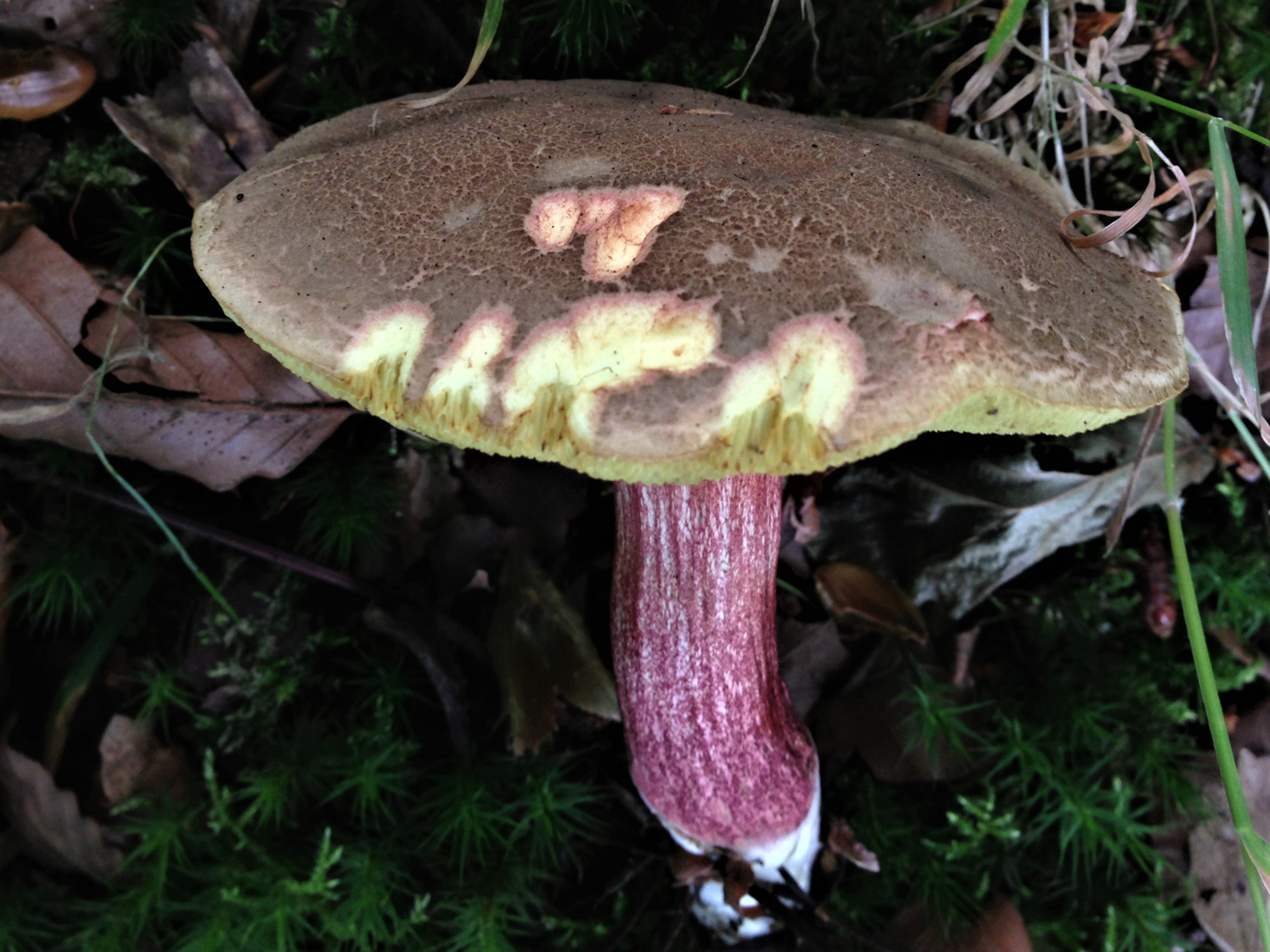
Xerocomellus chrysenteron, commonly known as the red-cracked bolete, is an edible mushroom in the family Boletaceae. It is recognized by its cracked cap surface, revealing a red layer beneath.
How to Identify
- Cap
- The cap is convex, becoming flattened with age, and ranges from 3 to 10 cm in diameter. Its color varies from olive-brown to reddish-brown. The surface is characteristically cracked, revealing a red layer underneath.
- Gills
- This mushroom has pores instead of gills. The pores are small, angular, and yellowish, bruising bluish-green when handled.
- Stem
- The stem is cylindrical, slender, and ranges from 4 to 8 cm in length and 0.5 to 1.5 cm in thickness. It is yellowish, often with reddish streaks or fibers, and lacks a ring.
- Flesh
- The flesh is yellowish, sometimes bruising slightly blue when cut, especially in the stem. It has a mild, pleasant taste and odor.
- Fruiting body
- The fruiting body of Xerocomellus chrysenteron is a bolete, characterized by a cap and a central stem. The cap is typically dry and velvety, with a cracked surface.
- Habitat
- Xerocomellus chrysenteron is found in deciduous and mixed forests, often associated with oak and beech trees. It fruits from summer to autumn.
Key Facts
- Cap surfaces: Dry, velvety, cracked
- Growth Form: Solitary or scattered
- Spore Print: Olive-brown
- Body color: Olive-brown to reddish-brown
- Odor: Mild
- Flesh bruises: Slightly blue
- Height: 4-8 cm
- Cap Diameter: 3-10 cm
- Nutrient gathering: Mycorrhizal
Safe
SafeXerocomellus chrysenteron is generally considered edible, but it can cause gastrointestinal upset in some individuals. It should be cooked before consumption.
Quick Check
- Odor: Mild, pleasant
- Fruiting: Summer to Autumn
- Substrate: Soil, under deciduous trees
Where to Find
Europe
Common throughout Europe, particularly in deciduous woodlands.
North America
Found in eastern North America, with similar habitats to Europe.
Finding Tips
Look for Cracked Caps
The cracked cap surface revealing red underneath is a key identifying feature.
Check Under Deciduous Trees
Search in deciduous forests, especially under oak and beech trees.
Similar Species
Bay Bolete
mushroom
Also known as: Imleria badia
Scientific Classification
- Phylum
- Basidiomycota
- Class
- Agaricomycetes
- Order
- Boletales
- Family
- Boletaceae
- Genus
- Xerocomellus
Storage Information
- Max Temperature: 0
- Freezing duration: 3 months
- Min Temperature: 2
- Refrigeration: 3 days
How to Clean
Clean the mushroom by brushing off any dirt or debris. Avoid soaking in water, as boletes tend to absorb water easily.
Explore Red-cracked Bolete
Identify mushrooms anywhere
Free on iOS, Android, and Web. Photo identification, full database, and your personal collection.