
Got a photo? Identify mushrooms instantly with the Mushby app
Open the appDescription
Trichaptum biforme, commonly known as the Violet Toothed Polypore, is a widely distributed bracket fungus. It is recognized by its violet to purple coloration on the upper surface when young, which fades with age. This fungus is a saprophyte, meaning it obtains nutrients from decaying organic matter, and is commonly found on dead hardwood trees and branches.
How to Identify
- Cap
- The cap is typically semicircular or irregular in shape, with a velvety to hairy texture. Young specimens exhibit a distinct violet to purple color, which fades to brown or grayish-brown as they mature. The cap surface may also display concentric zones of different colors.
- Gills
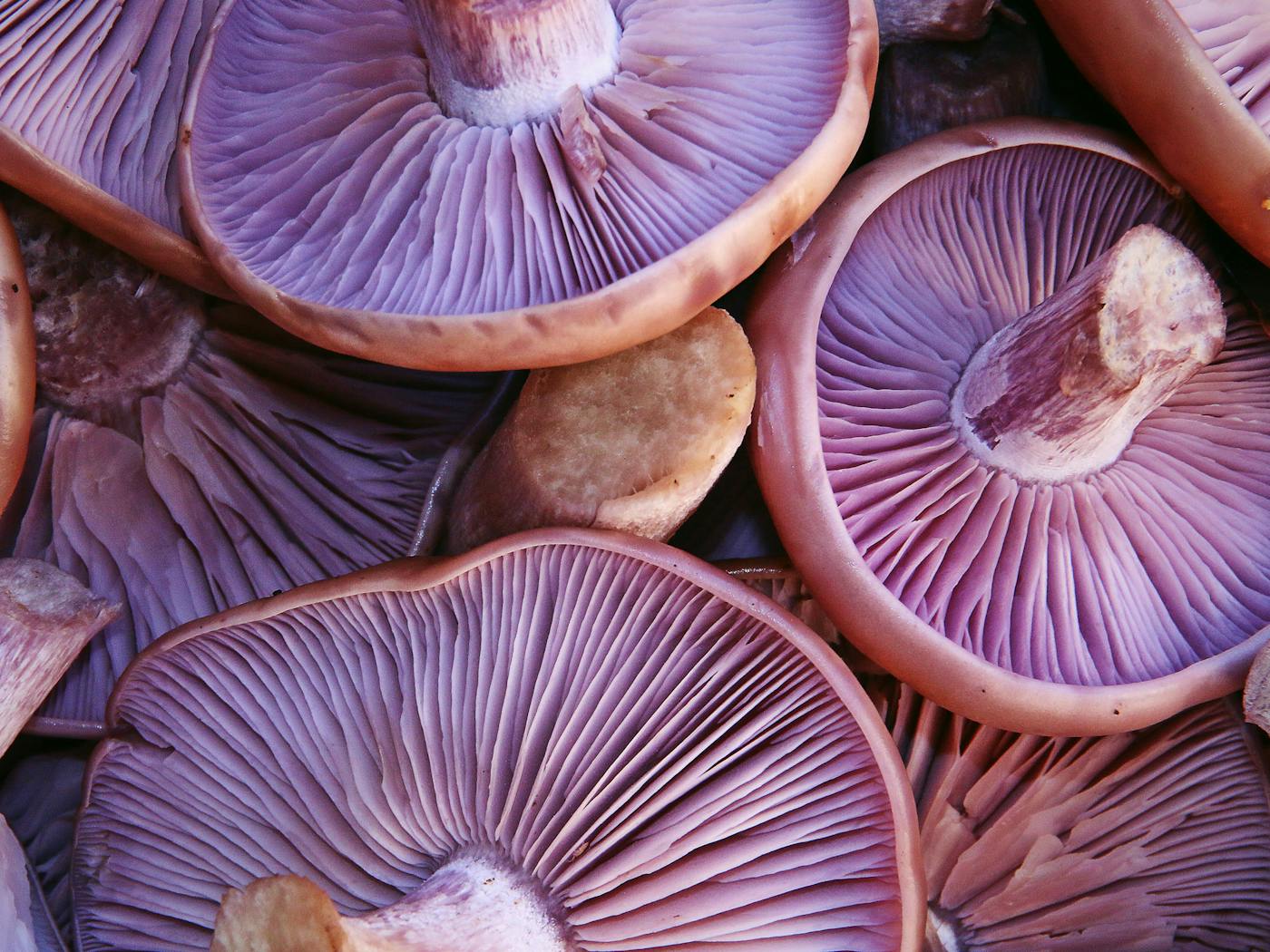
- Instead of true gills, Trichaptum biforme has a pore surface that appears tooth-like or maze-like. The pore surface is initially violet or purple, fading to brownish or grayish.
- Stem
- Lacks a stem; the fruiting body attaches directly to the substrate.
- Flesh
- The flesh is thin, leathery, and tough.
- Fruiting body
- The fruiting body is a thin, tough, and flexible bracket or shelf-like structure. It often grows in overlapping clusters.
- Habitat
- Found on dead hardwood trees and branches, causing white rot. It can be found year-round.
Key Facts
- Cap surfaces: Velvety to hairy.
- Growth Form: Bracket or shelf-like.
- Spore Print: White to pale lilac.
- Body color: Violet to purple when young, fading to brown or grayish-brown.
- Odor: Indistinct.
- Flesh bruises: Does not typically bruise.
- Height: 1-4 cm
- Cap Diameter: 2-10 cm
- Nutrient gathering: Saprophytic.
Safe
SafeTrichaptum biforme is not considered toxic, but it is also not typically consumed due to its tough texture and lack of flavor.
Quick Check
- Odor: Indistinct.
- Fruiting: Year-round.
- Substrate: Dead hardwood.
Where to Find
North America
Common throughout North America, particularly in deciduous forests.
Europe
Widespread in Europe, found on various hardwood species.
Finding Tips
Look on Hardwoods
Search for this fungus on fallen logs, branches, and standing dead trees, especially those of hardwood species like oak, beech, and birch.
Check for Color
Look for the distinctive violet to purple coloration on the upper surface of young specimens. Note that older specimens may have faded to brown or gray.
Similar Species
Turkey Tail
a polypore fungus
Also known as: Trametes versicolor
Hirschioporus pargamenus
a polypore fungus
Also known as: Parchment Fungus
Scientific Classification
- Phylum
- Basidiomycota
- Class
- Agaricomycetes
- Order
- Polyporales
- Family
- Polyporaceae
- Genus
- Trichaptum
Storage Information
- Max Temperature: N/A
- Freezing duration: N/A
- Min Temperature: N/A
- Refrigeration: N/A
How to Clean
Not typically consumed, so cleaning is not applicable.
Explore Violet Toothed Polypore
Identify mushrooms anywhere
Free on iOS, Android, and Web. Photo identification, full database, and your personal collection.