
Got a photo? Identify mushrooms instantly with the Mushby app
Open the appDescription
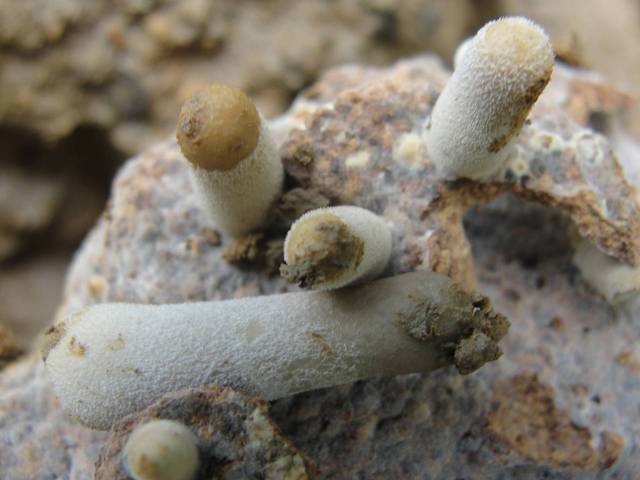
A highly prized edible mushroom that exists in a symbiotic relationship with termites of the genus Odontotermes. It features a characteristic pseudorhiza (root-like structure) that connects the sporocarp to the deep subterranean termite nest.
How to Identify
- Cap
- Convex to planoconvex, often with a prominent central umbo, brownish-grey to white surface.
- Gills
- Free from the stem, crowded, white to cream colored.
- Stem
- Sturdy, smooth, with a well-developed root-like pseudorhiza extending several centimeters into the soil.
- Flesh
- Firm, white, unchanging when bruised.
- Fruiting body
- Epigeal sporocarp emerging from a distinct deep-seated pseudorhiza.
- Habitat
- Exclusively associated with active or abandoned termite mounds in tropical and subtropical forests.
Key Facts
- Cap surfaces: Smooth to slightly fibrous
- Growth Form: Clustered
- Spore Print: Pinkish-white to salmon
- Body color: White, grey, or brownish
- Odor: Mild, mushroom-like
- Flesh bruises: Does not change color
- Height: 5-15 cm excluding pseudorhiza
- Cap Diameter: 5-12 cm
- Nutrient gathering: Symbiotic with termites
Safe
SafeConsidered an excellent edible mushroom. No inherent toxicity if correctly identified and fully cooked.
Quick Check
- Odor: Pleasant, mild, nutty, or earthy.
- Fruiting: Gregarious, appearing in clusters on termite mounds.
- Substrate: Soil above termite fungus gardens.
Where to Find
Southeast Asia
Commonly found in deciduous forests and shrublands where termite activity is high.
Tropical Africa
Widely distributed in savannas and wooded regions associated with Odontotermes species.
Finding Tips
Seasonality
Fruiting occurs strictly during the rainy season, typically following the first heavy monsoon rains.
Habitat cues
Look for raised earth structures or mounds in forested areas; mushroom clusters often appear directly on or near the periphery of these mounds.
Similar Species
Termitomyces albuminosus
Termitomyces
Also known as: White Termite Mushroom
Termitomyces microcarpus
Termitomyces
Also known as: Small Termite Mushroom
Scientific Classification
- Phylum
- Basidiomycota
- Class
- Agaricomycetes
- Order
- Agaricales
- Family
- Lyophyllaceae
- Genus
- Termitomyces
Storage Information
- Max Temperature: 4 degrees Celsius
- Freezing duration: Not recommended to freeze fresh, best cooked first.
- Min Temperature: 0 degrees Celsius
- Refrigeration: 2 to 3 days
How to Clean
Gently brush off soil particles from the cap. Since the pseudorhiza is often woody and covered in debris, it is typically discarded during harvesting.
Explore Termite Mushroom
Identify mushrooms anywhere
Free on iOS, Android, and Web. Photo identification, full database, and your personal collection.