
Got a photo? Identify mushrooms instantly with the Mushby app
Open the appDescription
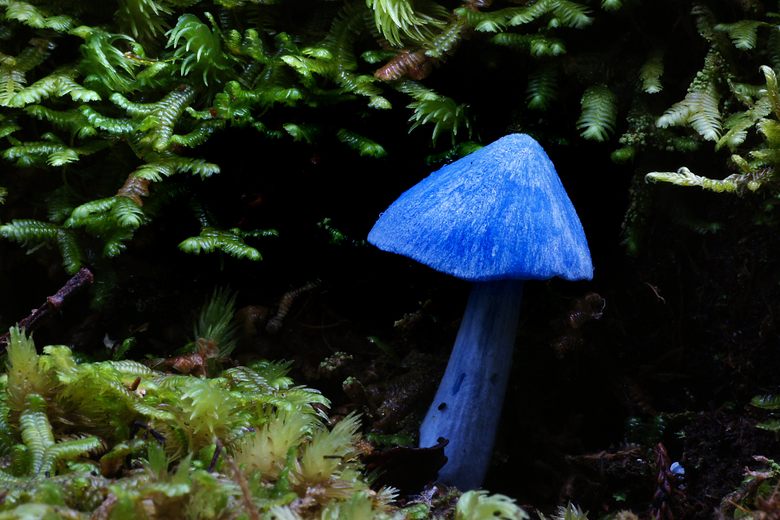
Stropharia caerulea, commonly known as the blue roundhead, is an inedible mushroom. It is found in grassy habitats, such as lawns, meadows, and parks in North America and Europe. The cap is hemispherical to convex, 2–7 cm in diameter, and has a smooth, slimy surface. The gills are closely spaced and have an adnate attachment to the stem. They are initially whitish, but turn grayish-blue to dark purple as the spores mature. The stem is 3–8 cm long and 0.5–1.5 cm thick, with a ring that is often slimy or disappears with age. The spore print is dark purple-brown. The flesh is whitish and does not change color when bruised. The taste and odor are mild.
How to Identify
- Cap
- Hemispherical to convex, 2–7 cm in diameter, smooth, slimy surface, color varies from bluish to brownish.
- Gills
- Closely spaced, adnate, initially whitish, turning grayish-blue to dark purple as spores mature.
- Stem
- 3–8 cm long, 0.5–1.5 cm thick, with a ring that is often slimy or disappears with age.
- Flesh
- Whitish, does not change color when bruised.
- Fruiting body
- Medium-sized mushroom with a slimy cap and stem.
- Habitat
- Grassy habitats, such as lawns, meadows, and parks.
Key Facts
- Cap surfaces: Smooth, slimy
- Growth Form: Solitary or in small groups
- Spore Print: Dark purple-brown
- Body color: Bluish to brownish
- Odor: Mild
- Flesh bruises: No color change
- Height: 3-8 cm
- Cap Diameter: 2-7 cm
- Nutrient gathering: Saprophytic
Safe
Mild ToxicityStropharia caerulea is considered inedible, and consumption may cause gastrointestinal upset in some individuals. It is not known to contain any potent toxins, but it is best avoided due to its potential to cause discomfort.
Quick Check
- Odor: Mild
- Fruiting: Late summer to autumn
- Substrate: Grasslands, lawns, meadows, parks
Where to Find
Grasslands
Grassy areas such as lawns, meadows, and parks.
Compost piles
Areas with decaying organic matter.
Finding Tips
After Rain
Look for them after periods of rain, as they prefer moist conditions.
Rich Soil
Check areas with rich soil and decaying plant material.
Similar Species
Stropharia aeruginosa
mushroom
Also known as: Verdigris Agaric
Scientific Classification
- Phylum
- Basidiomycota
- Class
- Agaricomycetes
- Order
- Agaricales
- Family
- Strophariaceae
- Genus
- Stropharia
Storage Information
- Max Temperature: 2
- Freezing duration: 3
- Min Temperature: -2
- Refrigeration: 2
How to Clean
Gently wipe the cap and stem with a damp cloth to remove any dirt or debris. Avoid soaking them in water, as they can become waterlogged.
Explore Cobweb Stropharia
Identify mushrooms anywhere
Free on iOS, Android, and Web. Photo identification, full database, and your personal collection.