
Got a photo? Identify mushrooms instantly with the Mushby app
Open the appDescription
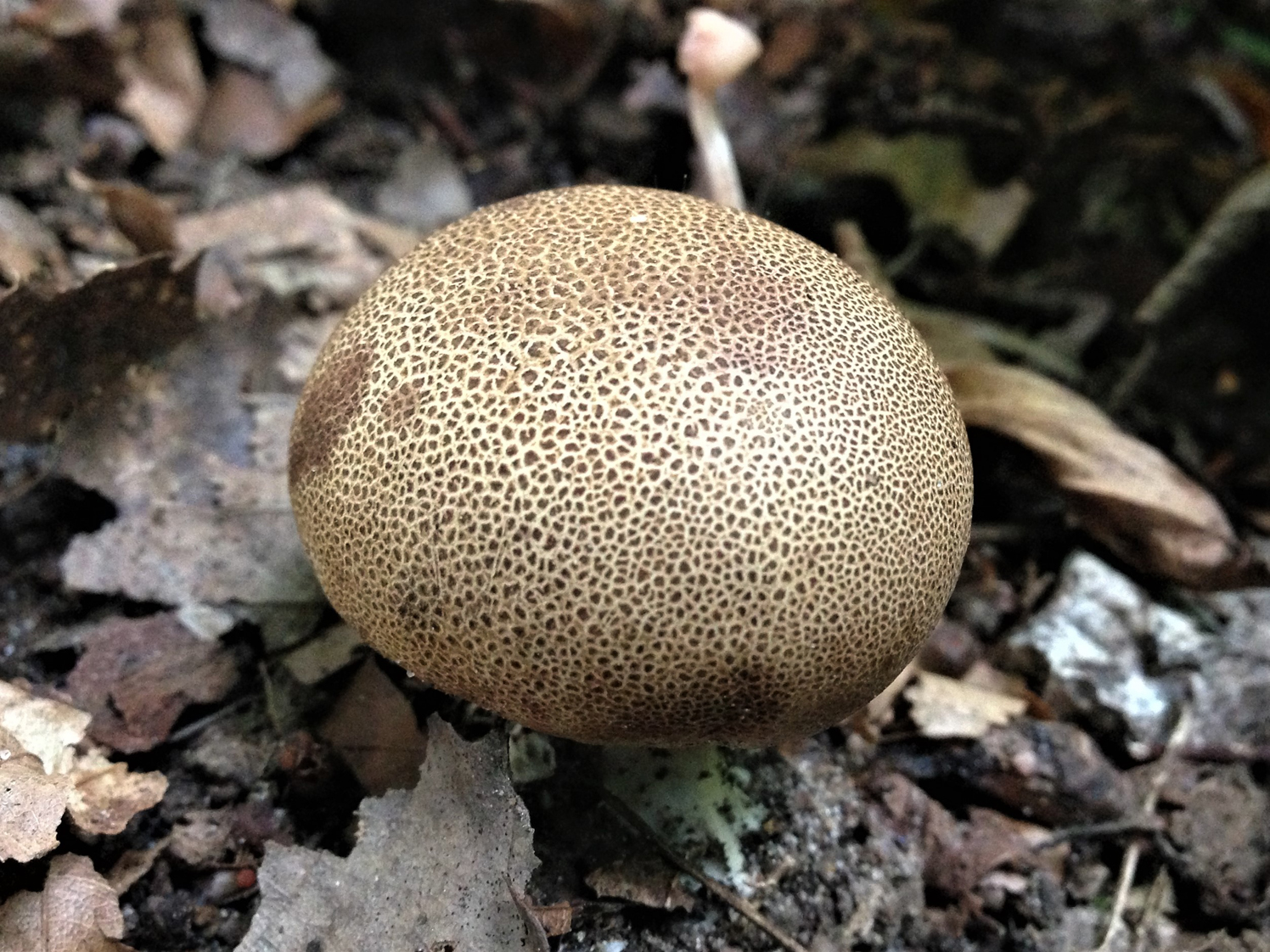
Scleroderma areolatum, commonly known as the Bread Crust Earthball or Leopard Earthball, is a puffball-like fungus belonging to the Sclerodermataceae family. It is characterized by its irregularly shaped fruiting body and distinctive surface markings. While not considered choice edible, it is often mistaken for edible puffballs, leading to potential gastrointestinal upset. Extreme caution is advised when identifying this species.
How to Identify
- Cap
- There is no true cap. The outer surface (peridium) is yellowish-brown to ochre, covered with small, flattened scales or areolae, giving it the appearance of cracked bread crust or leopard spots. The surface bruises reddish-brown when handled.
- Gills
- There are no gills. Scleroderma areolatum is a puffball-like fungus.
- Stem
- There is no true stem. The fruiting body is attached to the substrate by rhizomorphs (root-like strands).
- Flesh
- The interior (gleba) is white when young, gradually turning yellowish, then olive-brown, and finally dark brown to blackish-brown with maturity. At maturity, the gleba becomes powdery with spores.
- Fruiting body
- The fruiting body is irregularly shaped, often roundish or flattened, ranging in size from 2-6 cm in diameter. It lacks a true stem, although it may have a small, constricted base.
- Habitat
- Found in woods, particularly with sandy or poor soil, often under deciduous or coniferous trees. It is a mycorrhizal fungus, forming symbiotic relationships with tree roots. Can occur solitary or in small groups.
Key Facts
- Cap surfaces: Areolate, scaly
- Growth Form: Puffball-like
- Spore Print: Dark brown to blackish brown
- Body color: Yellowish-brown to ochre
- Odor: Earthy, slightly chemical
- Flesh bruises: Reddish-brown
- Height: 2-6 cm
- Cap Diameter: 2-6 cm
- Nutrient gathering: Mycorrhizal
Toxic
Moderate ToxicityScleroderma areolatum is considered toxic and can cause gastrointestinal upset if ingested. It contains compounds that can irritate the digestive system. It is also easily confused with edible puffballs when young, increasing the risk of accidental poisoning.
Quick Check
- Odor: Earthy, sometimes slightly chemical odor.
- Fruiting: Irregularly shaped puffball-like body without a distinct stem.
- Substrate: Soil, often sandy, in association with trees.
Where to Find
Woodlands
Prefers mixed deciduous and coniferous woodlands.
Sandy Soils
Often found in areas with sandy or nutrient-poor soils.
Under Trees
Grows in mycorrhizal association with oak, pine, and other tree species.
Finding Tips
Look closely at the ground
Search near the base of trees, especially in areas with disturbed soil or leaf litter.
Check sandy areas
Focus on areas with exposed sandy soil within woodlands.
Observe seasonal timing
Fruiting occurs mainly in late summer and autumn.
Similar Species
Common Earthball
Mushroom
Also known as: Scleroderma citrinum
Scaly Earthball
Mushroom
Also known as: Scleroderma verrucosum
Pigskin Poison Puffball
Mushroom
Also known as: Scleroderma bovista
Prairie Puffball
Mushroom
Also known as: Vascellum pratense
Scientific Classification
- Phylum
- Basidiomycota
- Class
- Agaricomycetes
- Order
- Sclerodermatales
- Family
- Sclerodermataceae
- Genus
- Scleroderma
Explore Bread Crust Earthball
Identify mushrooms anywhere
Free on iOS, Android, and Web. Photo identification, full database, and your personal collection.