
Got a photo? Identify mushrooms instantly with the Mushby app
Open the appDescription
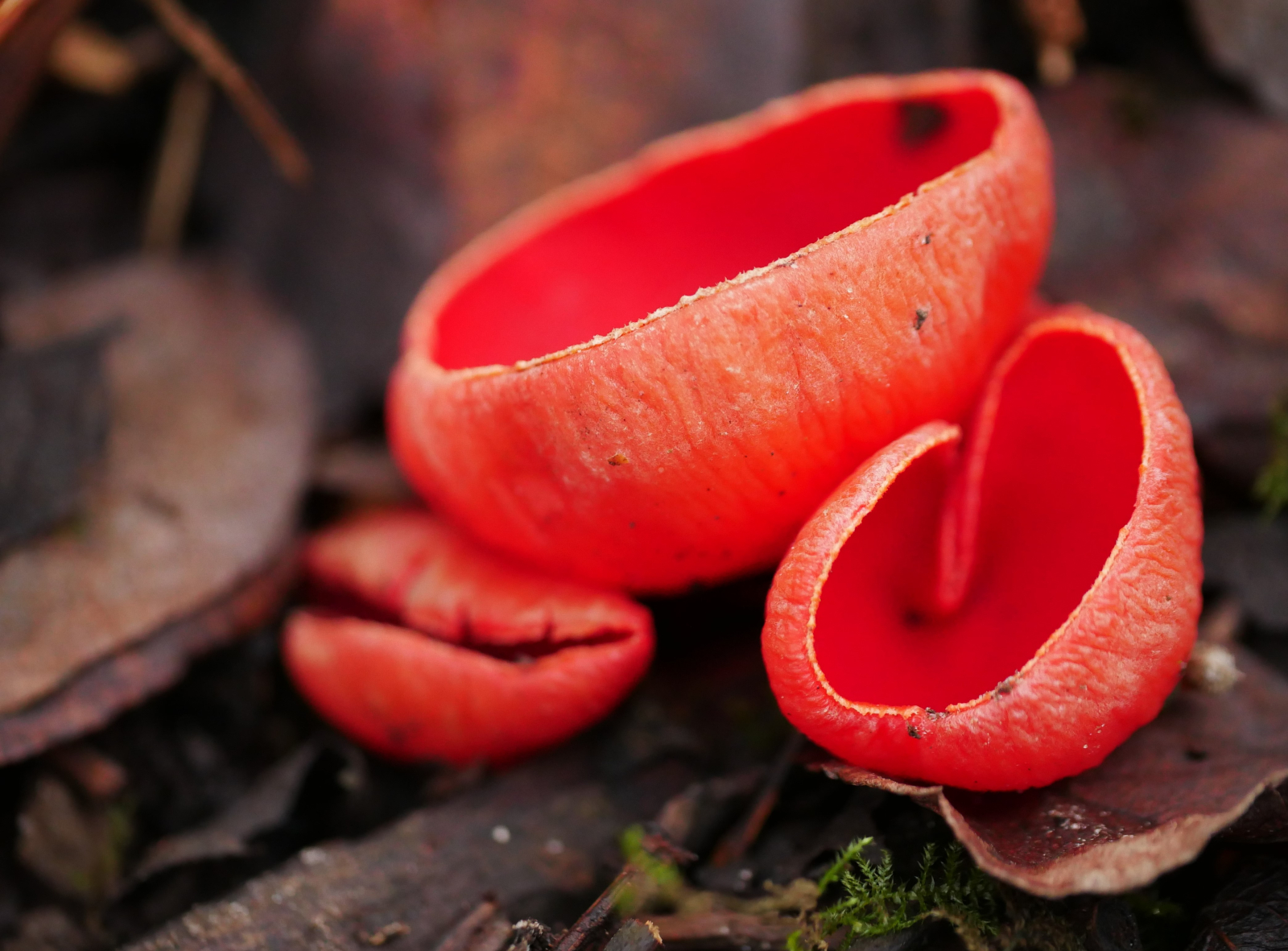
Sarcoscypha austriaca is a saprophytic Ascomycete fungus in the family Sarcoscyphaceae, commonly known as the Burgundy Cup or Scarlet Elf Cup. It is characterized by its bright red, cup-shaped fruit bodies that appear in late winter and early spring. While often considered edible, caution is advised due to potential confusion with similar, less palatable, or potentially toxic species.
How to Identify
- Cap
- Inner surface is bright scarlet red, smooth, and concave. Outer surface is paler, finely hairy, and may be slightly wrinkled or bumpy.
- Gills
- Absent. Sarcoscypha species are Ascomycetes, so they don't have gills; instead, they have a fertile inner surface (hymenium).
- Stem
- Short, stout, and often buried in the substrate; whitish to pale pink; can be almost absent in some specimens.
- Flesh
- Thin, brittle, and pale pinkish-red.
- Fruiting body
- Cup-shaped or saucer-shaped, typically 2-5 cm in diameter.
- Habitat
- Found on decaying twigs and branches of deciduous trees, particularly hazel, willow, and elm, often partially buried in leaf litter. Prefers damp woodland habitats.
Key Facts
- Cap surfaces: Smooth inner surface, hairy outer surface
- Growth Form: Cup-shaped
- Spore Print: White
- Body color: Bright scarlet red (inner surface), paler pinkish-red (outer surface)
- Odor: Faint, earthy
- Flesh bruises: Does not typically bruise
- Height: 1-3 cm
- Cap Diameter: 2-5 cm
- Nutrient gathering: Saprophytic
Safe
Mild ToxicityWhile Sarcoscypha austriaca is generally considered edible, it is not particularly flavorful and can be tough. Great caution must be exercised to avoid confusion with other, potentially toxic, cup fungi. Thorough cooking is recommended. Some individuals may experience gastrointestinal upset. Therefore, it is absolutely critical to positively identify this mushroom and to consume it in small quantities initially to assess individual tolerance. WARNING: Never consume any wild mushroom unless you are 100% certain of its identification. When in doubt, throw it out!
Quick Check
- Odor: Faint, earthy or mushroomy
- Fruiting: Cup-shaped fruit bodies, inner surface bright scarlet red, outer surface paler and hairy.
- Substrate: Decaying deciduous wood (twigs, branches)
Where to Find
Deciduous Woodlands
Prefers damp deciduous woodlands with rich leaf litter and decaying wood.
Near Water Sources
Often found near streams, rivers, or other bodies of water where humidity is consistently high.
Finding Tips
Search in Late Winter/Early Spring
Burgundy Cups are most commonly found from late winter to early spring (February to April).
Look for Decaying Wood
Focus your search on areas with decaying twigs and branches of deciduous trees, especially hazel, willow and elm.
Check Damp Areas
Pay attention to damp, shaded areas with high humidity, such as near streams or in bottomlands.
Similar Species
Ruby Elfcup
Mushroom
Also known as: Sarcoscypha coccinea
Sarcoscypha dudleyi
Mushroom
Also known as: None
Scientific Classification
- Phylum
- Ascomycota
- Class
- Pezizomycetes
- Order
- Pezizales
- Family
- Sarcoscyphaceae
- Genus
- Sarcoscypha
Storage Information
- Max Temperature: 5°C (41°F)
- Freezing duration: Not recommended due to loss of texture and flavor.
- Min Temperature: 2°C (36°F)
- Refrigeration: 1-2 days. Store in a paper bag in the refrigerator to prevent moisture build-up.
How to Clean
Gently brush off any dirt or debris with a soft brush. Avoid washing unless absolutely necessary, as they can become waterlogged and lose their texture. If washing is required, do it quickly under a gentle stream of cold water and pat dry immediately.
Explore Burgundy Cup
Identify mushrooms anywhere
Free on iOS, Android, and Web. Photo identification, full database, and your personal collection.