
Got a photo? Identify mushrooms instantly with the Mushby app
Open the appDescription
Rhodocollybia butyracea, commonly known as the Pleated Whitegill, Buttery Collybia, or Butter Cap, is a widespread and common mushroom found in temperate regions of the Northern Hemisphere. It is characterized by its greasy or buttery-feeling cap, often with a somewhat wrinkled or pleated margin, and its typically white to cream-colored gills. While generally considered edible, its culinary value is low, and it is often overlooked by foragers due to its bland taste and potential for confusion with other species.
How to Identify
- Cap
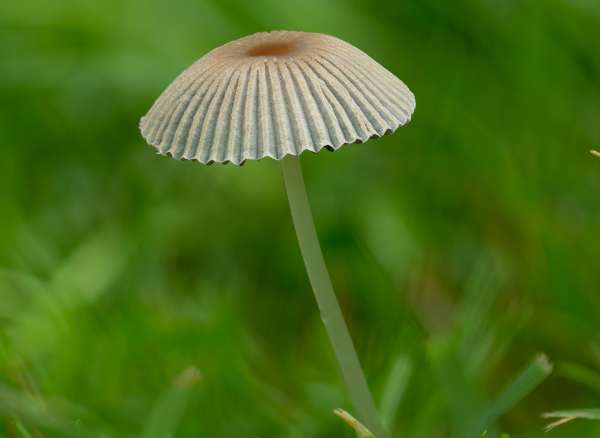
- The cap is typically 3-10 cm in diameter, convex to broadly convex or nearly flat in maturity, often with a central depression. The margin can be wavy or somewhat pleated (hence 'Pleated Whitegill'). The surface is smooth, moist to greasy or buttery to the touch, especially when wet. Color varies significantly from pale tan, buff, or grayish-brown to dark reddish-brown, often fading with age or in dry conditions. The center is usually darker.
- Gills
- The gills are adnexed to nearly free, close to crowded, and narrow. They are typically white to cream-colored, sometimes developing a yellowish tint with age. They often appear somewhat 'pleated' or wavy near the stem attachment.
- Stem
- The stem is 4-10 cm long and 0.5-1.5 cm thick, often tapering slightly upwards or downwards, sometimes with a slightly swollen base. It is typically hollow or stuffed, fibrous, and brittle. The surface is smooth or finely striate, often concolorous with the cap or paler, sometimes with a whitish, fuzzy base (mycelium).
- Flesh
- The flesh is thin, white, and rather soft. It does not change color when cut or bruised.
- Fruiting body
- The fruiting body is a typical agaric (gilled mushroom) with a cap, gills, and a central stem.
- Habitat
- Saprobic, growing on decaying organic matter, typically in leaf litter or on well-rotted wood (often buried) in coniferous and deciduous forests. It can be found growing solitarily, scattered, or in small clusters.
Key Facts
- Cap surfaces: Smooth, moist, greasy/buttery, often wrinkled/pleated margin.
- Growth Form: Solitary, scattered, or in small clusters.
- Spore Print: White to pale cream.
- Body color: Cap variable (tan, buff, grayish-brown to reddish-brown), gills white to cream, stem concolorous or paler.
- Odor: Mild, sometimes slightly rancid or indistinct.
- Flesh bruises: No color change.
- Height: 4-10 cm
- Cap Diameter: 3-10 cm
- Nutrient gathering: Saprobic
Safe
SafeRhodocollybia butyracea is generally considered edible, but its culinary value is low due to its bland taste and somewhat rubbery texture. There are no known significant toxins. However, it is crucial to correctly identify this mushroom, as some similar-looking species could be mildly toxic or simply unpalatable. Always exercise caution and consult with an expert if unsure.
Quick Check
- Odor: Mild, sometimes slightly rancid or indistinct.
- Fruiting: Autumn to early winter, sometimes in spring or summer.
- Substrate: Decaying organic matter, leaf litter, or buried wood in forests.
Where to Find
North America
Widespread across the continent, particularly in temperate forests.
Europe
Common throughout European forests.
Asia
Reported in various temperate regions of Asia.
Finding Tips
Forest Floor Search
Look for it growing directly on the forest floor, often among leaf litter or moss, especially under conifers or mixed woods.
Rotten Wood Association
While appearing terrestrial, it often grows from buried decaying wood, so check around old stumps or fallen logs.
Moist Conditions
It prefers moist conditions, so look after periods of rain.
Similar Species
Rhodocollybia butyracea var. asema
fungus
Also known as: Gray Butter Cap
Gymnopus dryophilus
fungus
Also known as: Oak-loving Collybia
Gymnopus peronatus
fungus
Also known as: Wood Woollyfoot
Scientific Classification
- Phylum
- Basidiomycota
- Class
- Agaricomycetes
- Order
- Agaricales
- Family
- Omphalotaceae
- Genus
- Rhodocollybia
Storage Information
- Max Temperature: 4°C
- Freezing duration: 6 months
- Min Temperature: 0°C
- Refrigeration: 5 days
How to Clean
Gently brush off any debris with a soft brush or damp cloth. Avoid washing under running water as the cap can become slimy and absorb excess moisture. If necessary, a quick rinse and immediate drying are acceptable.
Explore Pleated Whitegill
Identify mushrooms anywhere
Free on iOS, Android, and Web. Photo identification, full database, and your personal collection.