
Got a photo? Identify mushrooms instantly with the Mushby app
Open the appDescription
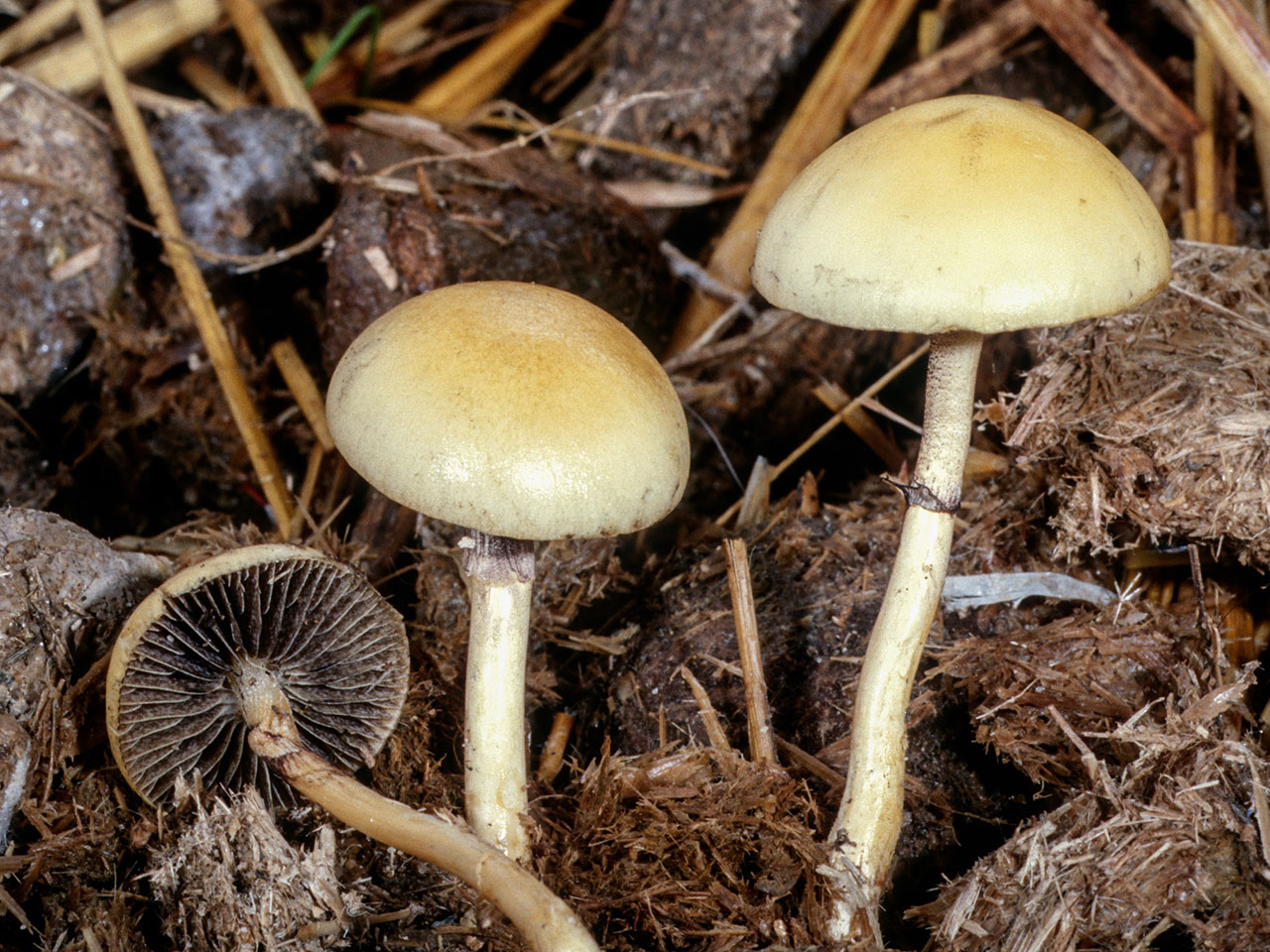
Protostropharia semiglobata, commonly known as the Dung Roundhead, is a widely distributed agaric fungus. It is typically found growing on dung, particularly in grassy areas. While not considered highly toxic, ingestion can cause gastrointestinal upset in some individuals. Identification relies on its smooth, yellowish-brown cap, viscid surface, and habitat on dung.
How to Identify
- Cap
- The cap is typically hemispherical to convex, smooth, and viscid (slimy when wet). The color ranges from yellowish-brown to tan. It is usually 1 to 3 cm in diameter.
- Gills
- The gills are adnate (attached to the stem) and closely spaced. They are initially pale, becoming grayish to purplish-brown as the spores mature.
- Stem
- The stem is slender, smooth, and yellowish to brownish. It is typically 3 to 7 cm long and 2 to 4 mm thick. A ring (annulus) is absent.
- Flesh
- The flesh is thin and yellowish.
- Fruiting body
- The fruiting body of Protostropharia semiglobata is a small to medium-sized mushroom with a distinct cap and stem.
- Habitat
- This mushroom is commonly found growing on dung, especially in pastures and grassy areas. It is saprobic, meaning it obtains nutrients from decaying organic matter.
Key Facts
- Cap surfaces: Smooth, viscid (slimy when wet)
- Growth Form: Agaric
- Spore Print: Purplish-brown
- Body color: Yellowish-brown to tan
- Odor: Not distinctive
- Flesh bruises: Does not typically bruise
- Height: 3-7 cm
- Cap Diameter: 1-3 cm
- Nutrient gathering: Saprobic
Safe
Mild ToxicityProtostropharia semiglobata is not considered highly toxic, but it can cause gastrointestinal upset in some individuals. Symptoms may include nausea, vomiting, and diarrhea. It is not known to contain any potent toxins.
Quick Check
- Odor: Not distinctive or slightly fungal
- Fruiting: On dung
- Substrate: Dung, especially of herbivores
Where to Find
Grasslands
Commonly found in grasslands where livestock or other herbivores graze, providing a source of dung.
Pastures
Pastures with grazing animals are prime locations for this species.
Fields
Agricultural fields where manure is used as fertilizer can also host this mushroom.
Finding Tips
Look for Dung
Focus your search around animal dung, especially cow or horse manure.
Check After Rain
These mushrooms often appear after periods of rain, as moisture promotes their growth.
Search in Grassy Areas
Grassy areas where animals graze are ideal habitats.
Similar Species
Deconica coprophila
mushroom
Also known as: Dung Loving Psilocybe
Scientific Classification
- Phylum
- Basidiomycota
- Class
- Agaricomycetes
- Order
- Agaricales
- Family
- Strophariaceae
- Genus
- Protostropharia
Storage Information
- Max Temperature: N/A
- Freezing duration: N/A
- Min Temperature: 2-4°C
- Refrigeration: 1-2 days
How to Clean
Cleaning Protostropharia semiglobata is generally not recommended due to its small size and the substrate it grows on. If necessary, gently brush off any debris. Washing is typically avoided to prevent the mushroom from becoming waterlogged.
Explore Dung Roundhead
Identify mushrooms anywhere
Free on iOS, Android, and Web. Photo identification, full database, and your personal collection.