
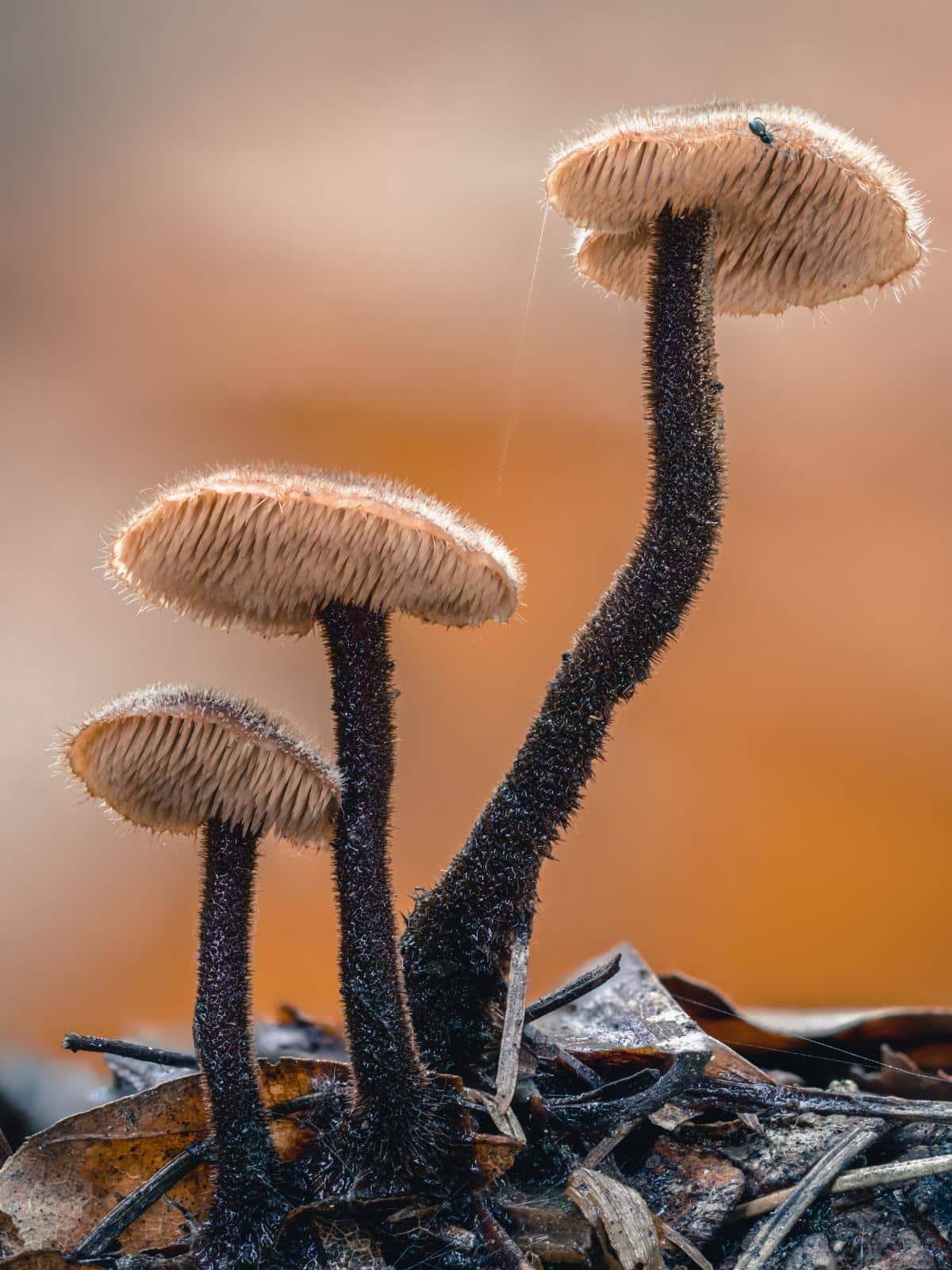
How to identify Dryad's Saddle
Polyporus squamosus
Got a photo? Identify mushrooms instantly with the Mushby app
Open the appTo correctly identify Dryad's Saddle (Polyporus squamosus), check each of these features in order. Misidentification is the most common cause of mushroom poisoning, so cross-reference multiple sources.
Step-by-step identification
- 1
Cap
Shape, color, surface texture, and diameter.
The cap is kidney-shaped to semicircular, with a pale yellow to tan background covered in dark brown scales arranged in a concentric pattern.
- 2
Gills
Attachment to stem, color, and spacing.
This fungus has pores instead of gills. The pores are angular, white to yellowish, and extend down the stem.
- 3
Stem
Length, shape, surface, and any ring.
The stem is short, thick, and lateral, often with a dark base. It is typically off-center and may be absent in some specimens.
- 4
Flesh
Color, texture, and bruising reaction.
The flesh is white, thick, and fleshy when young, becoming tougher and more fibrous as it matures.
- 5
Fruiting body
Overall growth pattern.
The fruiting body is a bracket or shelf-like structure, typically 5-30 cm wide and up to 10 cm thick. It attaches laterally to the host tree.
- 6
Habitat
Where it grows and on what substrate.
It grows on dead or dying deciduous trees, particularly elm, ash, and maple. It can be found in woodlands and urban environments.
Key Facts
- Cap surfaces
- Dry, with dark brown scales on a pale yellow to tan background.
- Growth Form
- Bracket or shelf-like.
- Spore Print
- White
- Body color
- Pale yellow to tan with dark brown scales.
- Odor
- Cucumber or watermelon rind-like when young.
- Flesh bruises
- Does not typically bruise.
- Height
- Up to 10 cm thick.
- Cap Diameter
- 5-30 cm wide.
Fruit body characteristics
- Gill attachment: Pores instead of gills, extending down the stem.
- Stem shape: Lateral, short, and thick.
- Stem surface: Smooth.
- Ring: Absent.
- Stem cross-section: Solid.
Explore Dryad's Saddle
Identify mushrooms anywhere
Free on iOS, Android, and Web. Photo identification, full database, and your personal collection.