
Got a photo? Identify mushrooms instantly with the Mushby app
Open the appDescription
The Oyster Mushroom is a common edible mushroom. It was first cultivated in Germany as a subsistence measure during World War I and is now grown commercially worldwide for food. It is related to the similarly cultivated King Oyster Mushroom. Oyster mushrooms can be used in various cuisines. It has a mild and subtle flavor, sometimes described as slightly anise-like. The oyster mushroom is one of the more commonly sought wild mushrooms, though it can be confused with poisonous look-alikes.
How to Identify
- Cap
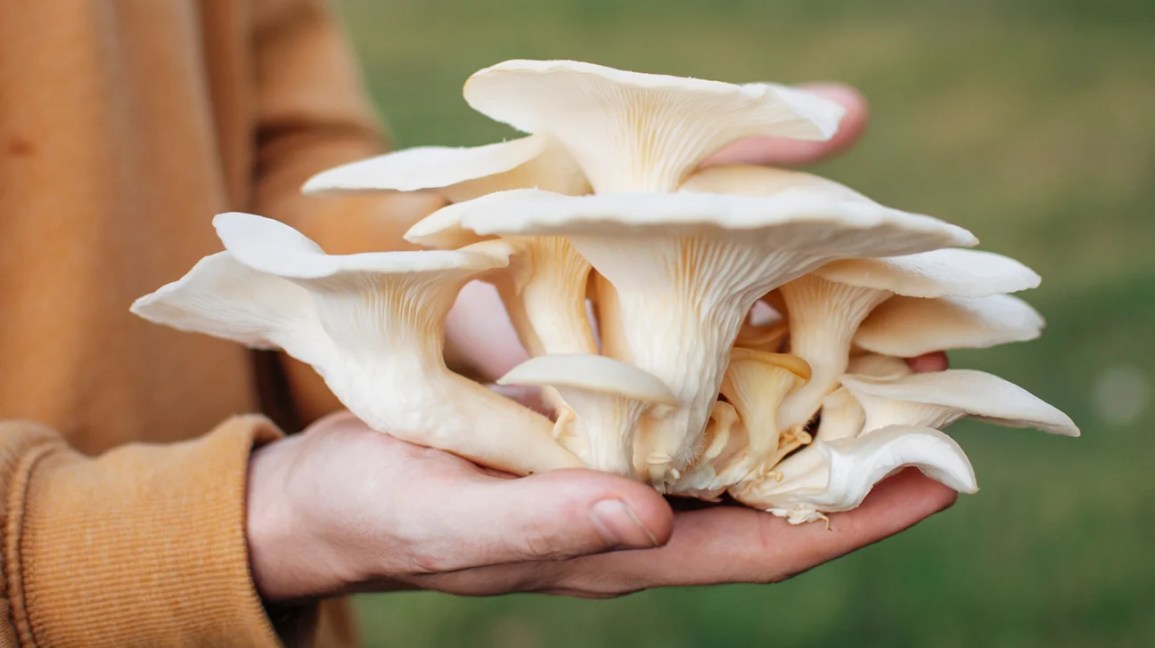
- The cap of the oyster mushroom is typically smooth and can be white, gray, or tan in color. Its shape is often described as oyster-like or fan-shaped. The margin of the cap is usually inrolled when young and becomes wavy or lobed as it matures.
- Gills
- The gills are decurrent, meaning they run down the stem. They are closely spaced and white to cream in color. The gills extend from the cap to the stem or substrate.
- Stem
- The stem is either short and thick or entirely absent. When present, it is lateral (growing from the side of the cap) and often curved. The stem surface is smooth and white.
- Flesh
- The flesh of the oyster mushroom is white, firm, and varies in thickness depending on the size and age of the mushroom. It has a mild, slightly anise-like odor.
- Fruiting body
- The fruiting body of Pleurotus ostreatus typically presents as a shell- or fan-shaped cap with a short or absent stem. The cap's size can range from 5 to 25 cm (2 to 10 inches) in diameter. The flesh is white and varies in thickness depending on maturity.
- Habitat
- Oyster mushrooms are saprophytic and typically grow on decaying wood, such as logs and tree stumps. They can be found in a variety of forests and woodlands, particularly in temperate and subtropical regions. They often grow in clusters.
Key Facts
- Cap surfaces: Smooth
- Growth Form: Clustered
- Spore Print: White to lilac-gray
- Body color: White, gray, or tan
- Odor: Mild, slightly anise-like
- Flesh bruises: Does not typically bruise
- Height: 2-10 cm
- Cap Diameter: 5-25 cm
- Nutrient gathering: Saprophytic
Safe
SafeOyster mushrooms are generally considered safe to eat for most people. However, as with any wild mushroom, proper identification is crucial to avoid consuming toxic look-alikes.
Quick Check
- Odor: Mild, slightly anise-like
- Fruiting: Grows in clusters on decaying wood
- Substrate: Decaying hardwood
Where to Find
Deciduous Forests
Oyster mushrooms are commonly found in deciduous forests, where they grow on decaying hardwood trees like beech, maple, and oak.
Wooded Areas
They can also be found in mixed woodlands and along the edges of forests, wherever there is decaying wood available.
Finding Tips
Check Decaying Wood
Look for oyster mushrooms on fallen logs, tree stumps, and dead branches of hardwood trees. They often grow in clusters.
Optimal Conditions
Search for them after periods of rain or high humidity, as these conditions promote fruiting.
Similar Species
Angel's Wings
saprophytic fungi
Also known as: Pleurocybella porrigens
Scientific Classification
- Phylum
- Basidiomycota
- Class
- Agaricomycetes
- Order
- Agaricales
- Family
- Pleurotaceae
- Genus
- Pleurotus
Storage Information
- Max Temperature: 10
- Freezing duration: 3
- Min Temperature: 2
- Refrigeration: 7
How to Clean
To clean oyster mushrooms, gently brush off any debris or substrate with a soft brush. Avoid soaking them in water, as they can become waterlogged. If necessary, lightly rinse them under cold water and pat them dry with a paper towel.
Explore Oyster Mushroom
Identify mushrooms anywhere
Free on iOS, Android, and Web. Photo identification, full database, and your personal collection.