
Got a photo? Identify mushrooms instantly with the Mushby app
Open the appDescription
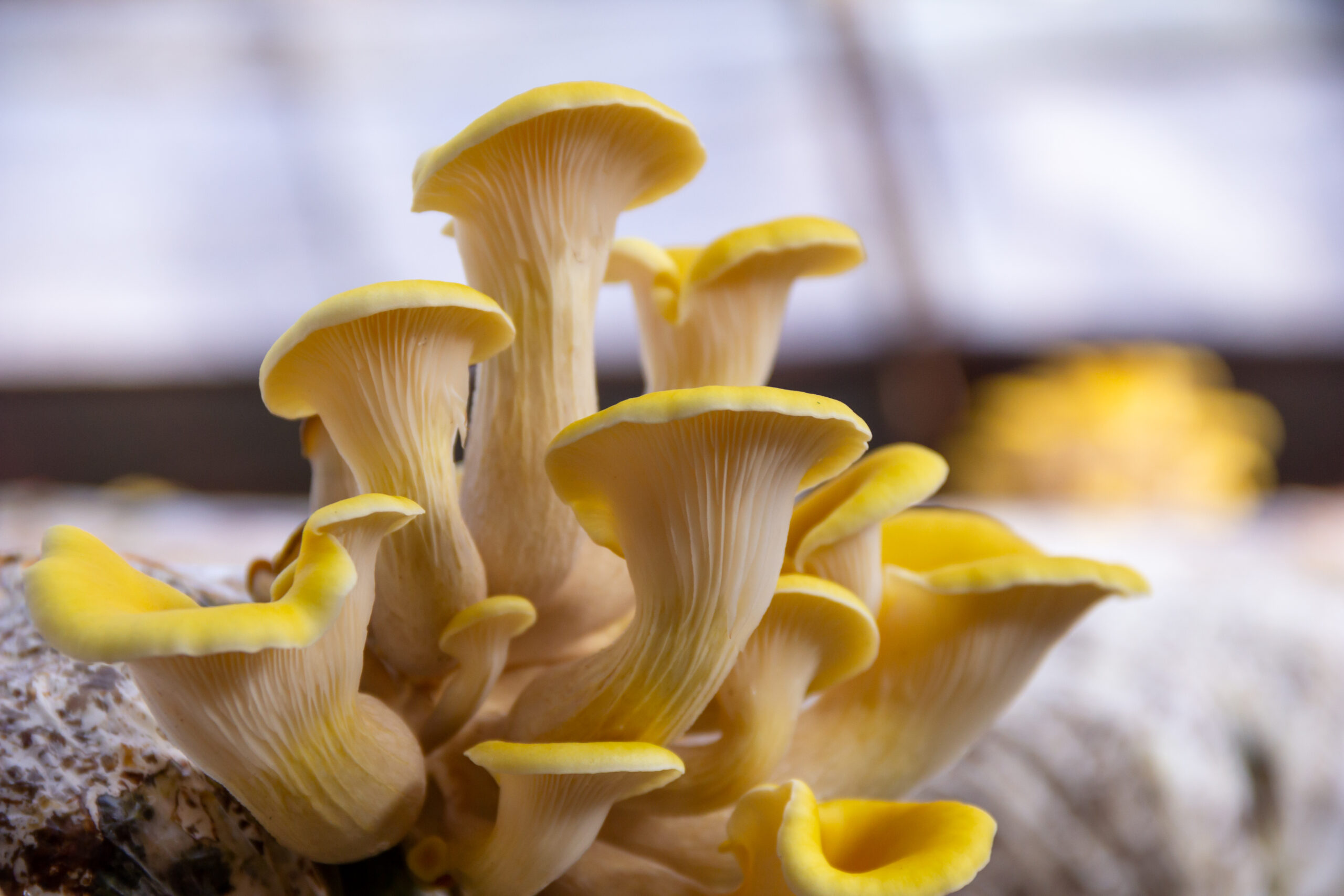
Pleurotus citrinopileatus, commonly known as the golden oyster mushroom, is a vibrant and visually appealing edible mushroom. It is characterized by its bright yellow to golden-orange color and clustered growth habit. This mushroom is prized for its delicate flavor and culinary versatility.
How to Identify
- Cap
- The cap of the golden oyster mushroom is its most distinctive feature, exhibiting a bright yellow to golden-orange color. The shape of the cap is convex to fan-shaped, with a smooth and slightly velvety texture. As the mushroom matures, the cap may flatten out and develop wavy edges.
- Gills
- The gills are decurrent, meaning they run down the stem. They are closely spaced and white to cream in color, contrasting beautifully with the vibrant cap.
- Stem
- The stem is short, stubby, and often eccentric (off-center). It is typically white or pale yellow and may be absent altogether in some specimens.
- Flesh
- The flesh of Pleurotus citrinopileatus is white and firm, with a mild and pleasant aroma.
- Fruiting body
- The fruiting body of Pleurotus citrinopileatus is typically medium to large in size, with a cap that ranges from 2 to 10 cm in diameter. The mushrooms often grow in dense clusters, forming a visually striking display.
- Habitat
- Pleurotus citrinopileatus is a saprophytic fungus, meaning it obtains nutrients from decaying organic matter. It is commonly found growing on dead or dying hardwood trees, particularly deciduous species like oak, beech, and maple. It can be cultivated on a variety of substrates, including straw, sawdust, and agricultural waste.
Key Facts
- Cap surfaces: Smooth, slightly velvety
- Growth Form: Clustered
- Spore Print: White to pale lilac
- Body color: Bright yellow to golden-orange
- Odor: Mild and pleasant
- Flesh bruises: Does not typically bruise
- Height: Varies depending on cluster size
- Cap Diameter: 2-10 cm
- Nutrient gathering: Saprophytic
Safe
SafePleurotus citrinopileatus is considered a safe and edible mushroom. There are no known toxins associated with this species.
Quick Check
- Odor: Mild and pleasant
- Fruiting: Grows in clusters on wood
- Substrate: Dead or dying hardwood trees
Where to Find
Asia
Native to East Asia, including regions of China, Japan, and Korea.
North America
Widely cultivated and can sometimes be found growing in the wild, particularly in areas with suitable hardwood forests.
Finding Tips
Look for Hardwood Trees
Search for golden oyster mushrooms on dead or dying hardwood trees, such as oak, beech, and maple.
Check After Rain
Mushrooms often fruit after periods of rain, so be sure to check potential habitats following wet weather.
Similar Species
Pleurotus pulmonarius
Edible mushroom
Also known as: Indian Oyster, Italian Oyster, Phoenix Mushroom, Lung Oyster
Scientific Classification
- Phylum
- Basidiomycota
- Class
- Agaricomycetes
- Order
- Agaricales
- Family
- Pleurotaceae
- Genus
- Pleurotus
Storage Information
- Max Temperature: 40°F (4°C)
- Freezing duration: Several months
- Min Temperature: 32°F (0°C)
- Refrigeration: 3-5 days
How to Clean
To clean golden oyster mushrooms, gently brush off any debris or substrate. Avoid soaking them in water, as they can become waterlogged. If necessary, lightly rinse them under cool water and pat dry with a paper towel.
Explore Golden Oyster Mushroom
Identify mushrooms anywhere
Free on iOS, Android, and Web. Photo identification, full database, and your personal collection.