
Got a photo? Identify mushrooms instantly with the Mushby app
Open the appDescription
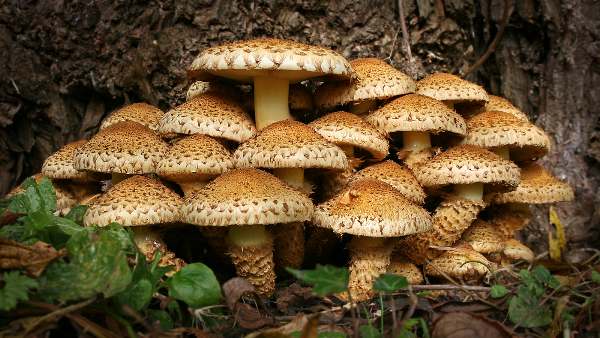
Pholiota squarrosa, commonly known as the scaly pholiota, is a basidiomycete fungus of the order Agaricales and the family Strophariaceae. It is known for its distinctive scaly cap and stem, and it typically grows in clusters on the dead wood of deciduous trees. While not considered highly toxic, it can cause gastrointestinal upset in some individuals.
How to Identify
- Cap
- The cap is convex to broadly convex, measuring 4-12 cm in diameter. It is dry and covered with recurved, pointed scales. The color ranges from yellowish-brown to rusty-brown.
- Gills
- The gills are adnate to slightly decurrent, closely spaced, and yellowish to brownish. They may become spotted with age.
- Stem
- The stem is 4-12 cm long and 1-2 cm thick, cylindrical, and scaly below the ring. The color is similar to the cap, and it often has a persistent, cottony ring.
- Flesh
- The flesh is firm and whitish to yellowish. It does not have a distinctive odor or taste.
- Fruiting body
- The fruiting body of Pholiota squarrosa is characterized by a scaly cap and stem, with a yellowish-brown to rusty-brown color. It typically grows in clusters on wood.
- Habitat
- Pholiota squarrosa grows in clusters on the dead wood of deciduous trees, particularly beech, birch, and maple. It is commonly found in forests and woodlands.
Key Facts
- Cap surfaces: Dry, scaly
- Growth Form: Clustered
- Spore Print: Brown
- Body color: Yellowish-brown to rusty-brown
- Odor: Not distinctive
- Flesh bruises: No bruising
- Height: 4-12 cm
- Cap Diameter: 4-12 cm
- Nutrient gathering: Saprophytic
Toxic
Mild ToxicityPholiota squarrosa is not considered highly toxic, but it can cause gastrointestinal upset in some individuals. Symptoms may include nausea, vomiting, and diarrhea.
Quick Check
- Odor: Not distinctive or slightly fungal
- Fruiting: Grows in clusters on wood
- Substrate: Dead or decaying deciduous trees
Where to Find
North America
Common in forests and woodlands across North America.
Europe
Found throughout Europe, particularly in areas with deciduous trees.
Finding Tips
Look for Clusters
Search for clusters of mushrooms growing on dead or decaying deciduous trees.
Check Scaly Features
Examine the cap and stem for the distinctive recurved scales that characterize this species.
Similar Species
Pholiota aurivella
a similar species of Pholiota
Also known as: Golden Scalycap
Armillaria mellea
a species of honey fungus
Also known as: Honey Mushroom
Scientific Classification
- Phylum
- Basidiomycota
- Class
- Agaricomycetes
- Order
- Agaricales
- Family
- Strophariaceae
- Genus
- Pholiota
Explore Scaly Pholiota
Identify mushrooms anywhere
Free on iOS, Android, and Web. Photo identification, full database, and your personal collection.