
Got a photo? Identify mushrooms instantly with the Mushby app
Open the appDescription
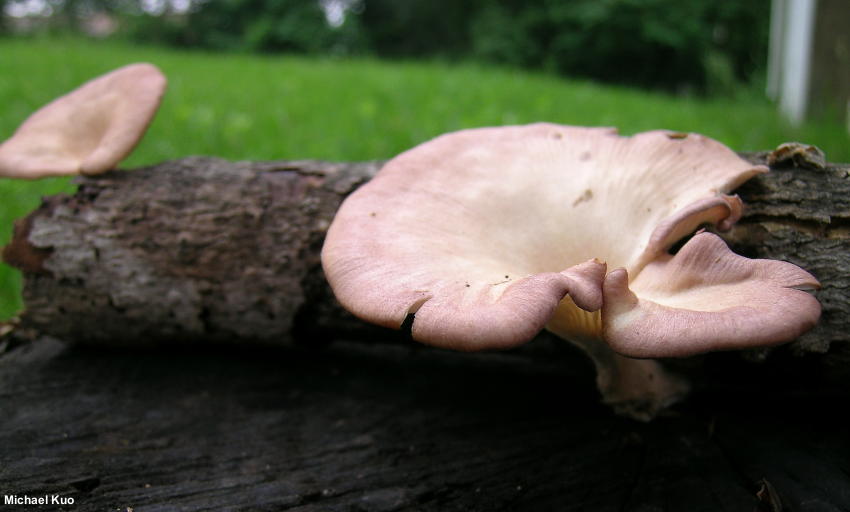
Panus conchatus is a wood-decaying fungus characterized by its oyster-like appearance and tendency to develop violet or lilac hues when young. It is a tough, leathery mushroom that is technically edible but often avoided due to its chewy texture.
How to Identify
- Cap
- Initially lilac or violet, fading to tan or brown with age; surface can be smooth or finely hairy/scaly.
- Gills
- Decurrent, crowded, and can sometimes exhibit a violet tint when fresh.
- Stem
- Short, eccentric to lateral, often hairy or shaggy at the base.
- Flesh
- White, tough, and fibrous; does not change color when bruised.
- Fruiting body
- Pleurotoid or fan-shaped, firm and leathery.
- Habitat
- Grows in clusters on decaying deciduous wood, particularly hardwoods like birch or beech.
Key Facts
- Cap surfaces: Smooth to finely tomentose or scaly.
- Growth Form: Cespitose or imbricate clusters.
- Spore Print: White to pale lilac-tinged.
- Body color: Lilac to violet when young, fading to tan/brown.
- Odor: Faint, not distinctive.
- Flesh bruises: No significant bruising.
- Height: 2-8 cm.
- Cap Diameter: 3-15 cm.
- Nutrient gathering: Saprotrophic on woody debris.
Safe
SafeGenerally considered edible but often ignored due to extreme toughness. Not recommended for novice foragers due to potential confusion with woody, inedible species.
Quick Check
- Odor: Mild, mushroomy to slightly unpleasant.
- Fruiting: Late spring through autumn.
- Substrate: Deciduous hardwood logs and stumps.
Where to Find
Northern Hemisphere
Widely distributed throughout North America, Europe, and parts of Asia.
Finding Tips
Look for clusters
They typically fruit in overlapping clusters on logs, stumps, or fallen branches.
Check the gills
The decurrent gills and tough, fibrous consistency are key indicators for the genus.
Similar Species
Pleurotus ostreatus
Pleurotaceae
Also known as: Oyster Mushroom
Panus neostrigosus
Polyporaceae
Also known as: Hairy Panus
Scientific Classification
- Phylum
- Basidiomycota
- Class
- Agaricomycetes
- Order
- Polyporales
- Family
- Polyporaceae
- Genus
- Panus
Storage Information
- Max Temperature: 4°C
- Freezing duration: 6 months
- Min Temperature: 1°C
- Refrigeration: 5 days
How to Clean
Use a soft brush to remove wood debris from the cap and base. Because of its tough texture, trimming the stem base is recommended.
Explore Hairy Panus
Identify mushrooms anywhere
Free on iOS, Android, and Web. Photo identification, full database, and your personal collection.