
Got a photo? Identify mushrooms instantly with the Mushby app
Open the appDescription
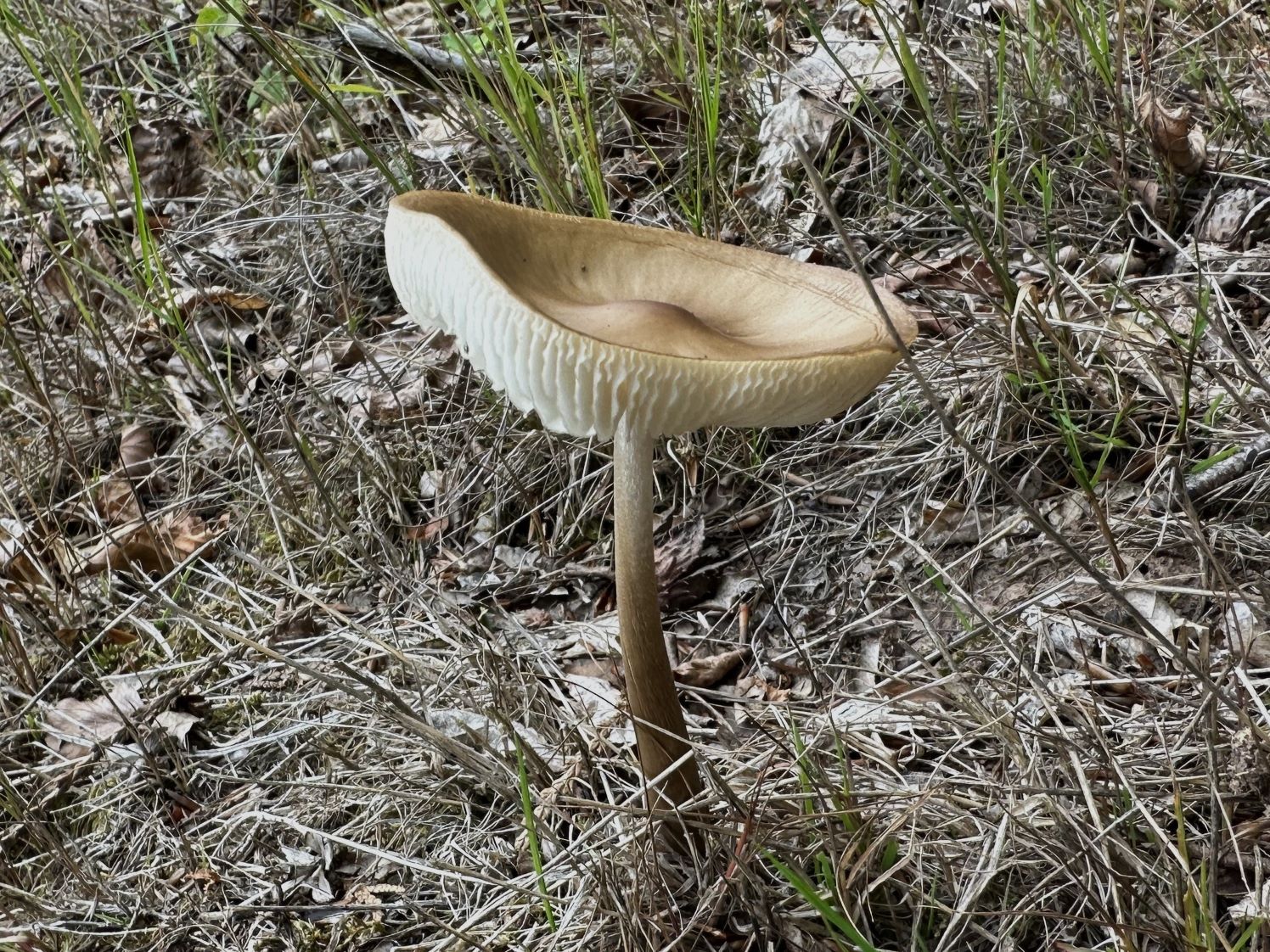
The Rooting Shank (Oudemansiella radicata) is a saprobic mushroom often found on decaying wood. It is characterized by its slimy cap, white gills, and a long, rooting stem that extends into the substrate.
How to Identify
- Cap
- The cap is convex, becoming flattened with age, and has a slimy surface. The color ranges from yellowish-brown to tan, often darker in the center.
- Gills
- The gills are white, widely spaced, and adnate to decurrent.
- Stem
- The stem is long, tapering downwards, and has a rooting base that extends into the substrate. It is slimy below the ring zone and dry above.
- Flesh
- The flesh is white and thin.
- Fruiting body
- Medium to large in size, with a distinctive rooting stem.
- Habitat
- Found on decaying hardwood, especially logs and stumps.
Key Facts
- Cap surfaces: Slimy
- Growth Form: Solitary or in small groups
- Spore Print: White
- Body color: White gills, yellowish-brown to tan cap
- Odor: Mild, not distinctive
- Flesh bruises: Does not typically bruise
- Height: Up to 20 cm
- Cap Diameter: 5-15 cm
- Nutrient gathering: Saprobic
Safe
SafeThe Rooting Shank is generally considered edible, but caution is advised. It can be confused with other mushrooms, some of which may be toxic. Always ensure proper identification before consumption.
Quick Check
- Odor: Mild
- Fruiting: Late summer to autumn
- Substrate: Decaying hardwood
Where to Find
Forests
Decaying hardwood logs and stumps in forests.
Finding Tips
Habitat
Look for mushrooms with slimy caps and rooting stems near decaying wood.
Spore Print
Check for white spores by placing a cap on dark paper overnight.
Similar Species
Xerula furfuracea
Xerula
Also known as: Rooting Shank
Scientific Classification
- Phylum
- Basidiomycota
- Class
- Agaricomycetes
- Order
- Agaricales
- Family
- Physalacriaceae
- Genus
- Oudemansiella
Storage Information
- Max Temperature: 4
- Freezing duration: N/A
- Min Temperature: 2
- Refrigeration: 3 days
How to Clean
Wipe the cap gently with a damp cloth to remove debris. Trim the rooting stem if necessary.
Explore Rooting Shank
Identify mushrooms anywhere
Free on iOS, Android, and Web. Photo identification, full database, and your personal collection.