
Got a photo? Identify mushrooms instantly with the Mushby app
Open the appDescription
Oudemansiella canarii is a saprobic mushroom characterized by its often viscid cap, distant gills, and a tough, tapering stem with a rooting base. It is a pantropical species.
How to Identify
- Cap
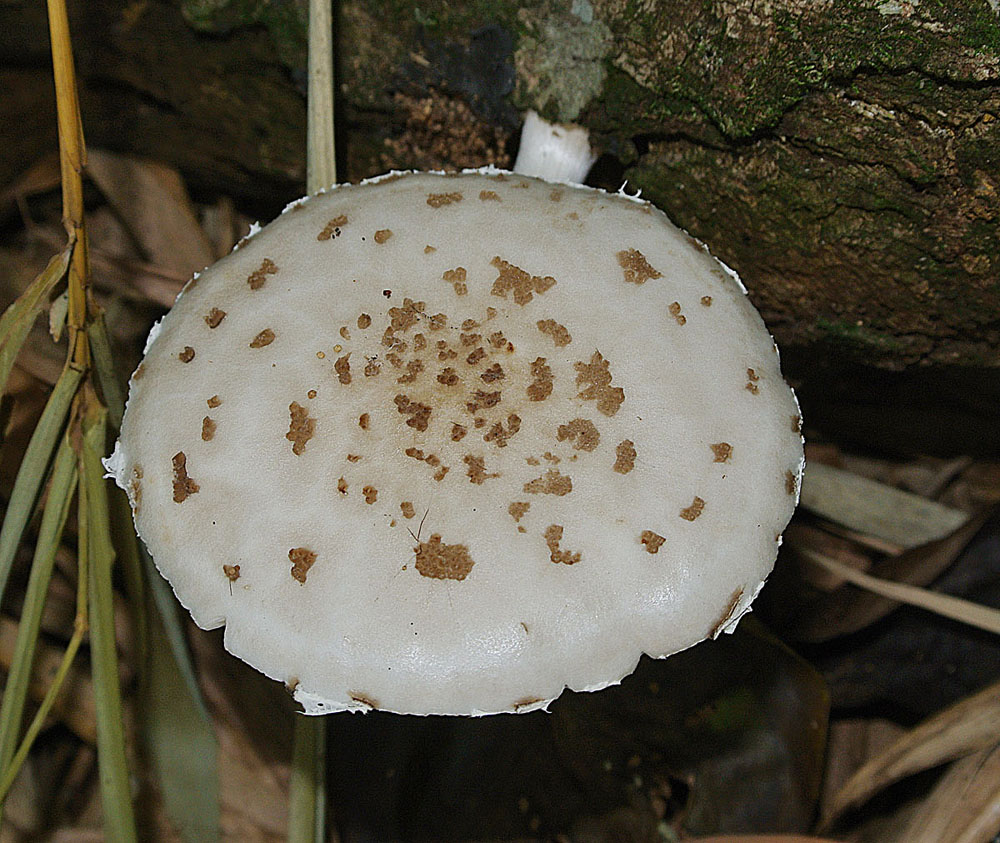
- 3-12 cm in diameter, convex to broadly convex or plano-convex, sometimes with a broad umbo. Surface is smooth, varying from dry to highly viscid or glutinous, especially when moist. Color ranges from whitish, cream, pale yellow, dull yellow-brown, cinnamon-brown, or reddish-brown, often darker towards the center or with faint radiating fibrils. Margin is usually striate or sulcate when moist.
- Gills
- Adnexed to adnate, sometimes nearly free, broad, very distant, often ventricose. White to cream, occasionally with a yellowish tint. Gill edges are entire.
- Stem
- 5-30 cm long, 0.4-1.5 cm thick, slender to robust, central, cylindrical or tapering slightly upwards, often with a distinctly elongated, rooting base that can extend deep into the substrate. Surface is dry, typically smooth or finely striate above, often pruinose at the apex, sometimes finely scaly or fibrillose towards the base. Color is whitish to pale brown or concolorous with the cap, often darker at the base. Tough and cartilaginous.
- Flesh
- Thin in the cap, whitish to pale cream, firm to tough. Odor and taste are generally mild or indistinct.
- Fruiting body
- Typically agaricoid, with a distinct cap, gills, and stem.
- Habitat
- Typically solitary or scattered, growing saprobically on buried hardwood (Angiosperm) logs, roots, or wood debris, often appearing terrestrial due to the deeply rooting stem. Occasionally found on visible decaying wood.
Key Facts
- Cap surfaces: Smooth, dry to highly viscid or glutinous.
- Growth Form: Solitary to scattered.
- Spore Print: White.
- Body color: Whitish, cream, pale yellow to dull yellow-brown, cinnamon-brown, or reddish-brown.
- Odor: Mild, indistinct.
- Flesh bruises: Does not bruise significantly.
- Height: 5-30 cm
- Cap Diameter: 3-12 cm
- Nutrient gathering: Saprobic (decomposer of dead wood).
Safe
SafeOudemansiella canarii is generally considered edible, though its culinary value is not highly regarded due to its somewhat tough texture, especially in the stem. There are no reports of toxicity. However, as with all wild mushrooms, proper identification is paramount. Consuming unidentified mushrooms can lead to severe illness or death. Always cook thoroughly before consumption.
Quick Check
- Odor: Mild, indistinct
- Fruiting: Year-round in tropical climates, especially during rainy seasons.
- Substrate: Buried hardwood (Angiosperm) logs, roots, or wood debris.
Where to Find
Tropical and Subtropical Regions
This species is pantropical, found widely across tropical and subtropical Asia, Africa, and the Americas. It is particularly common in rainforest ecosystems.
Finding Tips
Substrate Focus
Look for it growing from the ground near hardwood trees, as its rooting stem often connects to buried wood. Check areas with decaying logs and leaf litter.
Moist Conditions
The cap can be quite viscid or slimy in moist conditions, which is a key identifying feature.
Rooting Base
Carefully excavate around the base of the stem to observe its distinctive, elongated rooting structure, which can be several times the length of the exposed stem.
Similar Species
Rooting Shank
Xerula radicata
Also known as: Hymenopellis radicata
Porcelain Fungus
Oudemansiella mucida
Also known as: Mucidula mucida
Scientific Classification
- Phylum
- Basidiomycota
- Class
- Agaricomycetes
- Order
- Agaricales
- Family
- Physalacriaceae
- Genus
- Oudemansiella
Storage Information
- Max Temperature: 4
- Freezing duration: 0
- Min Temperature: 1
- Refrigeration: 3 days
How to Clean
Due to its potential edibility (see toxicInformation), proper cleaning is crucial. Gently brush off any dirt or debris from the cap and stem. If very slimy, a quick rinse under cold water followed by drying with a paper towel may be necessary, but excessive washing is not recommended as it can make them waterlogged.
Explore No common English name (Canarium Oudemansiella)
Identify mushrooms anywhere
Free on iOS, Android, and Web. Photo identification, full database, and your personal collection.