
Got a photo? Identify mushrooms instantly with the Mushby app
Open the appDescription
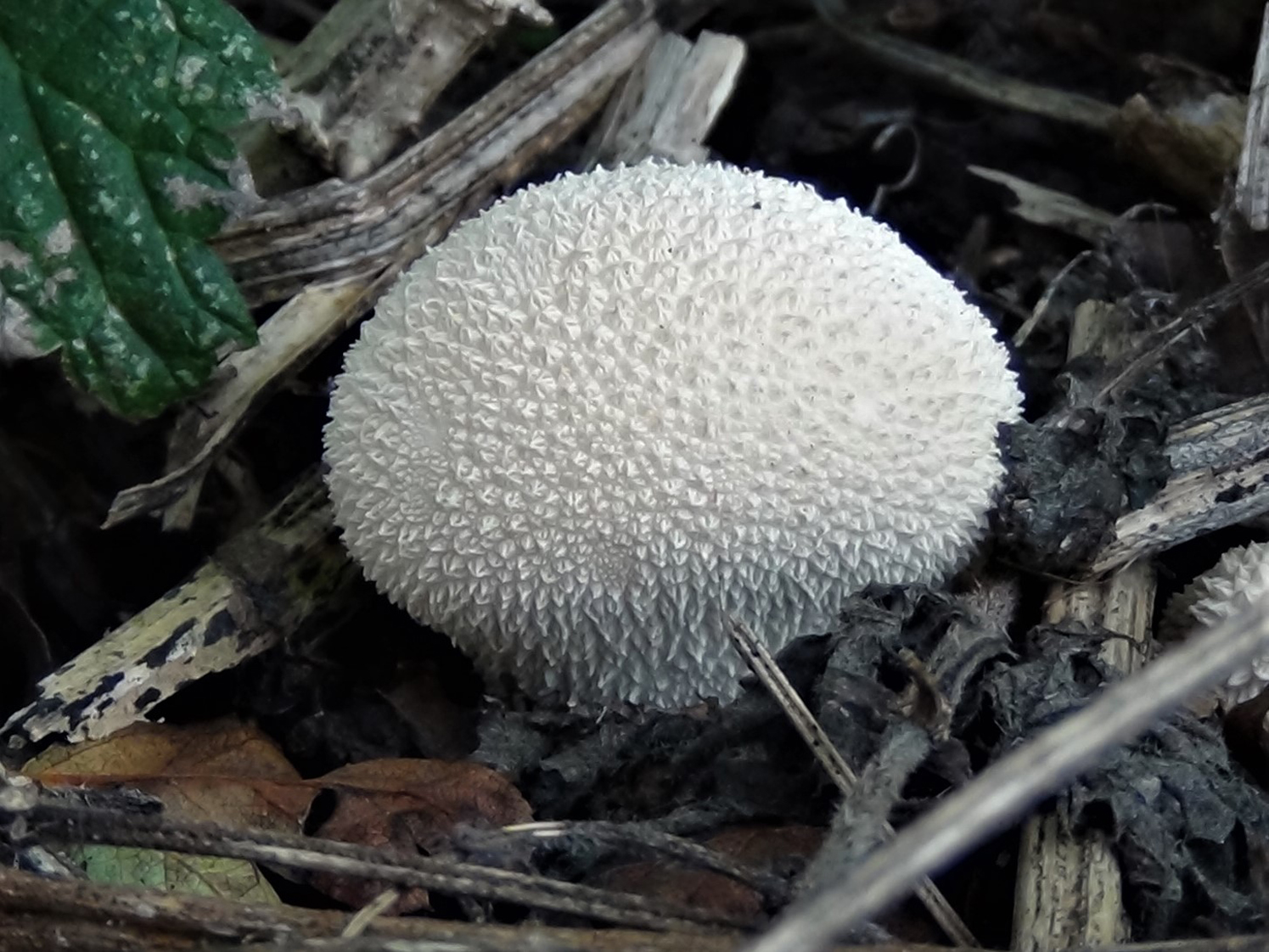
Puffball mushrooms are a group of fungi characterized by their spherical or pear-shaped fruiting bodies. They belong to the division Basidiomycota and are commonly found in meadows, fields, and deciduous woodlands. These mushrooms are known for releasing a cloud of spores when disturbed, hence the name 'puffball'.
How to Identify
- Cap
- Puffball mushrooms do not have a distinct cap like many other mushrooms. Instead, the entire fruiting body is enclosed in a skin-like outer layer called the peridium.
- Gills
- Puffball mushrooms do not have gills. Instead, they produce spores internally within the fruiting body.
- Stem
- Puffball mushrooms typically do not have a distinct stem. The fruiting body is often attached directly to the substrate.
- Flesh
- The flesh of young puffballs is white and firm. As the mushroom matures, the flesh turns yellowish or greenish-brown and eventually becomes powdery.
- Fruiting body
- The fruiting body is typically round or pear-shaped, ranging from small to medium in size.
- Habitat
- Puffball mushrooms are commonly found in meadows, fields, and deciduous woodlands. They often grow on the ground or on decaying wood.
Key Facts
- Cap surfaces: Smooth or slightly textured
- Growth Form: Globose or pear-shaped
- Spore Print: Olive-brown
- Body color: White when young, turning yellowish or brownish with age
- Odor: Mild or mushroomy
- Flesh bruises: Does not typically bruise
- Height: Variable, typically 2-10 cm
- Cap Diameter: Variable, typically 2-10 cm
- Nutrient gathering: Saprophytic
Safe
SafePuffball mushrooms are generally considered safe to eat when young and the flesh is still white and firm. However, it's essential to avoid consuming puffballs that have begun to turn yellowish or brownish, as they may cause gastrointestinal upset. Additionally, it's crucial to distinguish puffball mushrooms from poisonous look-alikes, such as earthballs or immature mushrooms of deadly species.
Quick Check
- Odor: Mild or mushroomy
- Fruiting: Solitary or in groups
- Substrate: Ground or decaying wood
Where to Find
Meadows and Fields
Puffball mushrooms can be found in grassy areas, especially after rainfall.
Deciduous Woodlands
They also occur in forests with deciduous trees, often near decaying wood.
Finding Tips
Look after Rain
Puffball mushrooms tend to appear after periods of rain, so it's a good time to search for them.
Check Grassy Areas
Keep an eye out for round or pear-shaped fungi in meadows and fields.
Similar Species
Earthball
Fungi
Also known as: Scleroderma citrinum
Scientific Classification
- Phylum
- Basidiomycota
- Class
- Agaricomycetes
- Order
- Agaricales
- Family
- Lycoperdaceae
- Genus
- Lycoperdon
Storage Information
- Max Temperature: Room temperature
- Freezing duration: Not recommended
- Min Temperature: Refrigerate
- Refrigeration: 2-3 days
How to Clean
To clean puffball mushrooms, gently wipe off any dirt or debris with a damp cloth. Avoid soaking them in water, as they can become waterlogged.
Explore Puffball Mushroom
Identify mushrooms anywhere
Free on iOS, Android, and Web. Photo identification, full database, and your personal collection.