
Got a photo? Identify mushrooms instantly with the Mushby app
Open the appDescription
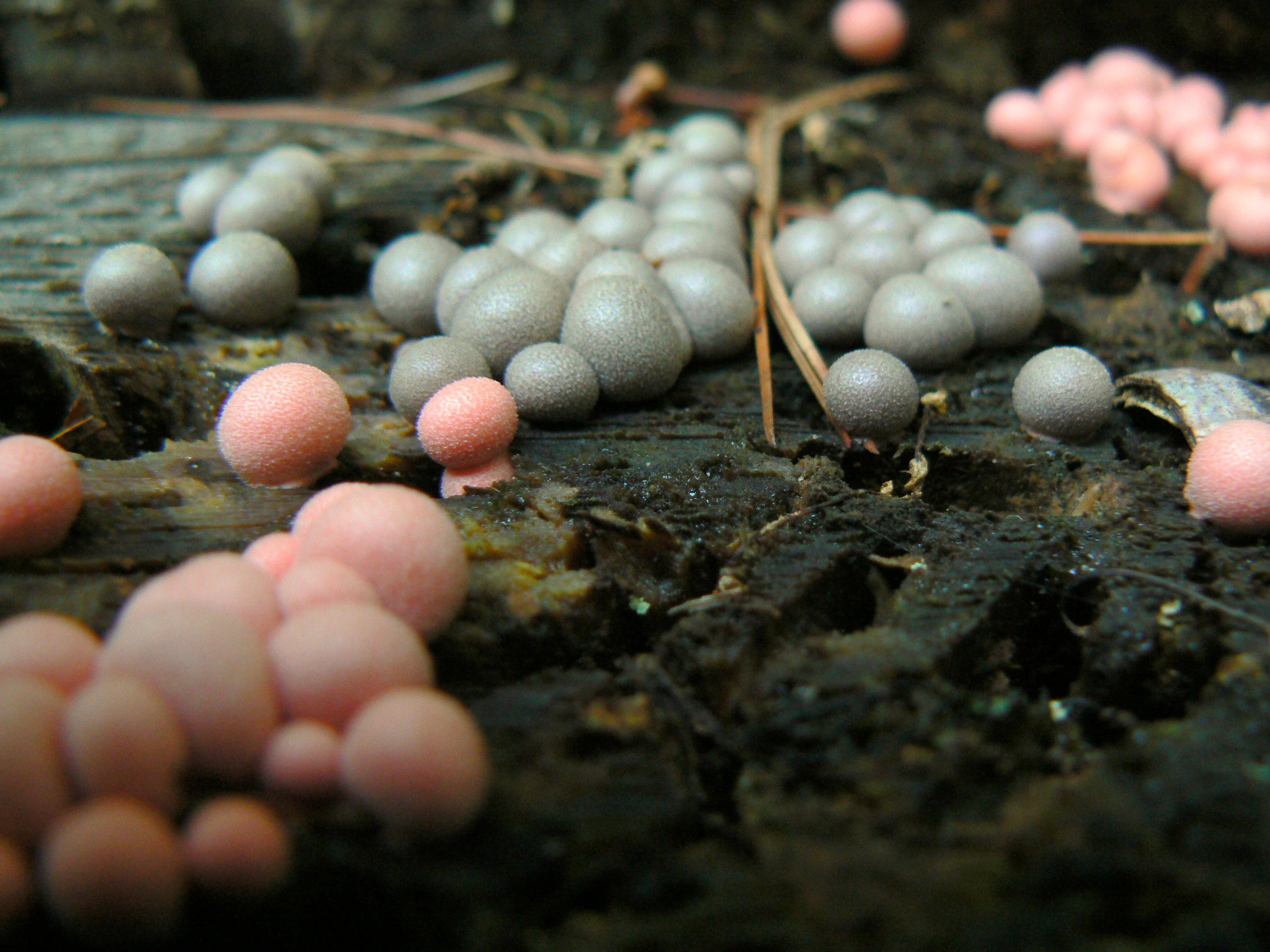
Lycogala epidendrum is not a true fungus but a myxomycete in the class Myxogastria. It exists as an amoeboid plasmodium before developing into coral-pink to brownish, spherical aethalia. It is famous for exuding a creamy, pinkish fluid when ruptured in its early stages, resembling toothpaste.
How to Identify
- Cap
- Surface is varying in texture from smooth to minutely warted, changing from pink/coral when young to grayish-brown or brown when mature.
- Gills
- Not applicable; myxomycetes do not produce gills.
- Stem
- Sessile; lacks a true stem structure.
- Flesh
- Initially a thick, pinkish, paste-like fluid, maturing into a powdery, dusty, brownish mass of spores and capillitium.
- Fruiting body
- Spherical to cushion-shaped aethalia, typically 3-15 mm in diameter.
- Habitat
- Found on decaying wood, stumps, and fallen logs in forests worldwide.
Key Facts
- Cap surfaces: Minutely warted at maturity
- Growth Form: Clustered or scattered
- Spore Print: Pinkish to brownish dust
- Body color: Pink, coral, or grey-brown
- Odor: Not distinctive
- Flesh bruises: Oozes pinkish fluid when young
- Height: Up to 1.5 cm
- Cap Diameter: 0.3 to 1.5 cm
- Nutrient gathering: Phagocytosis (ingesting bacteria and spores)
Toxic
Moderate ToxicityLycogala epidendrum is not an edible mushroom and has no culinary value. While not highly toxic, ingestion is strictly discouraged due to the risk of gastrointestinal irritation and potential allergic reactions to the spores.
Quick Check
- Odor: Generally odorless or slightly fungal.
- Fruiting: Commonly found in clusters during late summer and autumn.
- Substrate: Found on various types of rotting deciduos or coniferous wood.
Where to Find
Global Distribution
Cosmopolitan, found on every continent except Antarctica, commonly observed in temperate and tropical forests.
Micro-habitats
Exclusively lignicolous (wood-decaying), favor moist, rotting wood where internal humidity is high.
Finding Tips
Look for the Pink
Search for small, bubble-like pink or coral spheres growing in clusters on dead wood.
Check Seasonality
They are most commonly encountered during wet summer and autumn months.
Similar Species
Lycogala flavo-fuscum
Myxomycete
Also known as: Brown wolf's milk
Lycogala conicum
Myxomycete
Also known as: Conical wolf's milk
Scientific Classification
- Phylum
- Mycetozoa
- Class
- Myxogastria
- Order
- Myxogastrales
- Family
- Reticulariaceae
- Genus
- Lycogala
Explore Wolf's Milk
Identify mushrooms anywhere
Free on iOS, Android, and Web. Photo identification, full database, and your personal collection.