
Got a photo? Identify mushrooms instantly with the Mushby app
Open the appDescription
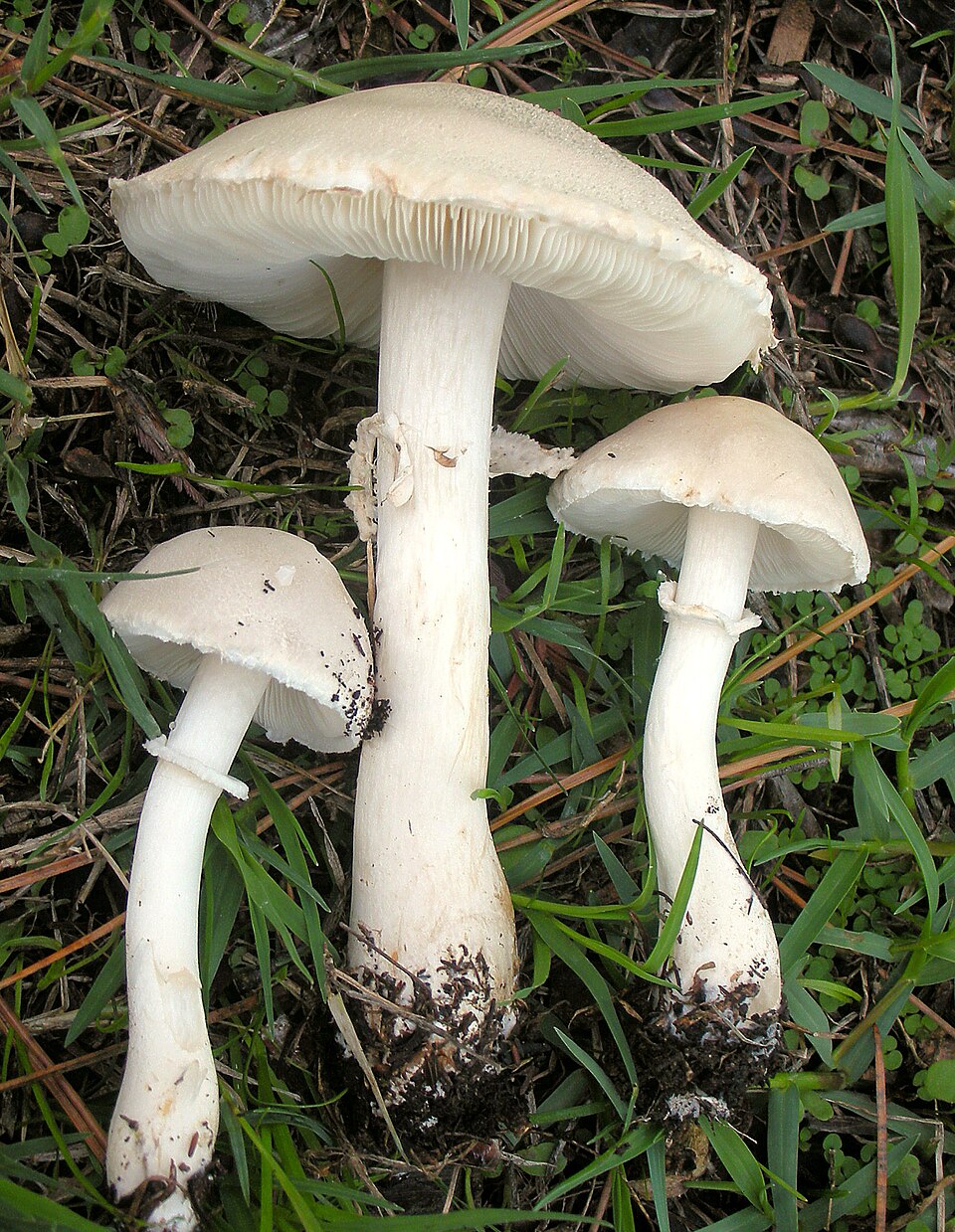
Leucocoprinus cretaceus is a small, delicate, and entirely white mushroom, often found growing in disturbed soils, gardens, greenhouses, and potted plants. It is characterized by its chalk-white appearance, granular cap surface, and a distinct, movable ring on the stem. While visually appealing, it is considered inedible and potentially toxic.
How to Identify
- Cap
- The cap is typically 2-6 cm in diameter, initially ovoid or bell-shaped, expanding to convex or plano-convex with a slightly depressed center. The surface is dry, chalk-white, and covered with fine, granular or mealy scales, especially towards the center. The margin is often striate and can be slightly upturned with age.
- Gills
- The gills are free from the stem, crowded, and white, sometimes developing a slight cream tint with age. They are relatively broad.
- Stem
- The stem is 3-8 cm long and 0.3-0.8 cm thick, cylindrical, hollow, and fragile. It is white, often with a slightly granular or mealy surface, especially below the ring. A prominent, white, membranous, and movable ring is present on the upper part of the stem, which may sometimes disappear with age.
- Flesh
- The flesh is thin, white, and fragile, with no significant odor or taste.
- Fruiting body
- The fruiting body is entirely white, becoming slightly cream-colored with age, and has a delicate structure.
- Habitat
- Saprobic, growing solitarily or in small groups on rich, disturbed soil, compost, wood chips, leaf litter, and often in potted plants, greenhouses, and gardens. It is a common indoor mushroom.
Key Facts
- Cap surfaces: Dry, granular to mealy, chalk-white
- Growth Form: Solitary to scattered
- Spore Print: White
- Body color: Entirely white
- Odor: Indistinct
- Flesh bruises: No significant bruising
- Height: 3-8 cm
- Cap Diameter: 2-6 cm
- Nutrient gathering: Saprobic
Toxic
Severe ToxicityLeucocoprinus cretaceus is considered inedible and potentially toxic. While specific toxins are not always clearly identified for all Leucocoprinus species, many in this genus are known to cause gastrointestinal upset, including nausea, vomiting, and diarrhea. Due to its small size and potential for toxicity, it should not be consumed.
Quick Check
- Odor: Indistinct or slightly fungal
- Fruiting: Solitary to scattered
- Substrate: Soil, compost, wood chips, potted plants
Where to Find
Gardens and Lawns
Frequently found in cultivated areas with rich soil, compost, or wood chip mulch.
Potted Plants
A very common inhabitant of indoor and outdoor potted plants, especially those with organic-rich potting mix.
Greenhouses
Thrives in the warm, humid conditions and rich substrates found in greenhouses.
Disturbed Ground
Can appear in areas where soil has been recently disturbed, such as construction sites or newly landscaped areas.
Finding Tips
Check Potted Plants
Regularly inspect the soil surface of indoor and outdoor potted plants, especially after watering.
Look in Mulched Areas
Search in garden beds and landscaped areas that use wood chips or other organic mulches.
Seasonal Appearance
While it can appear year-round indoors, it is most common outdoors during warmer, humid months, typically late spring through fall.
Similar Species
Flowerpot Parasol
Leucocoprinus
Also known as: Yellow Parasol, Plantpot Dapperling
White Dunce Cap
Conocybe
Also known as: White Conecap
Deadly Parasol
Lepiota
Also known as: Deadly Dapperling
Scientific Classification
- Phylum
- Basidiomycota
- Class
- Agaricomycetes
- Order
- Agaricales
- Family
- Agaricaceae
- Genus
- Leucocoprinus
Explore White Dapperling
Identify mushrooms anywhere
Free on iOS, Android, and Web. Photo identification, full database, and your personal collection.